
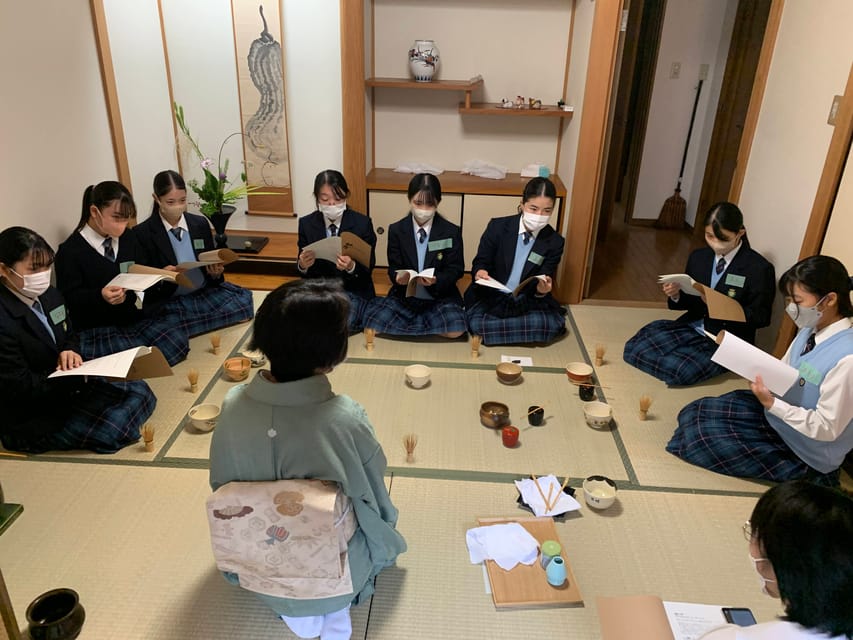
Reviewed · KYOTO TEA CEREMONIES
Kyoto: Private Tea Ceremony at local home with tea master
The most appealing part of this experience is its setting: a real local home near Nijo Castle, not a large performance space built for crowds. A certified tea master explains the ceremony in plain language, then shows you how each careful motion reflects Japanese ideas of respect, quiet, and attention.
I like the chance to prepare your own matcha, and I like the thoughtful food pairing: two cups of Uji matcha with two kinds of seasonal Japanese dried sweets. The main consideration is the one-hour limit. The ceremony covers a lot, and one recent booking found the final part a little rushed when another appointment was due to begin.
Key points at a glance
- Local home near Nijo Castle: The tea room is about three minutes on foot from Nijo Castle and Nijojo-mae subway station.
- Aya-san and certified tea instruction: You learn the ceremony’s background, utensils, manners, and philosophy in English or Japanese.
- Hands-on matcha preparation: You do not only watch. You whisk matcha yourself and learn how to handle the bowl.
- Two cups and seasonal sweets: The price includes two cups of matcha and two kinds of traditional dried Japanese sweets.
- Private one-hour format: Your party has the room to itself, making this a calm choice for focused instruction.
- Clear clothing rules: Wear socks and long trousers or a long skirt. Avoid perfume, shorts, short skirts, sleeveless shirts, and jewelry.
A quiet tea room three minutes from Nijo Castle
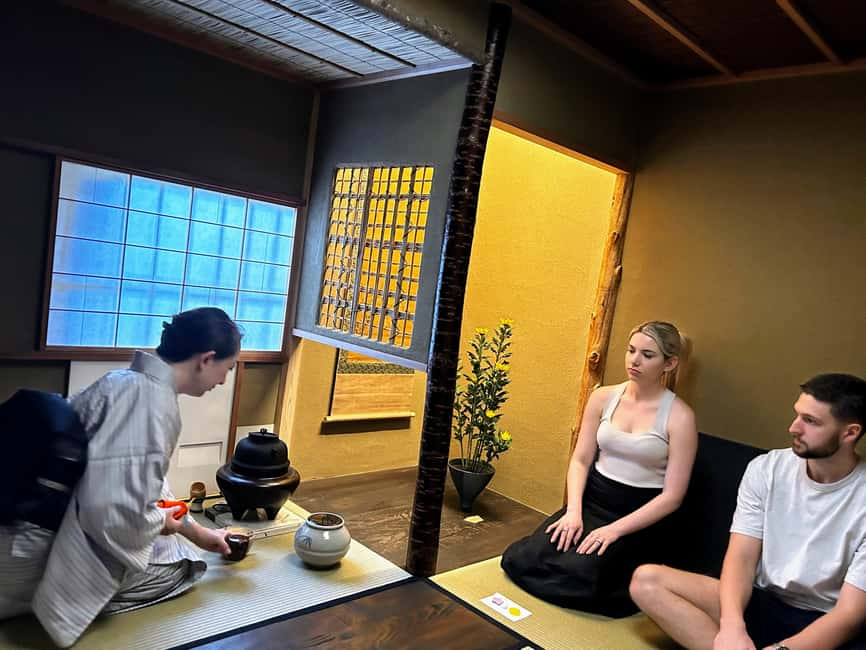
The experience begins at Sakura Japanese Culture Experience, a short walk from Nijo Castle and the Nijojo-mae subway station. That location makes this easy to fit between sightseeing stops. You can visit the castle first, then walk over while the area is still fresh in your mind.
The meeting point is also about three minutes from the Kyoto city bus stop at Nijojo-mae. From Shijo Station on the Hankyu line, allow about 15 minutes on foot. From Kyoto Station, a taxi takes roughly 10 minutes. I would use the subway or bus if you are already touring central Kyoto, and a taxi if you have luggage or are coming straight from the station.
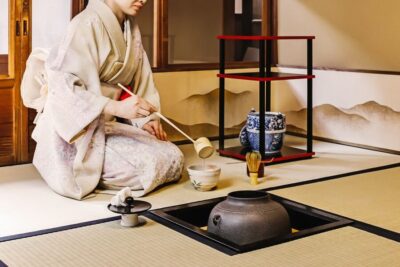
The tea room is in a local home. That matters because the experience feels personal rather than staged for a large audience. You enter a smaller space where clothing, posture, movement, and silence all become part of the lesson.
You will remove your shoes indoors, so wear clean socks. Bare feet are not allowed, and the host can provide socks for an extra charge if needed. Long clothing is required because shorts and short skirts are uncomfortable in the tea room.
More tea ceremonies in Kyoto:
- Kyoto: Tea Ceremony in a Traditional Tea House in Kiyomizu
★ 4.9 · 3,519 reviews - Kyoto: Tea Ceremony Ju-An at Jotokuji Temple
★ 4.9 · 3,207 reviews - Kyoto: 45-Minute Tea Ceremony Lesson Experience
★ 4.3 · 2,378 reviews
The opening lesson gives the ceremony a clear purpose
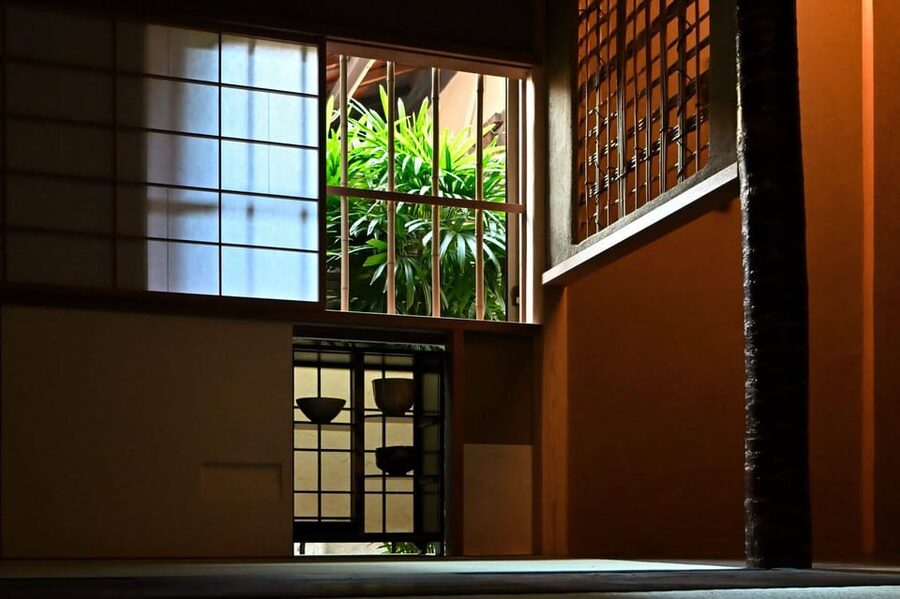
Before the formal tea preparation begins, the tea master introduces the background and development of Japanese tea ceremony. You learn how this practice connects hospitality, manners, seasonal awareness, and careful attention to ordinary objects.
I find this opening useful because the ceremony can otherwise seem like a series of mysterious movements. Here, the folding of a cloth, the position of a bowl, and the way tea is offered all have a reason. The explanation helps you watch the gestures as part of a system rather than as decoration.
The instruction is designed for beginners. You do not need prior knowledge of matcha, Japanese etiquette, or tea ceremony vocabulary. The teacher explains the terms and actions in a relaxed way, with English and Japanese available.
The experience is led by a certified tea master who was born and raised in Kyoto. Aya-san is named by the host as one of the instructors, and the warm welcome is an important part of the visit. You are not simply shown a ritual and sent away. You have time to ask questions and reflect on what you have seen.
Learning the chawan, chasen, and chashaku
One of the most useful sections focuses on the three main tea tools:
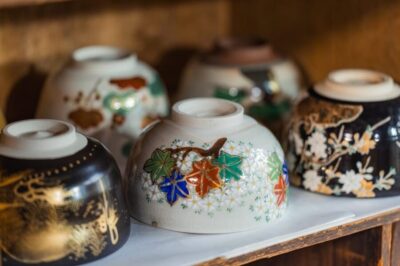
- The chawan, or tea bowl, holds the matcha and has its own shape, texture, and character.
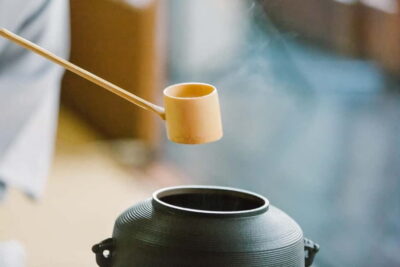
- The chasen, or bamboo whisk, mixes the powdered tea with hot water.
- The chashaku, or tea scoop, measures the matcha.
You learn what these tools do, how to handle them, and why their care matters. The lesson also covers practical points about maintenance in daily life. That detail gives the class more value than a short ceremonial demonstration because you leave understanding the tools as objects with a place in Japanese culture.
The teacher also explains how to receive and appreciate the bowl. You learn the basic etiquette for turning it, holding it, and drinking from it. These actions may feel formal at first, but they become easier once you understand the respect behind them.
Do not expect a long technical workshop on tea production. This is a short cultural introduction, not a professional tea school. Its strength is the balance between explanation, demonstration, and participation.
Watching the formal demonstration
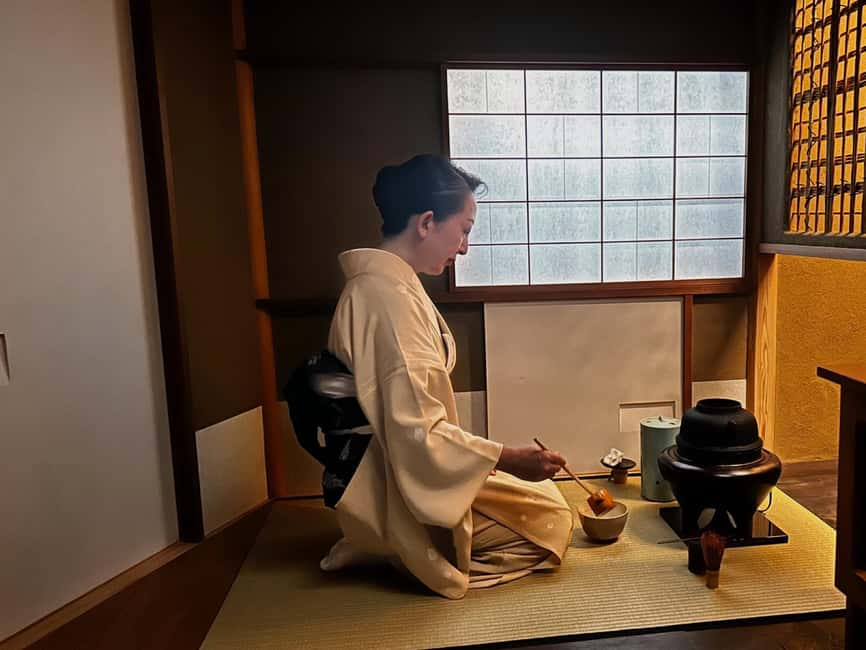
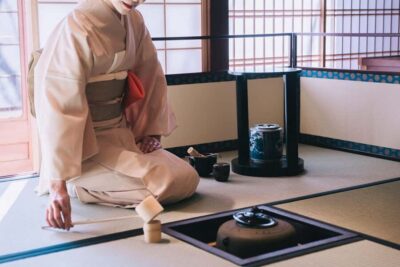
After the introduction, the tea master demonstrates the ceremony. The movements are deliberate and quiet. Folding the cloth, arranging the utensils, measuring the tea, whisking the matcha, and presenting the bowl all take place in a set order.
The pace gives you a chance to notice small details. You will see how the host prepares the space before serving you and how seasonal hospitality shapes the ceremony. The goal is not speed. The goal is attention.
This is also the point where the private format helps. In a large group, you might spend much of your time watching someone else from the back of the room. In this private setting, you can follow the hands and tools more closely and ask questions when something is unclear.
The room itself is part of the lesson. A tea ceremony depends on simplicity, restraint, and respect for the space. You are expected to move carefully, keep perfumes and strong fragrances away, and leave shoes outside. These rules may feel strict if you are used to casual sightseeing, but they protect the atmosphere the ceremony needs.
A few more Kyoto tours worth putting on the shortlist
- PERFECT KYOTO 1-Day Bus Tour
★ 5.0 · 13,518 reviews - Kyoto: Fushimi Inari, Kinkakuji, Bamboo Grove 1 Day Bus Tour
★ 4.8 · 4,316 reviews - Kyoto Geisha Walking Tour: Gion District & Hidden Gems
★ 4.7 · 3,273 reviews - Kyoto: Gion Magical Night Walking Tour with Geisha Trivia
★ 4.9 · 2,393 reviews
Making your own matcha
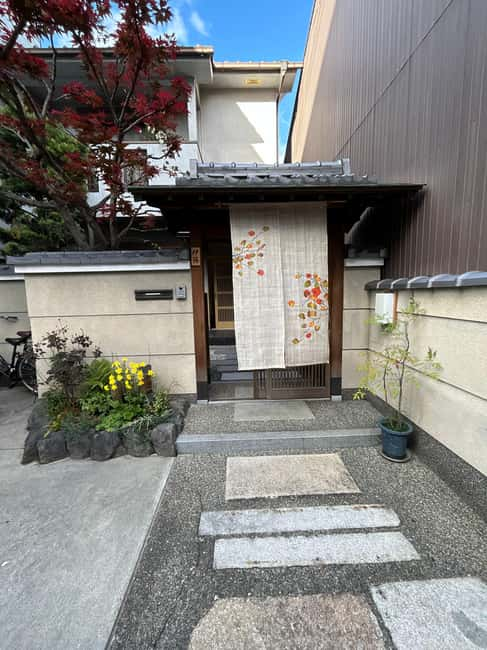
The hands-on section is the practical heart of the hour. After watching the demonstration, you prepare matcha yourself with the traditional whisk.
You learn how to measure the powder, add water, and whisk the tea. The point is not to produce a perfect bowl on your first try. The point is to understand the work involved and feel how the tools respond in your hands.
I especially like this part for first-time visitors because it turns an abstract cultural lesson into a physical one. You feel the rhythm of the whisk and see how the powder changes as it mixes. Even a small action becomes more meaningful once you know why it is done.
The tea is high-quality matcha sourced from Uji in Kyoto, one of Japan’s best-known tea-producing areas. Matcha has a strong, grassy flavor that can surprise people who mostly drink mild green tea. The traditional sweets help balance that taste.
The experience includes two cups of matcha. One is prepared for you as part of the ceremony, and you also have the chance to prepare matcha yourself. The supplied details describe this as two cups overall, so you should expect a tasting and a practical lesson rather than unlimited tea.
Seasonal Japanese sweets add welcome balance
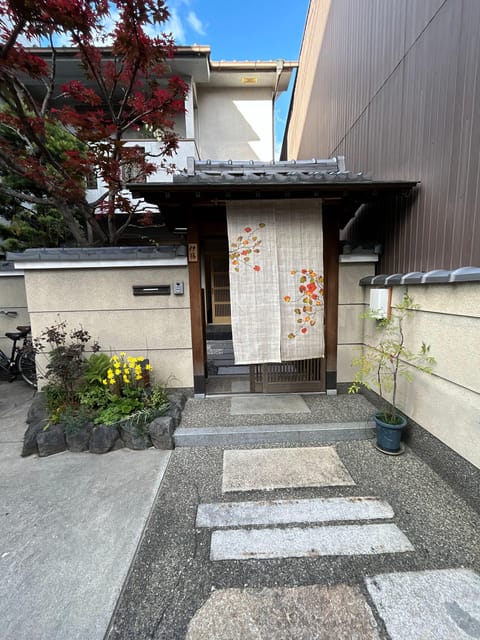
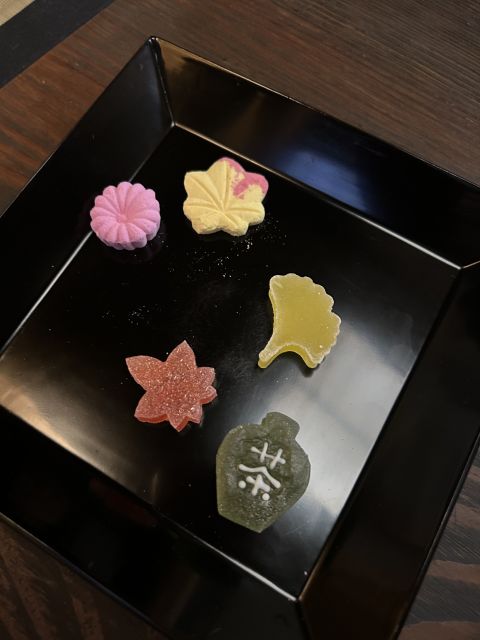
Two kinds of traditional dried Japanese sweets are served with the tea. They are made to order and selected with the season in mind.
These sweets are not simply snacks on the side. In a tea ceremony, the sweet taste prepares your palate for the bitterness of matcha. The contrast makes the tea easier to appreciate and gives the tasting a clear rhythm.
The seasonal element is another reason this is more than a generic green tea demonstration. Japanese hospitality pays attention to the time of year, and the sweets help connect the ceremony to that idea. The exact designs and flavors can vary, so you should not expect one fixed menu.
If you have food restrictions, tell the provider when booking. The experience accommodates vegan, halal, LGBTQ, and various allergy needs. The supplied information does not specify every ingredient or substitution, so it is sensible to ask for confirmation before arrival.
One hour is enough for an introduction, but not a full course
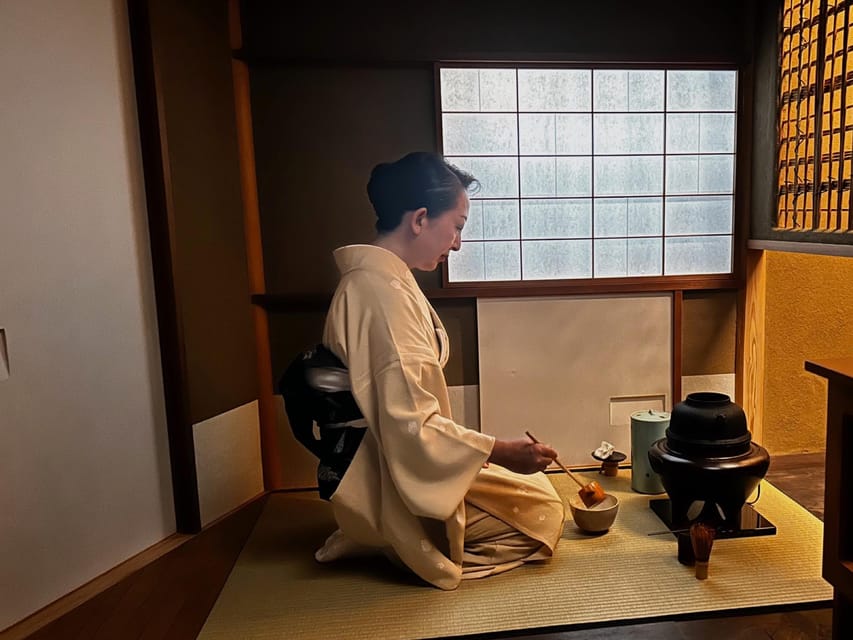
The schedule lasts one hour from start to finish. In that time, you receive an introduction to the ceremony, learn about the tools, watch a demonstration, prepare matcha, drink tea, enjoy sweets, and ask questions.
That makes the experience easy to add to a busy Kyoto day. You can combine it with Nijo Castle, the Kyoto Imperial Palace, or other central sights without giving up half a day.
The short length also creates the main limitation. You will cover many subjects quickly. If you want a long meditation session, advanced whisking practice, or a detailed study of tea schools, this will feel brief.
The timing at the end may require attention. One booking found the last part rushed because another appointment was arriving. I would come ready to start on time and avoid scheduling a tight connection immediately afterward. A few extra minutes of breathing room will help you enjoy the final questions rather than watching the clock.
What to wear and how to behave in the room
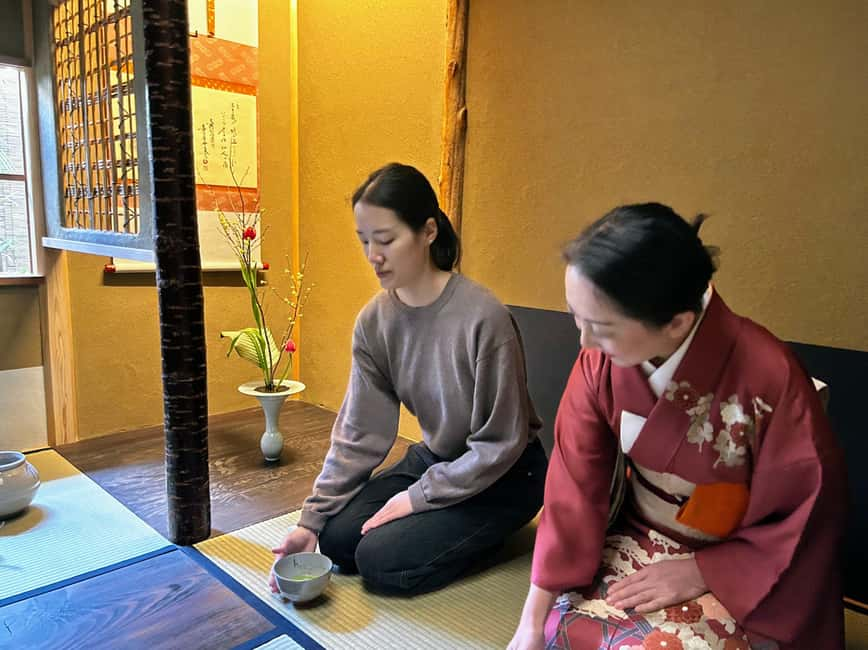
The clothing rules are practical, not decorative. Wear:
- Long trousers or a long skirt
- Clean socks
- Comfortable clothes that allow you to sit and move carefully
Do not wear shorts, short skirts, sleeveless shirts, hats, or strong perfume. Jewelry is not allowed, and shoes stay outside. Smoking and vaping are prohibited, as are alcohol and drugs.
Video and audio recording are not allowed. That may disappoint anyone hoping to document every movement, but it keeps the room quiet and protects the concentration of the ceremony. You can focus on what is happening instead of managing a phone.
Children under 13 are not accepted. The experience is wheelchair accessible, but the supplied information does not describe the precise layout or seating arrangement. If you use a wheelchair, contact the provider in advance to confirm the details that matter for your visit.
Is $101 a fair price for one hour?
At $101 per person, this is not the cheapest way to drink matcha in Kyoto. You can find casual tea tastings at a lower price. The comparison changes when you consider what is included here.
You receive a private setting, a certified tea master, instruction in English or Japanese, two cups of Uji matcha, two kinds of traditional sweets, a demonstration, hands-on preparation, cultural background, and a certificate from the tea master. The private format is particularly useful for couples, families with older children, or small groups who want to ask questions without holding up a larger class.
The value depends on your goal. If you only want a quick taste of green tea, the price will feel high for an hour. If you want to understand why the ceremony works as it does and take part in the preparation, the cost is easier to justify.
I would also consider the location. A short walk from Nijo Castle saves transport time and lets you connect the lesson with a day of central Kyoto sightseeing. That convenience is useful when your schedule is full.
Who will enjoy this Kyoto tea ceremony?
I would recommend it most strongly to first-time visitors who want a clear introduction to Japanese tea culture. The teacher explains basic terms and etiquette without assuming prior knowledge, and the hands-on section gives you something to remember beyond photographs.
It also suits anyone who prefers a private activity over a large class. The calm room, direct instruction, and chance to ask questions make this a good fit for couples, small groups, and solo visitors who want personal attention.
People with dietary or accessibility needs may find the stated accommodations helpful, but I would confirm the details before booking. The same applies to anyone who cannot sit or move comfortably in a traditional tea-room setting.
I would not choose it for children under 13, advanced students seeking a lengthy technical course, or anyone who dislikes strict indoor rules. The no-shoes, no-perfume, no-recording, and long-clothing requirements are part of the experience, but they need to suit your travel style.
Should you book it?
Book this experience if you want more than a quick cup of matcha and prefer a personal lesson near Nijo Castle. The strongest reasons are the local-home setting, the certified instruction, the Uji tea, and the chance to whisk matcha yourself.
Skip it if you want a long, unhurried ceremony or a flexible drop-in activity. One hour passes quickly, and the final questions may feel compressed if another appointment follows.
For most first-time visitors who can follow the clothing and conduct rules, I see this as a useful and well-located introduction to one of Kyoto’s most carefully practiced traditions. Arrive in socks, leave the perfume at your hotel, and give yourself a little time before and after the session.
FAQ
Where does the tea ceremony take place?
It takes place at Sakura Japanese Culture Experience, in a local home near Nijo Castle and the Kyoto Imperial Palace.
How long does the experience last?
The tea ceremony lasts one hour.
How far is the meeting point from Nijo Castle?
The meeting point is about three minutes on foot from Nijo Castle.
What languages are available?
Instruction is available in English and Japanese.
How many cups of matcha are included?
Two cups of matcha are included.
Are Japanese sweets included?
Yes. The experience includes two kinds of traditional Japanese dried sweets.
What should I wear?
Wear comfortable clothing, long trousers or a long skirt, and socks.
Are children allowed?
Children under 13 are not suitable for this experience.
Is the activity wheelchair accessible?
Yes, the activity is listed as wheelchair accessible.
Can I cancel for a full refund?
You can cancel up to 24 hours in advance for a full refund.
Newest Kyoto experiences on the site
- Treasures of Kyoto: Gion & historical Walking Tour★ 5.0 · 6 reviews
- Whisk Your Own Matcha: A Zen Matcha Experience at Temple★ 3.6 · 7 reviews
- Kyoto tea town for matcha lovers★ 5.0 · 16 reviews
- Uji: Private immersion into Kyoto’s tea and reglious culture★ 5.0 · 17 reviews
- Kyoto Matcha Green Tea Tour★ 4.5 · 23 reviews
- Uji and Wazuka Matcha Farm Half Day Private Guided Tour★ 5.0 · 21 reviews
- Utilising upcycled Matcha! Creating matcha incense (Uji, Kyoto)★ 5.0 · 6 reviews
- Sacred Temple Yoga Experience in Japan★ 5.0 · 3 reviews
Kyoto Tea Ceremonies, compared.
Tea Ceremony in a Traditional Tea House in Kiyomizu
Read our review →
Tea Ceremony in 100-year-old Kyo-Machiya Townhouse
Read our review →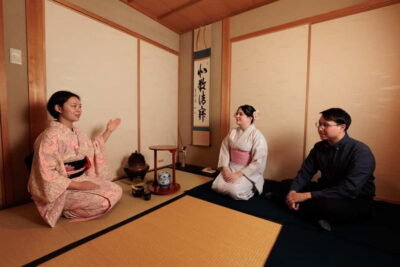
Browse the lists this tour appears in