
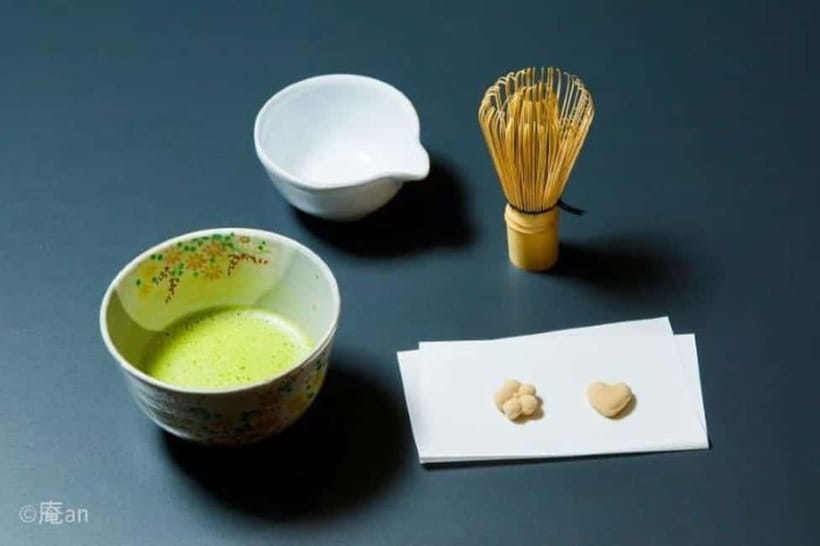
Reviewed · KYOTO TEA CEREMONIES
Traditional Tea Ceremony Experience in Kyoto
Kyoto’s tea ceremony is presented here in a compact, approachable format. You’ll watch a Japanese tea instructor prepare single-origin matcha, learn what the movements and tools mean, and then enjoy the tea with a traditional ohigashi sweet. I like the clear focus: this is a short cultural lesson, not a long formal ritual.
I also like the easy Gojo Station location and the fact that you sit at tables and chairs rather than on the floor. The price is very low for Kyoto, but the tradeoff is equally clear: the session lasts about 30 minutes, and explanations may be brief or harder to hear when the room is crowded.
Key points at a glance
- Single-origin matcha: Watch how the tea is made, then taste a particularly rich cup of matcha.
- Ohigashi included: A Japanese dried sweet is served with the tea to balance its bitter edge.
- 30 minutes near Gojo Station: This fits neatly between sightseeing stops in central Kyoto.
- Table seating: You do not need to sit in the traditional kneeling position.
- Japanese-led instruction: English translation is available as much as possible if requested in advance.
- Low-cost introduction: At $7 per person, this is an inexpensive way to try a Kyoto tea ceremony, though the lesson is short.
What this Kyoto tea ceremony actually offers
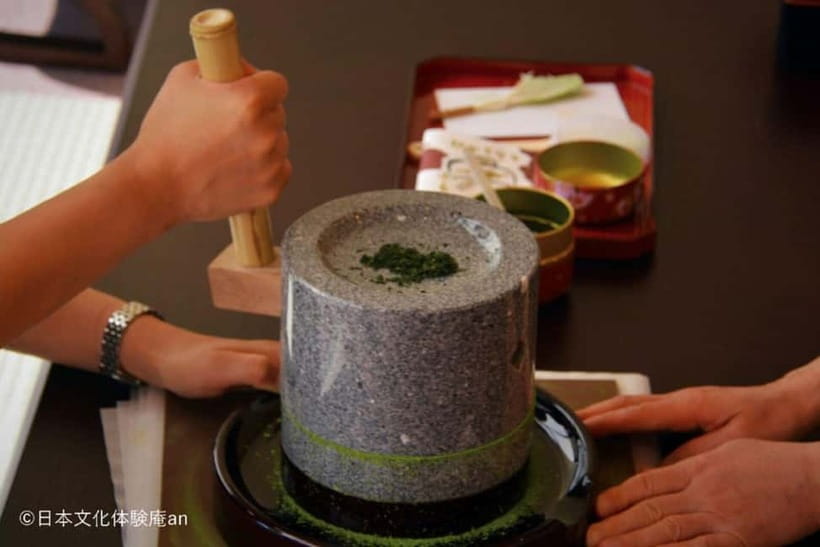
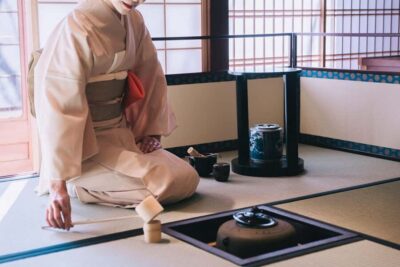
This experience gives you a short introduction to ote-mae, the Japanese tea ceremony procedure. The point is not simply to drink powdered green tea. You watch the preparation, learn about the purpose of the movements and utensils, and take part in the final tasting.
That distinction matters. If you want a full, highly formal tea ceremony with a long presentation on Japanese aesthetics, this session may feel limited. If you want a first look at the custom without giving up half a day, the format makes sense.
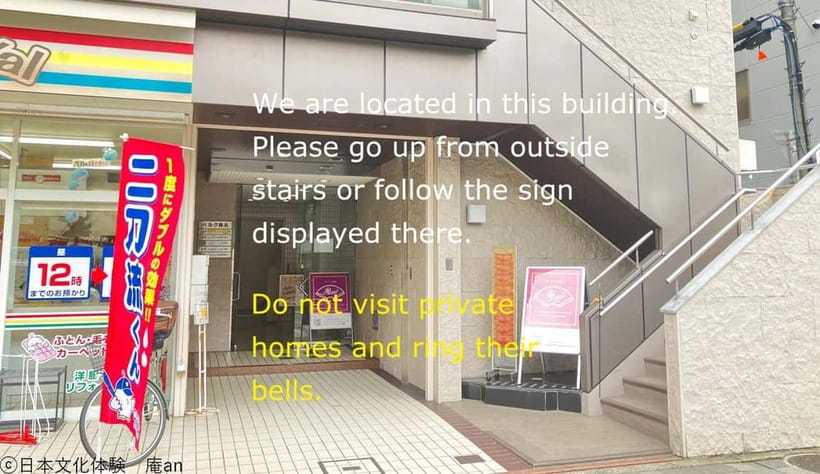
The activity takes place in Kyoto, the former capital of Japan and a city closely linked with the development of tea culture. You will not need to travel to a remote temple or traditional garden. The venue is just a one-minute walk from Exit 1 of Gojo Station on the Karasuma Subway Line, with the entrance facing Gojo-dori.
The instructor teaches in Japanese. English translation is provided as much as possible, but you should contact the operator if you need English support. One session included explanations in both English and Korean, so the exact language mix can vary. Ask about language help when you book rather than assuming the full presentation will be in English.
More tea ceremonies in Kyoto:
- Kyoto: Tea Ceremony in a Traditional Tea House in Kiyomizu
★ 4.9 · 3,519 reviews - Kyoto: Tea Ceremony Ju-An at Jotokuji Temple
★ 4.9 · 3,207 reviews - Kyoto: 45-Minute Tea Ceremony Lesson Experience
★ 4.3 · 2,378 reviews
Watching matcha become tea
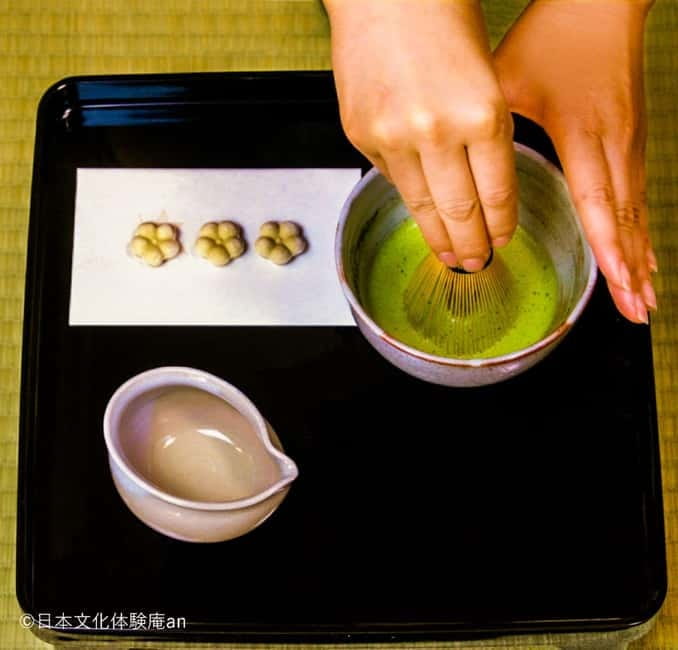
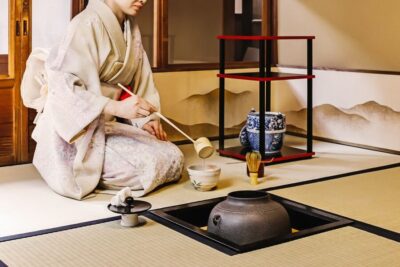
The central part of the session is the preparation of matcha. You see the powdered tea combined with hot water and whisked into a drinkable form. This sounds simple, but the ceremony gives that small act a set order and meaning.
The instructor explains the purpose of each movement, utensil, and step as far as time and language allow. You gain a basic sense of why the ceremony is conducted with such care. The lesson can also cover tea etiquette and the do’s and don’ts of taking part.
The word single-origin is worth noting. This is not just an unspecified cup of green tea. The experience promises a single-origin matcha, giving you a chance to notice the tea itself rather than treating it as a prop in a cultural demonstration.
You should expect a strong, concentrated flavor. One tasting described the matcha as very rich. If you normally drink sweetened tea, the grassy bitterness may surprise you, but the ohigashi helps soften the experience.
The ohigashi sweet has a practical role
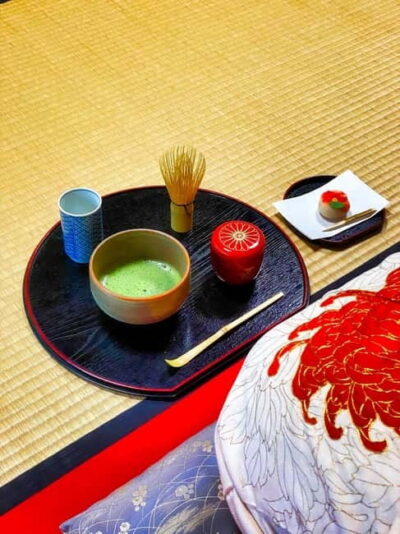
The Japanese dried sweet served with the tea is called ohigashi. It is not merely a small snack added to the booking. In a tea setting, the sweetness gives your palate a useful contrast before you drink the matcha.
The sweet also helps explain why Japanese tea ceremony treats are often delicate and restrained. The focus stays on the tea, while the confection adds just enough sweetness to make the bitter matcha easier to appreciate.
The provided details do not specify the exact flavor, shape, or ingredients of the ohigashi. You should therefore think of it as a traditional accompaniment rather than expect a particular confection.
A short session with a calm pace
The scheduled duration is 30 minutes. In practice, the activity itself may run closer to 25 minutes, with roughly half of one session devoted to English and Korean explanation. That leaves enough time for a demonstration and tasting, but not for a long discussion.
I see this short length as both the main strength and the main limit. It works well if you are building a busy Kyoto day around Gojo, Kyoto Station, or nearby central sights. You can fit it into a morning or afternoon plan without rearranging your entire schedule.
You should not book it expecting a detailed lecture on the origins of matcha, its place in Japanese society, or the different settings in which tea is served. The core information may stay at a basic level, such as adding hot water and mixing. For some people, that is exactly right. For others, it will feel too thin.
The calm atmosphere can still make the half hour worthwhile. One participant described the session as educational and calming, which captures the appeal of a short tea break in a busy city. The activity asks you to slow down, watch carefully, and follow a set of quiet actions.
A few more Kyoto tours worth putting on the shortlist
- PERFECT KYOTO 1-Day Bus Tour
★ 5.0 · 13,518 reviews - Kyoto: Fushimi Inari, Kinkakuji, Bamboo Grove 1 Day Bus Tour
★ 4.8 · 4,316 reviews - Kyoto Geisha Walking Tour: Gion District & Hidden Gems
★ 4.7 · 3,273 reviews - Kyoto: Gion Magical Night Walking Tour with Geisha Trivia
★ 4.9 · 2,393 reviews
Table seating makes the experience easier
You will sit at tables and chairs. This is a useful detail for anyone who finds traditional floor seating uncomfortable or difficult.
A formal tea ceremony can involve kneeling or sitting on the floor for an extended period. That is not the arrangement here. The chair seating makes this experience more accessible to a wider range of people, and it keeps the focus on the demonstration instead of on managing an unfamiliar sitting position.
The building itself has no elevator, however. You need to use stairs to reach the venue. The activity is described as wheelchair accessible, but the lack of an elevator is an important point to clarify before booking. If you use a wheelchair or have trouble with stairs, contact the operator in advance so you understand how access works at the specific venue.
The room can also become crowded. In that setting, hearing the instructor may be difficult. Sitting close to the demonstration area, arriving on time, and requesting language support beforehand may help, but the available information does not promise a private session or individual audio assistance.
Why the Gojo location works well
The meeting point is near Gojo Station on the Karasuma Line. From Exit 1, the walk takes about one minute. The entrance faces the main road, Gojo-dori, which should make it easier to identify than a venue tucked into a small side street.
This is a practical choice for a short activity. You do not lose much sightseeing time getting there, and the subway connection makes the location simple to reach within Kyoto. Check the exact starting time when you reserve, since the duration is fixed at 30 minutes and late arrivals cannot be accommodated.
The no-delay rule is strict. The event will not be held for people who arrive late, regardless of the reason. Build in extra time for finding Exit 1, crossing the street, and locating the entrance. A cheap booking can become poor value if you miss it because of a delayed train or a wrong turn.
The operating hours are 10:00 to 17:00. Reservations received after 17:00 are processed the next day. That detail matters if you are trying to arrange a last-minute morning visit.
Is $7 a good value?
At $7 per person, this is one of the less expensive ways to add a Japanese cultural activity to a Kyoto itinerary. You receive the tea ceremony procedure, a demonstration of matcha preparation, single-origin matcha, and an ohigashi sweet.
The value is strongest if you judge the experience as a brief introduction. You pay little, spend only half an hour, and leave with a better understanding of the basic ritual. It can be a sensible choice for first-time visitors who want to try matcha without committing to a more expensive or formal program.
The value is weaker if you are mainly paying for depth. The short schedule leaves limited room for questions, cultural background, or a detailed account of how tea ceremony developed and when matcha is traditionally served. The extra certificate costs 300 JPY, so add that only if you want a small souvenir of participation.
The overall rating is 4.3 from 64 reviews, with especially strong approval for the educational and calming nature of the activity. The lower scores focus on brevity, basic explanations, crowding, and sound levels rather than on the tea itself.
Who should book this experience?
I would recommend it to you if you want a simple cultural stop that is:
- Short enough to fit into a packed Kyoto schedule
- Inexpensive compared with many organized cultural activities
- Suitable for people who prefer chairs to floor seating
- Focused on seeing and tasting matcha rather than preparing a full meal
- Appropriate for a first introduction to Japanese tea ceremony
Families may also find the format manageable. Children under two who sit on a parent’s lap are free, while other children need the applicable booking arrangement. The short session may be easier for young children than a longer formal ceremony, though the operator does not promise a child-focused presentation.
I would think twice if you want a long, academic explanation or a private, highly traditional setting. You may also want another option if full English instruction is essential and you cannot confirm language support in advance.
Planning the visit without stress
Reserve a time that gives you a little room before and after the session. Since the activity will not wait for late arrivals, do not plan to arrive at Gojo Station at the exact starting minute.
The provider offers free cancellation up to 24 hours in advance for a full refund. After that point, cancellation fees apply, and changing the date or time after a fee has been incurred can bring another specified charge. The cutoff is handled by the provider’s operating schedule, with requests after 17:00 treated as the next day.
You should also know that the operator does not cover your transport costs if you cancel or miss the activity. Only people taking part may enter, so companions who are not booked should not expect to sit in the room.
The reserve-now, pay-later option can help if your Kyoto schedule is still changing. It lets you hold a place without paying immediately, but you still need to read the cancellation terms before confirming.
Should you book the Gojo tea ceremony?
Book it if you want a low-cost, 30-minute introduction to Kyoto tea culture, especially if you value a convenient subway location, chair seating, and a real taste of single-origin matcha with an ohigashi sweet.
Skip it if you want an extended ceremony, detailed cultural study, or guaranteed full-English instruction. The best way to approach this activity is as a compact first encounter. Keep your expectations modest, arrive early, request translation support, and you should get a pleasant pause in the middle of your Kyoto sightseeing day.
FAQ
Where is the tea ceremony held?
It is one minute from Exit 1 of Gojo Station on the Karasuma Subway Line. The entrance faces Gojo-dori.
How long does the experience last?
The scheduled duration is 30 minutes. One session was reported to last about 25 minutes.
What kind of tea is served?
You receive single-origin matcha. The activity includes a demonstration of how matcha is made.
Is food included?
Yes. An ohigashi, a Japanese dried sweet, is served with the matcha.
Do I sit on the floor?
No. Participants sit at tables and chairs.
What language is the experience in?
The instructor teaches in Japanese. English translation is provided as much as possible if requested, and you should contact the operator about language support.
Is the venue wheelchair accessible?
The activity is described as wheelchair accessible, but the building has no elevator and stairs are required to reach each venue. Contact the operator before booking if this affects you.
What are the operating hours?
The operating hours are 10:00 to 17:00. Reservations received after 17:00 are processed the next day.
Can I cancel for a full refund?
You can cancel up to 24 hours in advance for a full refund. Cancellation fees apply after that point.
Is a certificate included?
No. An experience completion certificate is available for an additional 300 JPY.
Newest Kyoto experiences on the site
- Treasures of Kyoto: Gion & historical Walking Tour★ 5.0 · 6 reviews
- Whisk Your Own Matcha: A Zen Matcha Experience at Temple★ 3.6 · 7 reviews
- Kyoto tea town for matcha lovers★ 5.0 · 16 reviews
- Uji: Private immersion into Kyoto’s tea and reglious culture★ 5.0 · 17 reviews
- Kyoto Matcha Green Tea Tour★ 4.5 · 23 reviews
- Uji and Wazuka Matcha Farm Half Day Private Guided Tour★ 5.0 · 21 reviews
- Utilising upcycled Matcha! Creating matcha incense (Uji, Kyoto)★ 5.0 · 6 reviews
- Sacred Temple Yoga Experience in Japan★ 5.0 · 3 reviews
Kyoto Tea Ceremonies, compared.
Tea Ceremony in a Traditional Tea House in Kiyomizu
Read our review →
Tea Ceremony in 100-year-old Kyo-Machiya Townhouse
Read our review →
Browse the lists this tour appears in