
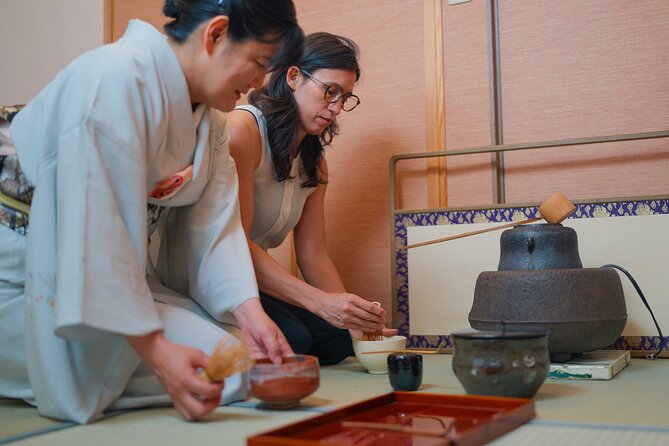
Reviewed · KYOTO TEA CEREMONIES
Kyoto: Authentic Tea Ceremony in a Small Group
The best part of this small-group tea ceremony is its sense of care. You enter a quiet tea room in Uzumasa, put on a traditional haori, watch the graceful Urasenke procedure, and learn why the garden, utensils, sweets, and tea all matter. I especially like the refined setting and the chance to whisk your own bowl of matcha.
I also like the focus on quality. The sweets come from a long-established Kyoto wagashi shop, and the matcha is selected from Marukyu Koyamaen, a respected tea producer. The main consideration is the price: $586.38 per group of up to six is good value for a full group, but expensive for one or two people.
Key points
- Private setting: Only your group participates, with a maximum of six people.
- One-hour format: A compact cultural activity that fits neatly into a Kyoto sightseeing day.
- Premium pairing: Kyoto wagashi is served with carefully selected Marukyu Koyamaen matcha.
- Hands-on tea making: After watching the host, you whisk your own bowl of matcha.
- Traditional details: You wear a haori, view a miniature garden, and learn about tea utensils.
- Uzumasa location: The tea room is near public transportation, away from Kyoto’s busiest visitor zones.
A quiet tea room in historic Uzumasa
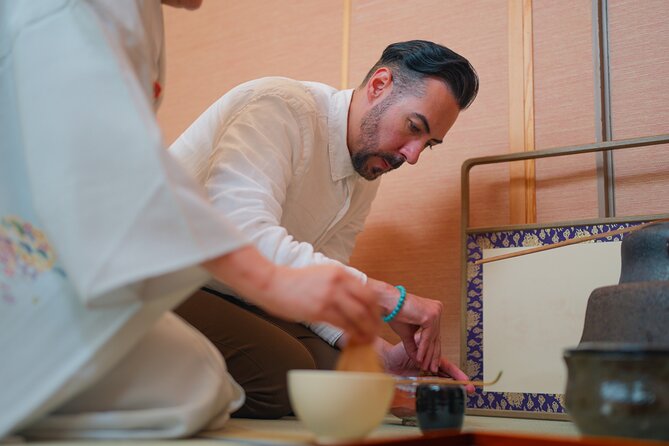
Kyoto tea ceremonies can range from quick demonstrations for large groups to formal events with many rules. This experience takes a more personal route. Chanoyu The KYOTO Uzumasa is a private activity for your group only, with no more than six participants.
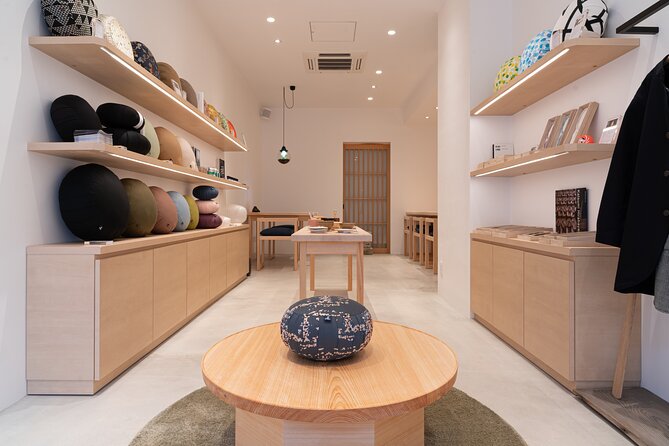
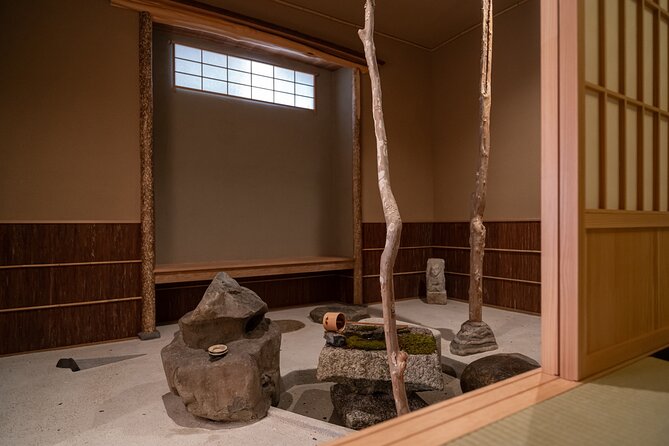
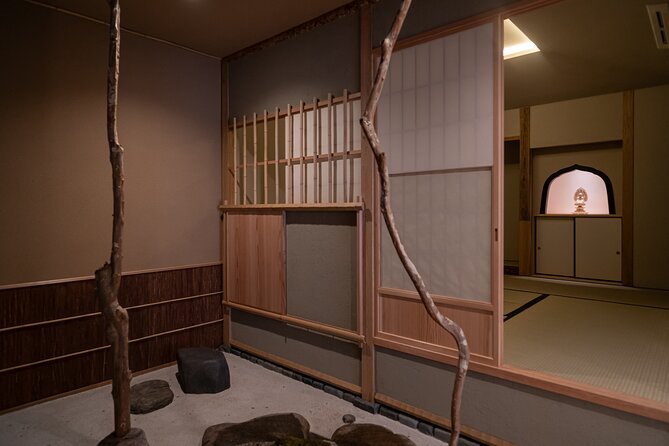
The setting is part of the experience. The tea room sits in Uzumasa, an area associated with Kyoto’s older cultural character and the refinement of the Heian period. Inside, the polished interior leads to a carefully arranged garden and a traditional tea room. You are not simply handed a cup of green tea at a counter. The space asks you to slow down and notice what has been placed in front of you.
That matters because chanoyu, the Japanese tea ceremony, is about more than drinking matcha. It is a form of hospitality built around preparation, attention, respect, and the relationship between host, visitor, season, room, utensils, sweets, and tea. In one hour, you will not master the full tradition, but you can begin to understand its logic.
The location is listed as Chanoyu The KYOTO Uzumasa, at 19 Kita, 1st floor, Uzumasa Izumishikibucho, Ukyo Ward, Kyoto 616-8101. The activity begins and ends there. Transportation is not included, so you need to make your own way to the meeting point. It is near public transportation, which keeps the visit fairly simple to add to your plans.
More tea ceremonies in Kyoto:
- Kyoto: Tea Ceremony in a Traditional Tea House in Kiyomizu
★ 4.9 · 3,519 reviews - Kyoto: Tea Ceremony Ju-An at Jotokuji Temple
★ 4.9 · 3,207 reviews - Kyoto: 45-Minute Tea Ceremony Lesson Experience
★ 4.3 · 2,378 reviews
Putting on a haori before the ceremony begins
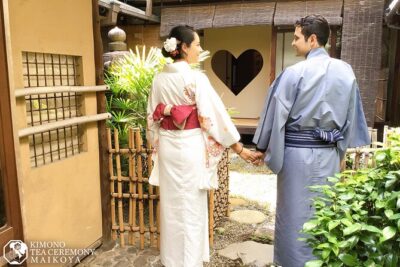
The experience starts with a small but memorable touch: you wear a traditional haori, a kimono-style jacket. This is not the same as dressing fully in a kimono, but it gives the occasion a clear sense of place and helps separate the tea ceremony from the rest of your sightseeing day.
I like this detail because it feels useful rather than theatrical. You are not being asked to spend hours changing clothes or learning formal dress rules. You simply put on a traditional garment and enter the tea room with a little more awareness of the setting.
The host then invites you to appreciate the garden. The garden is described as a meticulously designed miniature garden arranged within the tea room. Its small scale makes it part of the interior rather than a separate sightseeing stop. Look closely at how it contributes to the room’s mood and how the host uses it to frame the ceremony.
This is a good point to set your expectations. You are not visiting a large temple garden or a broad outdoor park. The garden is a carefully made feature within the tea-room environment. Its value comes from its design and placement, not from size.
Watching the Urasenke tea procedure
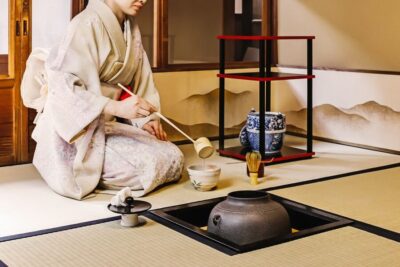
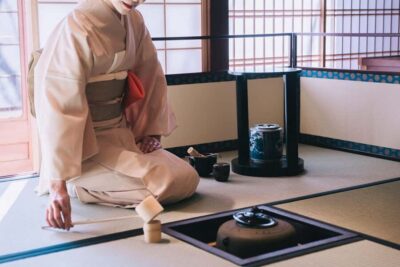
The next part is a demonstration of the Urasenke tea procedure. Urasenke is one of the major schools of Japanese tea, and the movements of the host are deliberate, calm, and ordered. You will see the preparation of matcha as a sequence rather than a hurried task.
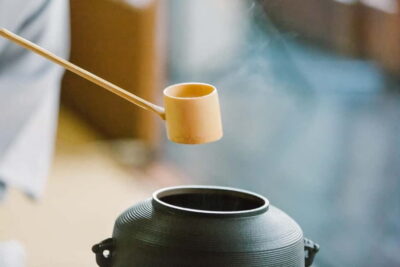
Pay attention to the small motions. The position of the bowl, the use of the whisk, the handling of the utensils, and the presentation of the tea all have a purpose. Even if you do not remember every term, the demonstration gives you a better sense of why a formal tea ceremony feels different from making powdered green tea at home.
The host also explains the history and culture behind chanoyu. The information is intended to be approachable, especially for first-time participants. You learn about the meaning of the utensils and the cultural ideas connected with the ceremony.
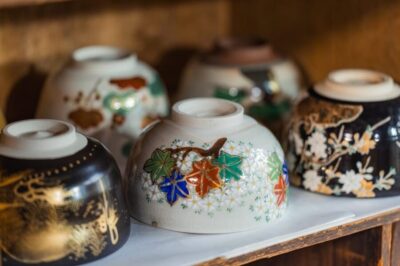
This explanation is one of the strongest reasons to choose this experience over a simple matcha tasting. You are given context for what you see. A bowl, scoop, whisk, or container is not treated as a random decorative object. Each item has a role in the room and in the preparation.
The time is still limited to about one hour, so expect an introduction rather than a complete course in tea studies. That short format is a benefit if you want a focused cultural activity. It is a limitation if you hope for a lengthy formal ceremony or advanced instruction.
Kyoto wagashi and carefully selected matcha
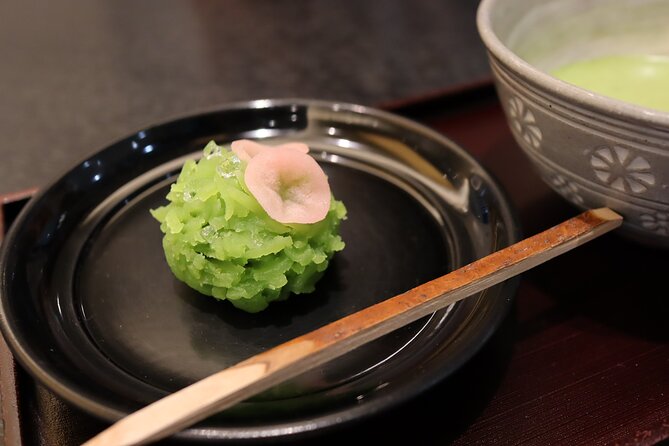
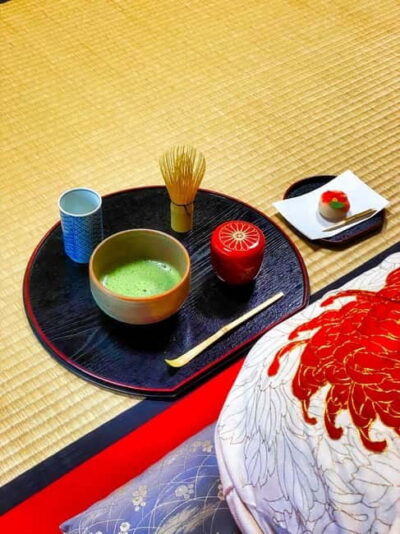
The food and tea receive unusual attention here. You are served traditional Kyoto sweets from a long-established wagashi shop, paired with matcha from Marukyu Koyamaen. Wagashi are Japanese confections designed to be appreciated for their flavor, appearance, and connection to the season or occasion.
The pairing is important. Traditional sweets are often served before matcha because their sweetness prepares your palate for the tea. The bitter, grassy edge of matcha tastes different after a small wagashi, and the contrast is part of the pleasure.
The quality of the matcha is a major selling point. The supplied information describes it as one of the finest selections from Marukyu Koyamaen, and the experience places it at the center rather than treating it as an afterthought. Several written comments praised the matcha as unusually smooth and delicious, including from people who had not previously enjoyed matcha.
Still, taste is personal. Matcha has a distinct flavor, and its bitterness may surprise you if you usually drink sweetened tea. The traditional sweets help balance it, but you should not expect a sugary latte or a mild cup of ordinary green tea.
You receive sweets and matcha during the demonstration, then enjoy a second traditional sweet with the bowl you prepare yourself. That two-part structure gives the hour a natural rhythm. First, you watch and taste. Then, you take part.
A few more Kyoto tours worth putting on the shortlist
- PERFECT KYOTO 1-Day Bus Tour
★ 5.0 · 13,518 reviews - Kyoto: Fushimi Inari, Kinkakuji, Bamboo Grove 1 Day Bus Tour
★ 4.8 · 4,316 reviews - Kyoto Geisha Walking Tour: Gion District & Hidden Gems
★ 4.7 · 3,273 reviews - Kyoto: Gion Magical Night Walking Tour with Geisha Trivia
★ 4.9 · 2,393 reviews
Whisking your own bowl of matcha
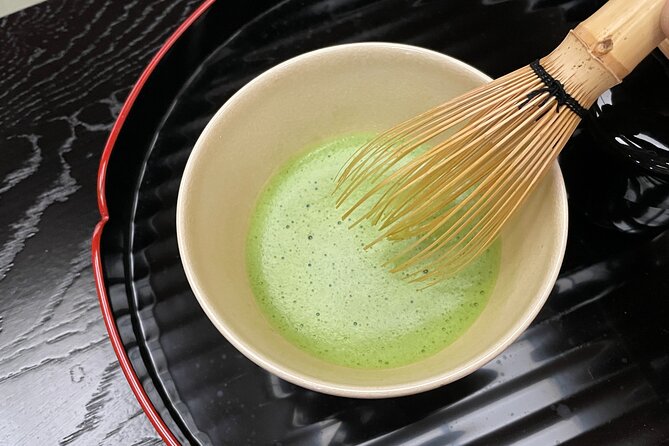
After observing the host, you are invited to whisk your own matcha. This is the most hands-on part of the experience and gives you something more lasting than a photograph.
The host introduces the equipment and shows you how it is used. You then prepare your own bowl and drink it with the second traditional sweet. The point is not to produce a perfect bowl on your first attempt. It is to understand the care involved in preparing tea and to feel the difference between watching the process and doing it.
I like this balance. The host performs the formal procedure, so you can watch the movements without pressure. You then have a chance to try the basic action yourself in a relaxed setting.
If you are shy about making a mistake, do not worry too much. The activity is presented as an introduction to chanoyu, not as an examination. The host’s explanation and guidance are central to the experience.
The hands-on section may be especially useful for families, couples, and friends who want to share an activity rather than sit quietly for the entire hour. It also gives children or first-time visitors a clear point of participation, though the provided information does not specify a minimum age.
Why the private group format matters
The maximum group size is six, and only your group takes part. That changes the feel of the activity. You do not have to compete with a large class for a view of the utensils or the demonstration.
A small group also makes it easier to ask about the tea, garden, sweets, or cultural customs. The available information does not identify the host by name, so you should not book this expecting a specific named instructor. The focus is on the host’s polite explanation and the setting itself.
The private format has a clear price tradeoff. The total cost is $586.38 per group. With six people, that works out to about $97.73 per person. For two people, it is about $293.19 each, and for one person, the full group rate applies.
That makes this experience most attractive if you are traveling with several friends or family members and want a private cultural activity. For a solo visitor or couple watching costs closely, a shared tea ceremony may offer better value, even if it cannot provide the same quiet, personal setting.
The one-hour length helps offset the price somewhat. You are paying for a carefully prepared room, quality ingredients, a private group, instruction, and a formal cultural setting rather than a long tour. If you value atmosphere and privacy, the cost may make sense. If you mainly want to sample matcha, it is likely more than you need.
What the atmosphere gets right
The strongest feature is the complete setting. The haori, miniature garden, tea room, utensils, sweets, and matcha work together. None of these elements alone would create a full tea ceremony, but together they make the hour feel intentional.
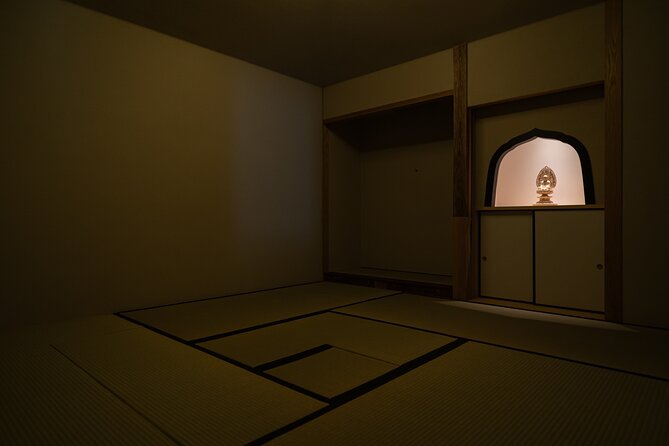
The interior is described as stylish and refined, with a carefully designed garden leading into an authentic tea room. The mood is quiet and removed from city noise. This can be a welcome pause after busy sightseeing in central Kyoto.
Do not confuse quiet with empty. There is a lot to notice. You can look at the garden, watch the preparation, listen to the cultural explanation, taste two sweets, and make your own tea. The ceremony gives you a reason to pay attention to details that are easy to miss in a fast-moving tour.
The polished atmosphere may also appeal to visitors seeking a special occasion. The experience is not framed as a casual workshop in a plain classroom. It is designed to feel refined, with high-quality tea tools and ingredients.
At the same time, the formal setting may not suit someone who wants a lively, social activity. The pace is calm, and the subject calls for quiet attention. If you prefer energetic group entertainment, this may feel too restrained.
Practical planning for your Kyoto day
Plan on about one hour at the tea room, plus the time needed to reach Uzumasa. Since the activity ends where it begins, you can continue sightseeing afterward without arranging a separate return transfer.
The exact meeting point is Chanoyu The KYOTO Uzumasa, 19 Kita, 1st floor, Uzumasa Izumishikibucho, Ukyo Ward. Keep the mobile ticket available and allow enough time to find the address. The experience is near public transportation, but transportation itself is not included.
The activity is confirmed at booking. Free cancellation is available if you cancel at least 24 hours before the start time. Cancellations made less than 24 hours in advance are not refunded, and changes inside that period are not accepted. The cutoff follows local Kyoto time.
Dress requirements are not provided, but you will wear a haori during the activity. Since this is a tea room rather than an outdoor excursion, the main preparation is simply arriving on time and ready to sit quietly, listen, taste, and participate.
If you have dietary restrictions, ask before booking because the experience includes traditional Kyoto sweets. The available details do not specify ingredient substitutions or allergy accommodations.
Who will appreciate this tea ceremony most
I would recommend this activity to you if you want more than a quick matcha sample. It suits people who care about Japanese design, traditional hospitality, fine sweets, and the meaning behind cultural rituals.
It is also a good choice for:
- A private family activity with a small group
- Couples looking for a quiet Kyoto experience
- Friends who want a shared hands-on cultural lesson
- First-time visitors who want clear explanations
- People who prefer quality and atmosphere over a low-cost tasting
You may want to choose another option if you are mainly interested in a long formal ceremony, a full kimono dressing session, or extensive time in a large garden. None of those are promised here. The experience is compact and focused on the tea room, its objects, its garden feature, and the preparation of matcha.
The one-hour format is especially useful on a packed Kyoto itinerary. You can fit it between other activities without giving up half a day. The tradeoff is that the experience introduces the Way of Tea rather than presenting every part of the tradition in full detail.
Should you book Chanoyu The KYOTO Uzumasa?
Book it if you want a polished, private introduction to chanoyu with excellent tea and sweets. The Marukyu Koyamaen matcha, Kyoto wagashi, elegant tea room, miniature garden, and chance to whisk your own bowl create a well-rounded hour.
The price is easiest to justify with four to six people. At full capacity, the cost per person becomes much more reasonable, and the private format lets your group enjoy the room without strangers. For one or two people, compare the cost with other Kyoto tea experiences before committing.
I would choose this for a quiet break from sightseeing, a first encounter with Japanese tea culture, or a special small-group occasion. I would skip it only if you want a cheaper tasting, a longer ceremony, or a broader tour of Kyoto’s temples and gardens.
FAQ
How long does the tea ceremony last?
The experience lasts approximately one hour.
Where does the activity take place?
It takes place at Chanoyu The KYOTO Uzumasa, 19 Kita, 1st floor, Uzumasa Izumishikibucho, Ukyo Ward, Kyoto 616-8101.
How many people can participate?
This is a private activity for your group, with up to six people.
Is transportation included?
No. Transportation is not included, though the meeting point is near public transportation.
What is included in the price?
The experience includes Kyoto sweets, premium matcha, a view of the miniature garden, wearing a traditional haori, an introduction to tea utensils, and an explanation of the history and cultural origins of chanoyu.
Can I cancel for a full refund?
Yes. You can cancel at least 24 hours before the start time for a full refund. Cancellations or changes made less than 24 hours before the start time are not accepted, and the cutoff uses local time.
Newest Kyoto experiences on the site
- Treasures of Kyoto: Gion & historical Walking Tour★ 5.0 · 6 reviews
- Whisk Your Own Matcha: A Zen Matcha Experience at Temple★ 3.6 · 7 reviews
- Kyoto tea town for matcha lovers★ 5.0 · 16 reviews
- Uji: Private immersion into Kyoto’s tea and reglious culture★ 5.0 · 17 reviews
- Kyoto Matcha Green Tea Tour★ 4.5 · 23 reviews
- Uji and Wazuka Matcha Farm Half Day Private Guided Tour★ 5.0 · 21 reviews
- Utilising upcycled Matcha! Creating matcha incense (Uji, Kyoto)★ 5.0 · 6 reviews
- Sacred Temple Yoga Experience in Japan★ 5.0 · 3 reviews
Kyoto Tea Ceremonies, compared.
Tea Ceremony in a Traditional Tea House in Kiyomizu
Read our review →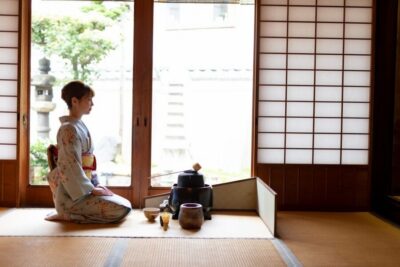
Tea Ceremony in 100-year-old Kyo-Machiya Townhouse
Read our review →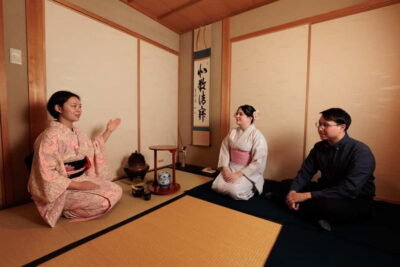
Browse the lists this tour appears in