
Reviewed · KYOTO TEA CEREMONIES
Tea Ceremony in 150 Years Old Townhouse with Tables and Chairs
The best part of this Kyoto activity is that you do not just watch a tea ceremony. You learn how to make matcha yourself, then drink what you prepared with two handmade seasonal sweets. The setting is a 150-year-old townhouse in Ninenzaka, one of Kyoto’s most atmospheric old streets.
I like the small-group format, which keeps the lesson personal even when the room is full. I also like the practical teaching: the tea master explains the utensils, etiquette, and rituals, while an English interpreter helps you follow each step. The main drawback is that the session can include up to 15 people, so it is a group class rather than a private ceremony.
Key details before you book
- Two cups of Uji matcha: You receive high-quality matcha from Uji, Kyoto, with tea prepared during the demonstration and your own hands-on preparation.
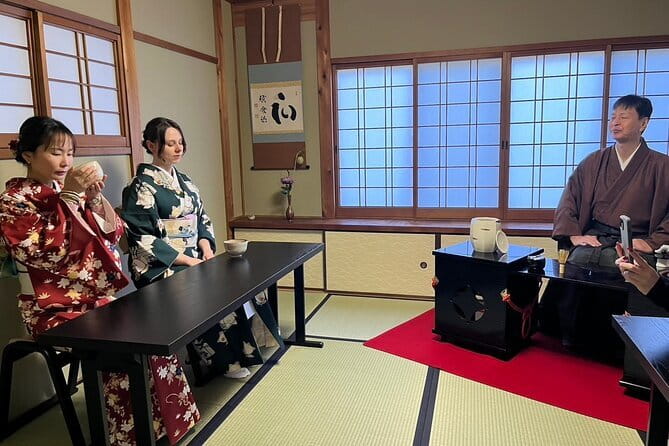
- A 150-year-old townhouse: The historic setting gives the lesson a genuine Kyoto feel, with a tea room and tables and chairs for a more approachable introduction.
- Two seasonal Japanese sweets: These are served with the tea and help explain the traditional balance between bitter matcha and delicate sweetness.
- English instruction every day: The tea master demonstrates the process, while an assistant or interpreter explains the details and answers questions.
- A 50-minute lesson: It fits neatly before or after sightseeing around Ninenzaka and nearby Sannenzaka.
- Respectful dress matters: Wear socks, avoid revealing clothing, and skip perfume, which can interfere with the aroma of the tea and incense.
Why this Ninenzaka tea ceremony works
Kyoto offers many polished cultural activities, but this one keeps its focus narrow. You come to understand matcha and the tea ceremony, not to fill an entire afternoon with unrelated crafts or sightseeing.
The setting helps. The activity takes place at Tea Ceremony and Cultural Experience Kangetsu Kyoto, at 349-19 Masuyacho in Higashiyama Ward. That address is in the Ninenzaka area, close to the old lanes and temples that make this part of Kyoto so popular. You finish at the same place, so there is no complicated transfer at the end.
I particularly like the balance between explanation and participation. The tea master first shows you what happens and explains why each movement matters. Then you make your own cup with the provided tools. That change from watching to doing makes the lesson easier to remember.
This is not a silent, formal ceremony where you are expected to know the rules already. The teaching is designed for first-time visitors. You can ask questions, learn the names and purpose of the utensils, and get a clearer sense of the manners that shape the ceremony.
More tea ceremonies in Kyoto:
- Kyoto: Tea Ceremony in a Traditional Tea House in Kiyomizu
★ 4.9 · 3,519 reviews - Kyoto: Tea Ceremony Ju-An at Jotokuji Temple
★ 4.9 · 3,207 reviews - Kyoto: 45-Minute Tea Ceremony Lesson Experience
★ 4.3 · 2,378 reviews
Entering a 150-year-old Kyoto townhouse
The old townhouse gives the session a sense of place that a modern hotel meeting room cannot match. You are not simply hearing a talk about Japanese tea in a generic classroom. You are learning inside a traditional building in one of Kyoto’s historic districts.
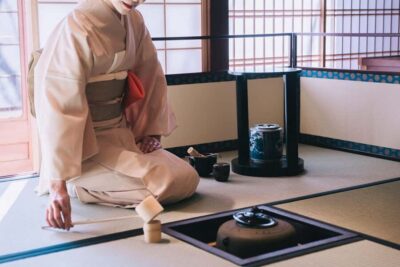
The activity uses a preparation room and a tea room. You may begin with the background and demonstration in the preparation area before moving to the tea room for sweets and tea. The setup includes tables and chairs, which makes the class easier for people who are not used to sitting on the floor for long periods.
That practical detail matters. Tea ceremony has formal traditions, but this introduction is meant to be accessible. The room remains intimate without requiring you to manage a highly rigid performance.
The maximum group size is 15 people. That is small enough for an instructor to demonstrate clearly, but it is not a private one-to-one booking. If you want complete quiet or individual attention, this format may feel busier than expected.
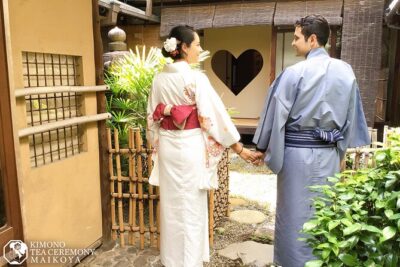
One important point deserves emphasis: book this as a group cultural lesson. A private ceremony and traditional clothing are not included. An optional two-piece kimono rental is available for 1,000 yen, but it is an add-on, not part of the base price.
What happens during the 50-minute lesson
The session begins with an introduction to Japanese tea culture. The tea master explains the background of matcha, the role of the tea room, and the basic etiquette you will use during the ceremony.
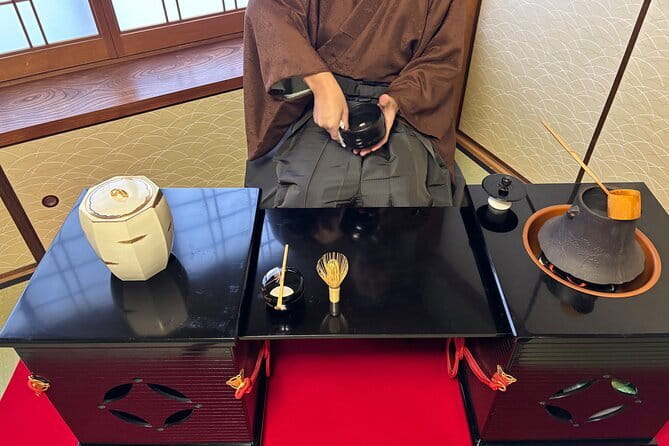
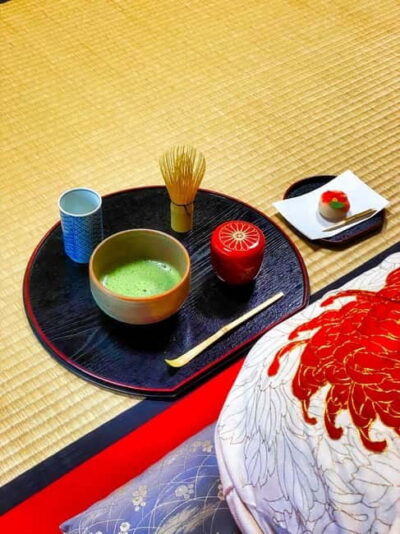
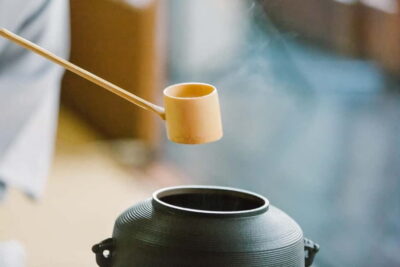
You then learn about the equipment. The bowl, whisk, scoop, and other utensils are not just props. Each has a place in the preparation process, and the instructor explains how they are handled. The English support is useful here, since small details can be easy to miss when a demonstration is conducted in Japanese.
Next comes the demonstration. Watch closely, because the movements are deliberate and the order matters. The instructor shows how to prepare a bowl of matcha and explains the purpose behind the steps rather than asking you to copy a routine without context.
Then it is your turn. You use the provided tools to prepare your own tea. This is the most valuable part for many first-time visitors because you leave with a skill you can repeat at home. Your whisking technique may not match the tea master’s on the first attempt, but that is part of the fun.
The activity includes two cups of high-quality matcha from Uji. One cup is connected to the instructor’s preparation and demonstration, while the hands-on portion gives you the chance to make your own. The exact order can vary, but the lesson is built around both watching and preparing.
The session ends with time for questions and traditional sweets. The two seasonal Japanese sweets are handcrafted and served with the tea. Their sweetness provides a clear contrast to matcha’s grassy, bitter flavor. If you usually add sugar or milk to tea, this pairing gives you a better idea of how matcha is traditionally enjoyed.
The tea master and English explanations
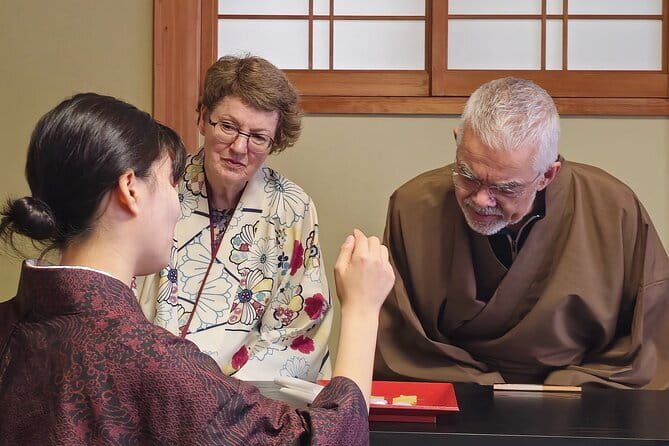
The teaching team includes a tea master and an English-speaking assistant or interpreter. The tea master leads the ceremony and demonstrates the preparation. The assistant explains the process in clear, step-by-step English and helps with questions.
That arrangement works well for an international audience. You get the authority of a trained tea instructor without being left to guess what is happening. Several parts of the ceremony can look mysterious if no one explains them, so the interpretation adds real value rather than simply translating a few words.
The instruction is also relaxed. You will learn the history and meaning of the practice, but the tone is not presented as a test. Families with children over seven have found the activity approachable, and older children can take part in making the tea.
The provider sets the minimum age at seven. Children under seven cannot participate. If you are booking for a family, make sure every child meets that rule before paying.
A few more Kyoto tours worth putting on the shortlist
- PERFECT KYOTO 1-Day Bus Tour
★ 5.0 · 13,518 reviews - Kyoto: Fushimi Inari, Kinkakuji, Bamboo Grove 1 Day Bus Tour
★ 4.8 · 4,316 reviews - Kyoto Geisha Walking Tour: Gion District & Hidden Gems
★ 4.7 · 3,273 reviews - Kyoto: Gion Magical Night Walking Tour with Geisha Trivia
★ 4.9 · 2,393 reviews
Why the sweets and Uji matcha matter
The food is modest but well chosen. You receive two different seasonal Japanese sweets, not a large snack spread. Their purpose is to accompany the tea and show how Japanese confectionery balances the flavor of matcha.
Uji, in southern Kyoto, is one of Japan’s best-known tea-producing areas. Using Uji matcha gives the class a local connection rather than serving an anonymous green tea powder. The activity also lets you buy high-quality matcha at the shop afterward if you want to continue the habit at home.
Do not expect a café-style drink. Matcha has a strong, vegetal taste and a fine texture. The ceremony teaches you to appreciate it as a carefully prepared tea, not as a sweet latte.
This is one reason the experience suits people who enjoy food and drink with a cultural story behind them. You get to taste the result, learn how the flavor is produced, and understand why the tea is paired with sweets.
What to wear and how to behave
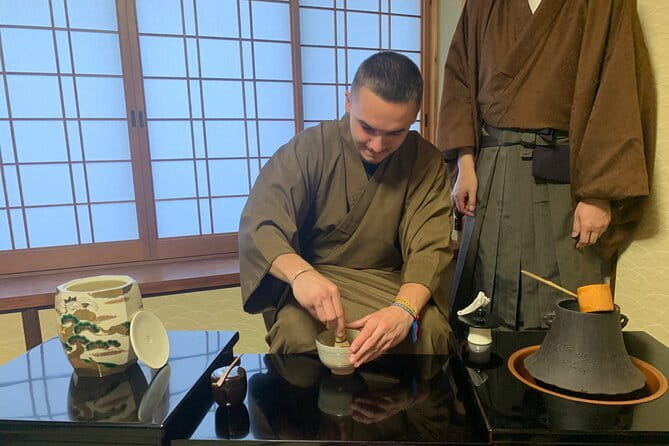
The dress rules are simple, but you should take them seriously. Wear socks. If you arrive without them, you will need to purchase a pair. Bare feet are not allowed in the tea room.
Choose clothing that does not expose too much skin. This is a formal cultural setting, even though the lesson is friendly and relaxed. A loose, comfortable outfit that allows easy movement is a sensible choice.
Do not wear perfume. Strong fragrance can interfere with the smell of incense and tea, which are part of the room’s atmosphere. This is not a minor preference. Scent is an important part of the ceremony, so perfume can affect the experience for everyone.
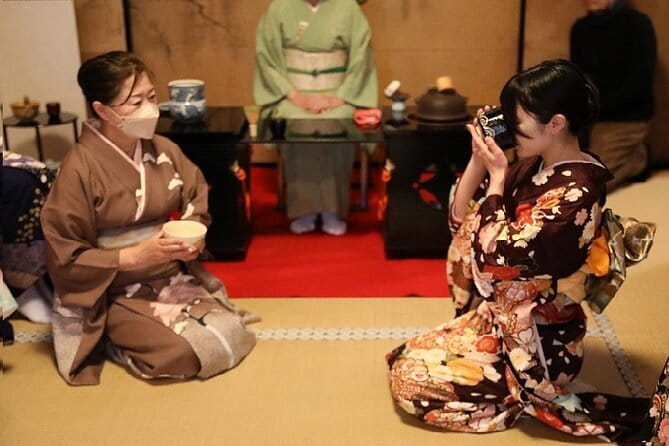
Only smartphones are allowed in the tea room. Video recording during the instructor’s demonstration is prohibited. You can take photographs where permitted, but plan to put the phone away while the tea master is teaching.
Arrive promptly. The session runs on a schedule, and a late arrival can interrupt the demonstration and inconvenience the group. Respectful behavior is especially important here because the ceremony values calm, attention, and consideration for others.
The Ninenzaka location and how to plan your day
The meeting point is in Ninenzaka, in Kyoto’s Higashiyama Ward. The activity begins and ends at the same address, and the site is near public transportation.
This location is easy to combine with a day around eastern Kyoto. You can schedule the tea ceremony near visits to Sannenzaka and Ninenzaka, then continue to other nearby sights. The old streets can be crowded at popular times, so leave enough time to find the townhouse rather than arriving at the last minute.
The provider sends location information by text, which helps with finding the entrance. Still, Kyoto’s historic lanes can be confusing, especially if you are navigating by a phone while sightseeing. Save the address before you leave your hotel and allow extra time.
The 50-minute length is a strength. It gives you a real introduction without taking over the day. You can fit it between temple visits, shopping, or a meal in Higashiyama.
The trade-off is that the short format cannot cover every aspect of tea ceremony. You get an engaging introduction, not a full study of the many schools, forms, and seasonal practices of Japanese tea.
Is $28.90 good value?
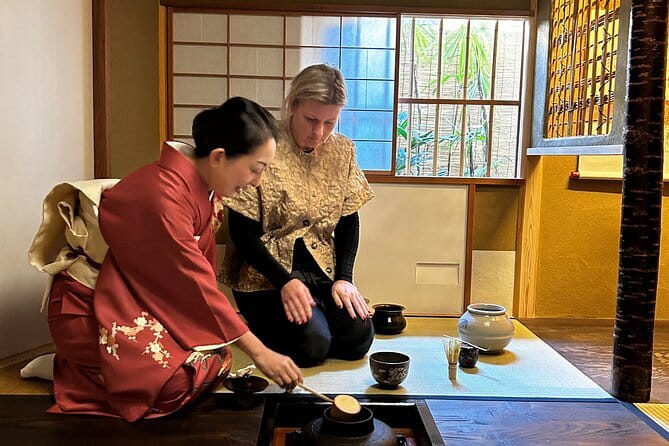
At $28.90 per person, the price is reasonable for Kyoto, especially because it includes the lesson, all taxes and fees, the use of tea-making tools, two cups of Uji matcha, and two seasonal sweets.
You are paying for instruction as much as for the tea. A simple bowl of matcha elsewhere may cost less, but it will not necessarily explain the etiquette, utensils, gestures, and cultural meaning behind it. Here, the hands-on section gives the price a practical benefit.
The small-group format also helps the value. With up to 15 people, you are not buying a private masterclass, but the assistant can help make the English explanations clear and the tea master’s demonstration visible.
The kimono option costs an additional 1,000 yen for the two-piece style. It may appeal if you want photographs in traditional clothing, but you do not need it to take part. I would treat it as an optional extra, not a reason to choose the activity.
Water, soft drinks, and alcohol are not included. That is hardly a problem for a 50-minute tea lesson, but bring your own plan if you need a drink beyond the matcha.
The main drawbacks to consider
The largest limitation is the group format. One session had a delay caused by a previous group arriving late, which affected the schedule and frustrated people who had arrived on time. Arriving promptly helps, but you cannot control the behavior of everyone else in the room.
You should also check the booking description carefully if you are comparing this with private tea ceremonies. This activity is a group session, and traditional clothing is optional rather than included. Confusing those details can lead to disappointment.
The atmosphere depends partly on the other people in your group. The ceremony works best when everyone listens, limits phone use, and treats the room with respect. If you want a completely quiet or highly formal event, a private option may suit you better.
The weather policy is also worth noting. If the activity is canceled because of poor weather, you are offered another date or a full refund. You can cancel for a full refund up to 24 hours before the start time. Changes or cancellations within 24 hours are not accepted for a refund.
Who should book this Kyoto tea ceremony?
I would choose this activity if you want a clear, friendly introduction to Japanese tea culture and you prefer to take part rather than watch from the side.
It suits:
- First-time visitors who want to understand matcha and tea etiquette
- Couples looking for a short cultural activity in Higashiyama
- Families with children aged seven and older
- People who enjoy Japanese food, tea, and traditional crafts
- Visitors who want English instruction and a hands-on lesson
- Anyone interested in wearing a kimono for an optional additional fee
I would look elsewhere if you require a private ceremony, a full kimono package, or a long formal sitting. I would also skip it if perfume, socks, or the phone restrictions are likely to be a problem.
Should you book it?
Yes, if you want a well-priced introduction with real participation. The combination of a historic townhouse, Uji matcha, seasonal sweets, clear English guidance, and your own chance to whisk tea gives you more than a quick photo stop.
Book with the right expectations. This is a 50-minute group lesson for up to 15 people, not a private ceremonial performance. Arrive on time, wear socks, leave perfume at the hotel, and treat the room with care. Do that, and this small slice of Kyoto tradition can become one of the more memorable stops in your Ninenzaka day.
FAQ
How long does the tea ceremony last?
The activity lasts approximately 50 minutes.
Where does the activity take place?
It takes place at Tea Ceremony and Cultural Experience Kangetsu Kyoto, at 349-19 Masuyacho, Higashiyama Ward, Kyoto, 605-0826, Japan, in the Ninenzaka area.
Where does the activity end?
The session ends back at the meeting point.
Is the experience offered in English?
Yes. English experiences are provided every day, with the tea master’s demonstration supported by an English-speaking assistant or interpreter.
How many people can join the session?
The activity has a maximum group size of 15 people.
How much matcha is included?
The activity includes two cups of high-quality matcha from Uji in Kyoto.
Are Japanese sweets included?
Yes. You receive two different seasonal Japanese sweets with the tea.
Do I need to wear socks?
Yes. Socks are required in the tea room. If you forget them, you must purchase socks before participating.
Can I wear a kimono?
A kimono is not included in the base price, but you can rent a two-piece kimono for 1,000 yen.
Newest Kyoto experiences on the site
- Treasures of Kyoto: Gion & historical Walking Tour★ 5.0 · 6 reviews
- Whisk Your Own Matcha: A Zen Matcha Experience at Temple★ 3.6 · 7 reviews
- Kyoto tea town for matcha lovers★ 5.0 · 16 reviews
- Uji: Private immersion into Kyoto’s tea and reglious culture★ 5.0 · 17 reviews
- Kyoto Matcha Green Tea Tour★ 4.5 · 23 reviews
- Uji and Wazuka Matcha Farm Half Day Private Guided Tour★ 5.0 · 21 reviews
- Utilising upcycled Matcha! Creating matcha incense (Uji, Kyoto)★ 5.0 · 6 reviews
- Sacred Temple Yoga Experience in Japan★ 5.0 · 3 reviews
Kyoto Tea Ceremonies, compared.
Tea Ceremony in a Traditional Tea House in Kiyomizu
Read our review →
Tea Ceremony in 100-year-old Kyo-Machiya Townhouse
Read our review →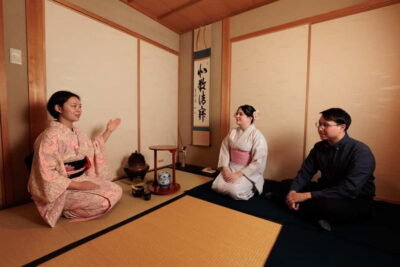
Browse the lists this tour appears in