
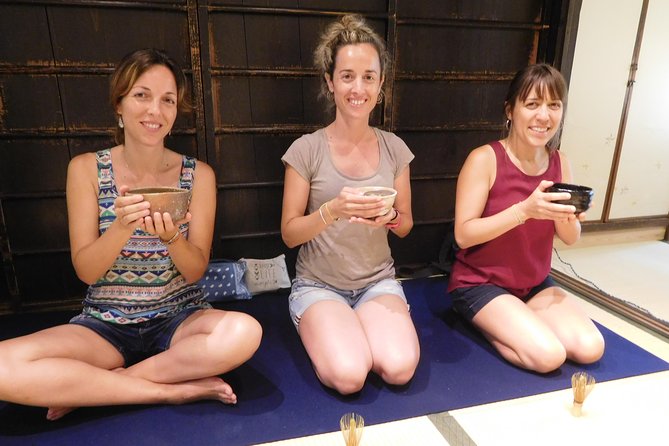
Reviewed · KYOTO TEA CEREMONIES
Tea Ceremony Experience in Traditional Kyoto Townhouse
The most appealing part of this Kyoto tea experience is the setting: you step into a traditional wooden machiya, not a modern classroom, and learn the tea ceremony in the kind of home that once filled the city. I like the small six-person limit, which gives Kimi and her fellow hostess time to explain each gesture and answer questions. I also like that you make your own bowl of matcha rather than simply watching.
The one drawback is practical: the townhouse sits in a traditional residential area where signs and street numbers may be hard to spot in English. Allow extra time to find 605 Nishidacho, and use the map link supplied after booking. The one-hour format is tidy and useful, but it is an introduction rather than a full study of tea ceremony.
Key points to know before you book
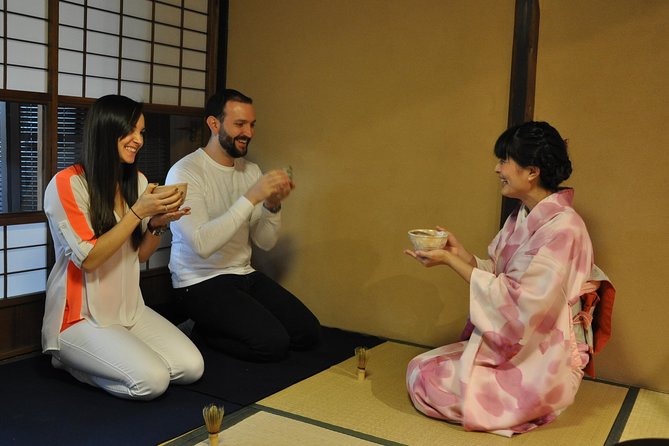
- An old Kyoto machiya: The ceremony takes place in a wooden townhouse described as about 80 years old, with the quiet, simple feel of a traditional Japanese home.
- A group of no more than six: The small size leaves room for questions and individual guidance.
- You make your own matcha: After watching the demonstration, you practice preparing and drinking the tea yourself.
- Uji matcha and Kyoto sweets: The tea comes from a farm in Uji City, while the accompanying confection is made by a respected Kyoto sweet maker.
- A focused one-hour visit: Multiple start times make it easy to fit into a day of sightseeing, and the session does not drag.
- A minor arrival challenge: English signs and street numbers may be limited in this older neighborhood, so map directions matter.
Entering an old Kyoto townhouse
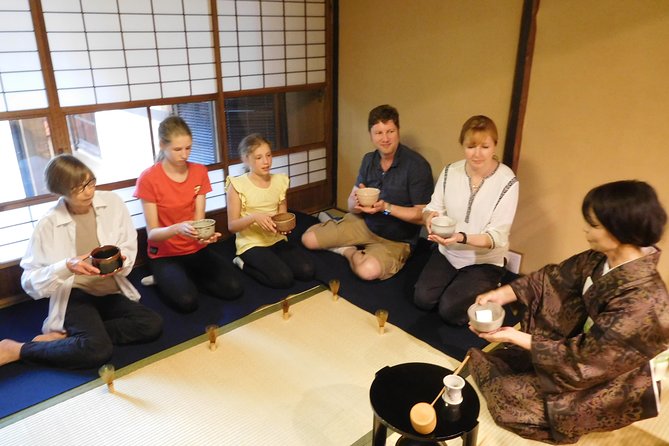
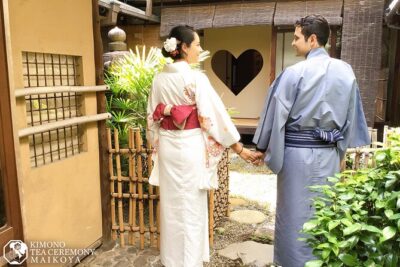
A tea ceremony can feel stiff if it takes place in a large room filled with tourists. Ami Kyoto avoids that problem with a small machiya in a residential part of the city. The building is a modest wooden townhouse, roughly 80 years old according to the hosts, and its plain design is part of the appeal.
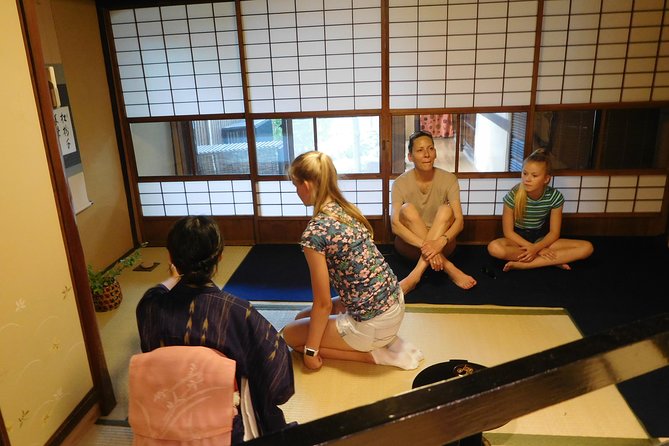
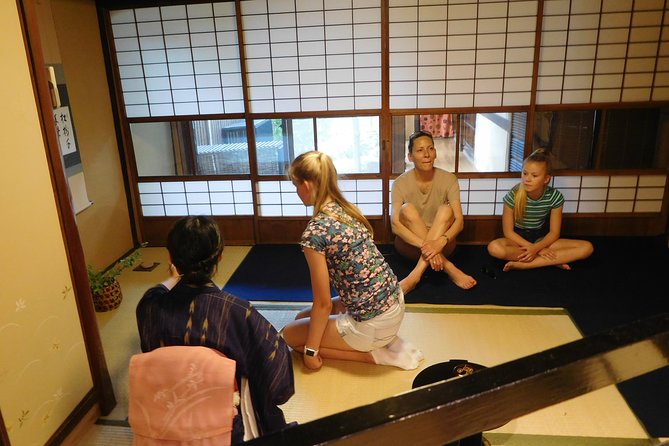
You are not visiting a grand temple or a polished museum. You are stepping into a living piece of Kyoto housing. The room is described as comfortable and cozy, which matters because the tea ceremony asks you to slow down and notice small things. A calm room makes the ritual easier to follow.
The townhouse can be difficult to identify at first. One account describes a lack of English street names and numbers, while another notes that the building does have a sign outside. These details are not quite the same, so I would not rely on spotting a large, obvious entrance. Keep the full address and map open on your phone, and avoid arriving at the last second.
The meeting point is 605 Nishidacho, Shimogyo Ward, Kyoto, postal code 600-8397. The activity ends at the same address, with no hotel pickup or drop-off.
More tea ceremonies in Kyoto:
- Kyoto: Tea Ceremony in a Traditional Tea House in Kiyomizu
★ 4.9 · 3,519 reviews - Kyoto: Tea Ceremony Ju-An at Jotokuji Temple
★ 4.9 · 3,207 reviews - Kyoto: 45-Minute Tea Ceremony Lesson Experience
★ 4.3 · 2,378 reviews
What the one-hour session covers
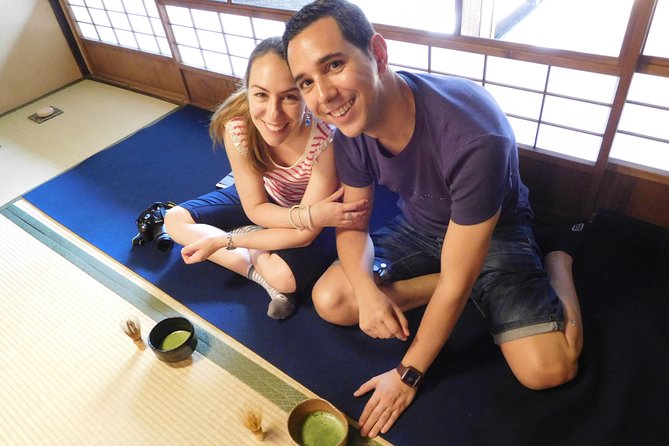
The session begins with an explanation of the basic ideas behind tea ceremony. You learn that the event is not simply a method for preparing powdered tea. The movements, order, posture, and manners all carry meaning, and the hosts explain both the practical and symbolic reasons for what they do.
Kimi is named in several host responses, and the session is led by her with another female instructor. Their teaching style appears warm and clear rather than severe. You are encouraged to ask questions, and the small group gives the hosts enough time to respond without rushing from one demonstration to the next.
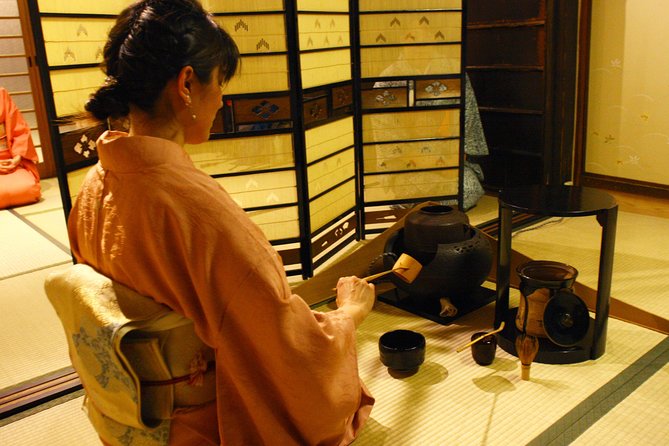
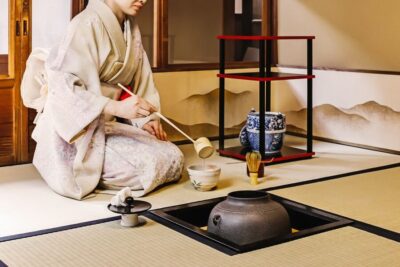
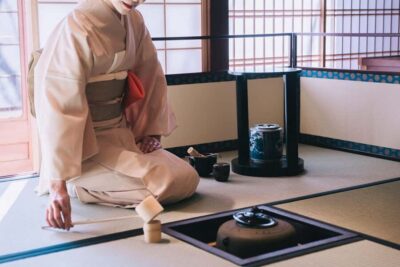
First, you watch the hosts perform the ceremony. Pay attention to the details that are easy to miss: how the tea room is entered, how utensils are handled, how the bowl is presented, and how the guest receives it. The point is not to memorize every rule. It is to see how a Japanese tea gathering creates respect between the person serving and the person receiving.
The demonstration is described as peaceful and carefully explained. One especially strong part is the attention given to each movement. Nothing looks random. Even a simple turn of the bowl or placement of a utensil has a reason.
After the demonstration, you take part. The hosts show you how to prepare your own bowl of matcha, then explain how to drink it. This hands-on section makes the experience more useful than a ceremony performed entirely for you. You leave with a basic understanding of what is happening and the confidence to repeat the process at home.
Making matcha instead of only watching
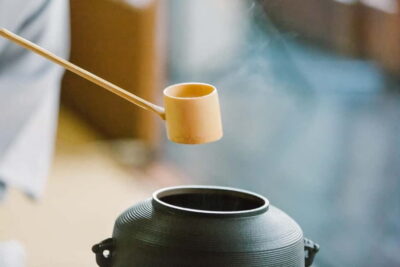
Matcha is whisked from powdered green tea, so the texture and preparation differ from an ordinary cup of steeped tea. Here, the matcha comes from Uji City, an area near Kyoto known for tea production. The exact farm is not named, but the hosts present the tea as a carefully selected ingredient rather than a generic drink.
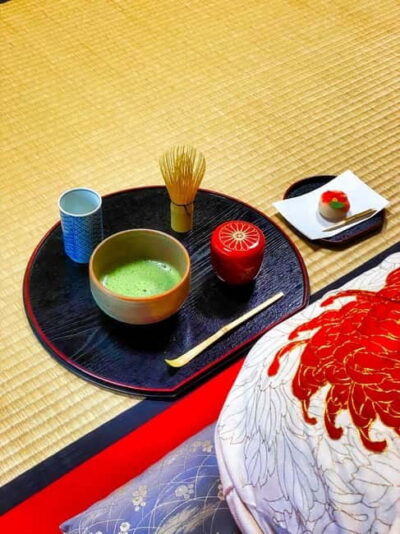
You receive a bowl of matcha and a Japanese sweet. The sweet is more than a snack. In the tea ceremony, its gentle sweetness prepares your mouth for the tea’s bitter, grassy flavor. The confection is supplied by a famous Kyoto maker, and the specific sweet served on one session was identified as suhama.
The balance works well for first-time drinkers. Eat the sweet as instructed, then taste the tea. Matcha can be an acquired taste, especially if you expect something like a sweetened latte. This version is traditional, with the flavor of the tea itself taking the lead.
I like that the session does not assume you already know how to handle the bowl. The hosts explain the etiquette and guide you through the process. That takes away the worry many first-time visitors feel when they are unsure where to place their hands or how to turn the bowl.
If you enjoy the tea, the hosts may have selected matcha and tea-making items available to buy after the session. This is useful only if you genuinely want to continue the habit at home. You are not paying simply for a sample and a sales pitch. The purchase option is an extra, not part of the advertised inclusions.
Why the small group matters
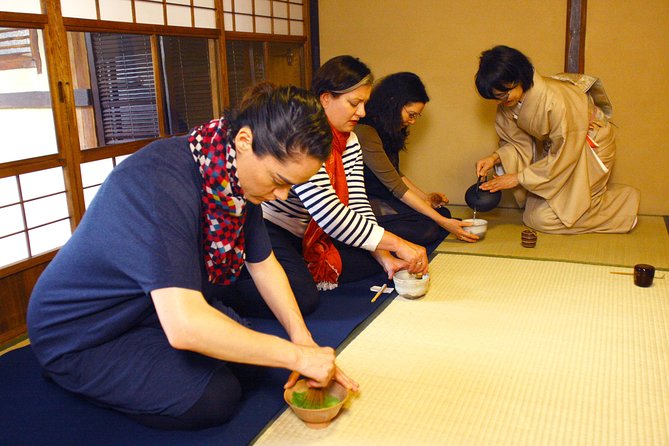
The maximum group size is six people. Some sessions may feel even smaller, and one account describes a group with only three other participants. That difference matters because the room is a townhouse, not a large performance hall.
With six or fewer people, you can see the demonstration without being pushed to the back. You also have a better chance to ask about the tea, the movements, or the meaning of the ceremony. If you are shy about participating, a small group can feel less intimidating than a packed class.
The size also affects the tone. Tea ceremony is built around attention and calm. A noisy group would work against that. The intimate arrangement helps preserve the quiet character of the event, even though you are taking part in a booked activity.
Families and mixed-age groups can use the format well. An Australian family of four found the explanations and demonstrations easy to follow, and the one-hour length suited them. The experience also accommodated a member of one party who used a wheelchair. That is encouraging, though you should still contact Ami Kyoto before booking if you need specific access arrangements, since the available information does not describe the entrance, floor layout, or restroom facilities.
A few more Kyoto tours worth putting on the shortlist
- PERFECT KYOTO 1-Day Bus Tour
★ 5.0 · 13,518 reviews - Kyoto: Fushimi Inari, Kinkakuji, Bamboo Grove 1 Day Bus Tour
★ 4.8 · 4,316 reviews - Kyoto Geisha Walking Tour: Gion District & Hidden Gems
★ 4.7 · 3,273 reviews - Kyoto: Gion Magical Night Walking Tour with Geisha Trivia
★ 4.9 · 2,393 reviews
The value of a $27.74 Kyoto activity
At $27.74 per person, this is priced below many polished cultural demonstrations in major Japanese cities. The value comes from several things arriving together: a traditional setting, direct instruction, a full demonstration, a bowl of matcha, a Kyoto sweet, and your own chance to prepare the tea.
I would not compare it with a quick cup of matcha at a café. A café gives you a drink. This gives you context, etiquette, and participation. You are paying for the hosts’ time and for access to a private-style townhouse that you would not normally enter during a walk through Kyoto.
The price is especially fair for someone who wants a cultural activity but does not want to spend half a day on it. The session takes about one hour, and multiple start times make it easier to place before or after a temple visit, market stop, or evening meal.
The tradeoff is depth. A one-hour class cannot explain every school of tea, the full development of the tradition, or the many layers of Japanese aesthetics. If you already study tea ceremony, you may want a longer or more specialized lesson. For a first encounter, the short format is a strength.
Finding 605 Nishidacho without stress
The address is near public transportation, but the final walk may require attention. Kyoto’s older residential streets do not always present information in the clear, Western style many visitors expect. The supplied directions include an address and Google Maps link, so use both.
I would save a screenshot before leaving your hotel. Check the map while you still have a reliable connection, and build in a few spare minutes. This is not a tour where being late is harmless. A tea room depends on quiet, and arriving in a rush can spoil the opening moments.
The end point is the same as the start. Since there is no hotel transport, you can plan your next stop from the townhouse. The activity is near public transportation, but the information does not name a specific station or give walking times, so check your route on the day.
Who will enjoy this experience most
I would choose this for a first-time visitor who wants more than a photograph of a tea bowl. You learn the basic rules, see the ceremony performed properly, and then try it yourself. That combination gives you a useful introduction without requiring prior knowledge.
It also suits people who like quiet cultural activities. The atmosphere is described as peaceful, and the hosts make the room feel relaxed. If you prefer a lively cooking class or a long guided tour, this may feel too still and restrained.
Matcha fans have an obvious reason to book. The Uji tea receives especially warm attention, and some participants wanted to buy tea to take home. Still, you do not need to like matcha already. The sweet, careful explanation, and gentle instruction make the tasting easier for newcomers.
Couples, families, and small groups of friends fit the format well. Solo visitors can also benefit from the small size, since it is easier to take part and ask questions. The session is not private by default, so you may share it with other people, but the maximum group size keeps it personal.
What the experience does not include
The booking includes one bowl of matcha and Japanese sweets. It does not include hotel pickup or drop-off. You also should not expect a meal, a long sightseeing walk, or a full-day cultural course.
The ceremony takes place back at the meeting point, and the total duration is about one hour. That makes it simple to schedule, but it also means you should not arrive expecting an extended visit to the townhouse.
The accommodation for a wheelchair user is a positive sign, but the available details are limited. If mobility is important for your party, ask Ami Kyoto about the exact entrance and seating arrangement before you commit.
Cancellation is flexible up to 24 hours before the local start time, with a full refund. Changes or cancellations made inside that 24-hour window are not accepted for a refund. Confirmation is sent within 48 hours, subject to availability, so check your booking details before setting out.
Should you book the Ami Kyoto tea ceremony?
I would book it if you want an affordable, hands-on introduction to Japanese tea ceremony in a real old townhouse. The best parts are the small group, the calm instruction from Kimi and her co-host, the Uji matcha, and the chance to make your own bowl. The hosts seem to take care with both etiquette and the deeper meaning of the ritual.
I would skip it if you want a private ceremony, a long lesson, or an elaborate performance in a famous temple. You should also think twice if a difficult-to-find residential address would cause stress, though careful use of the map should help.
For most first-time visitors, the balance is good: one hour, a fair price, quality tea and sweets, and enough explanation to make the experience meaningful rather than merely decorative.
FAQ
How long does the tea ceremony experience last?
The activity lasts approximately one hour.
Where does the experience start and finish?
It starts and ends at 605 Nishidacho, Shimogyo Ward, Kyoto, 600-8397, Japan.
How many people can join the session?
The activity has a maximum of six participants.
What is included in the price?
The experience includes a bowl of matcha green tea and Japanese sweets.
Is hotel pickup included?
No. Hotel pickup and drop-off are not included.
Do I make my own bowl of matcha?
Yes. You watch a demonstration first, then receive guidance as you prepare and drink your own matcha.
Can I cancel for a full refund?
Yes. You can cancel at least 24 hours before the local start time for a full refund. Cancellations or changes made less than 24 hours before the start are not refunded or accepted.
Newest Kyoto experiences on the site
- Treasures of Kyoto: Gion & historical Walking Tour★ 5.0 · 6 reviews
- Whisk Your Own Matcha: A Zen Matcha Experience at Temple★ 3.6 · 7 reviews
- Kyoto tea town for matcha lovers★ 5.0 · 16 reviews
- Uji: Private immersion into Kyoto’s tea and reglious culture★ 5.0 · 17 reviews
- Kyoto Matcha Green Tea Tour★ 4.5 · 23 reviews
- Uji and Wazuka Matcha Farm Half Day Private Guided Tour★ 5.0 · 21 reviews
- Utilising upcycled Matcha! Creating matcha incense (Uji, Kyoto)★ 5.0 · 6 reviews
- Sacred Temple Yoga Experience in Japan★ 5.0 · 3 reviews
Kyoto Tea Ceremonies, compared.
Tea Ceremony in a Traditional Tea House in Kiyomizu
Read our review →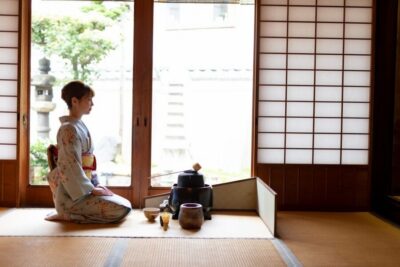
Tea Ceremony in 100-year-old Kyo-Machiya Townhouse
Read our review →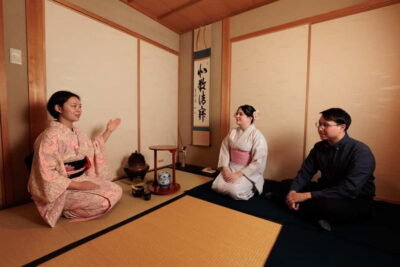
Browse the lists this tour appears in