Reviewed · KYOTO TOURS
TAIKO, Japanese Drum Experience from Kyoto
The best part of this Kyoto experience is simple: you do not just look at Japanese culture, you make some noise with it. At a professional taiko studio near Takatsuki, an instructor shows you the basics, then helps you perform a short piece with the group. No musical background is needed, and the lesson can be adjusted to your fitness and skill level.
I like the practical train-and-taxi transfer, which avoids an expensive direct taxi from Kyoto. I also like the small group format, the short calligraphy activity on a hachimaki headband, and the chance to watch a strong demonstration before picking up the sticks yourself. The main drawback is the strict meeting time: Kyoto Station is huge, and late arrivals cannot be accommodated or refunded.
Key points to know before booking
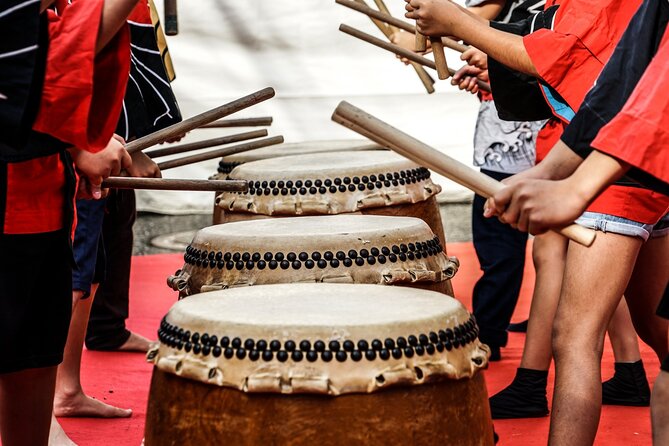
- The drumming is genuinely hands-on: You learn basic movements and rhythms, then play a simple piece with other participants.
- The trip begins at Kyoto Station: A guide leads you by JR train to Takatsuki, followed by a taxi ride to the studio.
- English support is built in: Guides such as Michiko, Kumi, Akemi, and Akiko have assisted sessions, depending on the date.
- You get more than a drum lesson: The program includes taiko background, a professional demonstration, kanji calligraphy, and a costume photo.
- Plan on 2.5 to 3 hours total: The listed duration is about 2 hours 30 minutes, including transfers.
- Arrive early: You must be at the correct Kyoto Station meeting point 15 minutes before departure.
Why this taiko class is more than a sightseeing stop
Kyoto offers endless temples, gardens, and old streets. Those are worthwhile, but they ask you to watch. This activity asks you to stand, listen, copy the rhythm, and work with a group. That change matters. Even a beginner quickly gets a feel for how much movement, timing, and concentration go into taiko performance.
Taiko means Japanese drum, but the word covers a broad tradition rather than one single instrument or style. Here, the lesson begins with an explanation of the drum’s place in Japanese culture and history. You then see those ideas in action through a professional demonstration before trying the techniques yourself.
The experience has earned a 99 percent recommendation rate and a five-star average from 86 ratings. That high level of approval makes sense, particularly for people looking for a cultural activity with real participation rather than a short photo stop. Still, the program is not a full course in Japanese drumming. You will learn the basics and perform a short piece, not become a trained taiko musician in one afternoon.
A few more Kyoto tours worth putting on the shortlist
- PERFECT KYOTO 1-Day Bus Tour
★ 5.0 · 13,518 reviews - Kyoto: Fushimi Inari, Kinkakuji, Bamboo Grove 1 Day Bus Tour
★ 4.8 · 4,316 reviews - Kyoto: Tea Ceremony in a Traditional Tea House in Kiyomizu
★ 4.9 · 3,519 reviews
Meeting at Kyoto Station without a stressful start
Your day begins at Kyoto Station, at Higashishiokoji Kamadonocho in Shimogyo Ward. The station is large enough to cause confusion, especially if you are carrying luggage or arriving during a busy travel period. The instructions stress the Central Exit, not the Shinkansen Central Ticket Gate.
I recommend arriving well before the required 15 minutes. If you lose your way, ask station staff for the central exit and show them the meeting details. Do not assume that a phone call will solve a late arrival. The train schedule is part of the plan, so the group cannot wait, and a late arrival does not qualify for a refund.
The guide may be holding a sign near the central exit kiosk. Guides who have led or supported sessions include Michiko, Kumi, Akemi, and Akiko. English assistance is included, and the guide also helps make the transfer easier by explaining the route and introducing the area along the way.
The 12-minute JR ride to Takatsuki
From Kyoto Station, the group takes a JR train to Takatsuki. The ride takes about 12 minutes, although some descriptions of the experience refer more generally to a trip of around 20 minutes once station timing is included.
This short train ride is useful for two reasons. First, it gets you out of central Kyoto without the high cost of a long taxi ride. Second, it gives the guide time to explain more about the local area and the studio visit. Several guide names appear in the experience details, but the exact person assigned to your date can vary.
The included transportation covers the one-way JR ticket to JR Takatsuki Station. From there, a taxi carries the group to the studio. The taxi cost is described as about 2,000 yen, with four people able to share one cab. The return transportation is also arranged as part of the experience, bringing you back to the Kyoto Station meeting point.
Do not take a taxi directly from Kyoto Station unless you have a very specific reason. The drive can take more than an hour, traffic can slow it further, and the fare may be high. The train is both faster and more sensible.
Arriving at a professional taiko studio
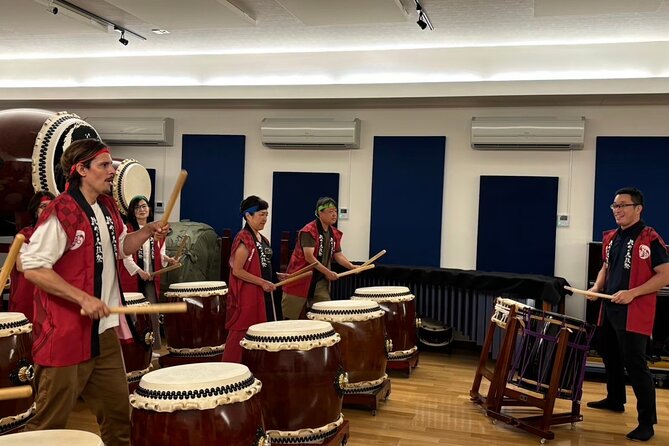
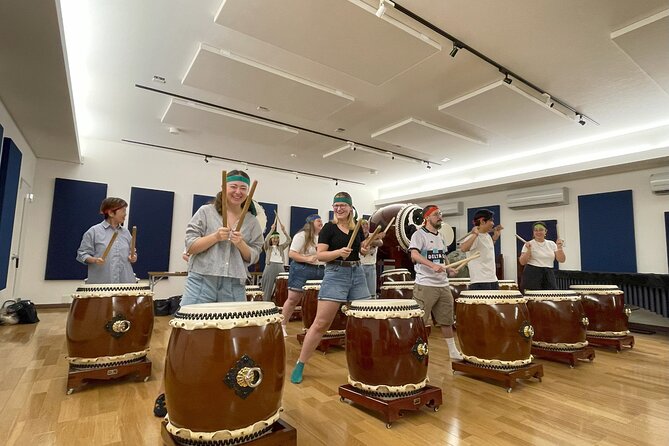
The studio is not simply a room set up for tourists. It is described as a professional taiko facility, which gives the lesson a more serious setting than a quick hotel activity. You get the feeling of entering a working music space, with proper drums and an instructor who knows how to handle beginners.
The class size can reach 15 people. That is not an intimate private lesson, but it is still small enough for an instructor and guide to watch the group and encourage participation. The teaching style is supportive rather than demanding. You are not expected to arrive fit, musical, or familiar with Japanese notation.
Your body does matter, though. Taiko involves standing, arm movement, and repeated strikes. One participant noted that the session can become good cardiovascular exercise if you drum with energy for long enough. The instructor adjusts movements to your skill and fitness level, but anyone with physical concerns should consider the active nature of the class before booking.
Same city, a completely different kind of day:
- Kyoto Geisha Walking Tour: Gion District & Hidden Gems
★ 4.7 · 3,273 reviews - Kyoto: Tea Ceremony Ju-An at Jotokuji Temple
★ 4.9 · 3,207 reviews - Kyoto: Gion Magical Night Walking Tour with Geisha Trivia
★ 4.9 · 2,393 reviews - Kyoto: 45-Minute Tea Ceremony Lesson Experience
★ 4.3 · 2,378 reviews
Writing your wish on a hachimaki
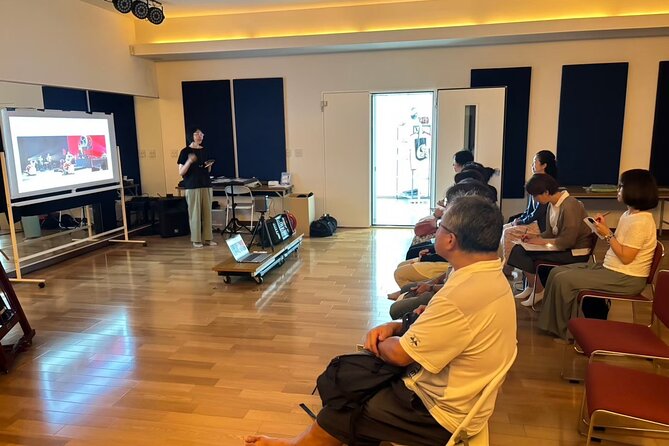
Before the main drumming lesson, you get a creative task: writing a wish or message in simple calligraphy on a hachimaki. This is a traditional Japanese headband, and it becomes part of your costume for the final photograph.
You do not need calligraphy experience. The activity is short and adds a personal touch to the session. Instead of receiving a generic souvenir, you make something connected to the day. It also gives you a calm introduction before the louder part of the class begins.
The calligraphy is not the main reason to book this experience, but it improves the pacing. You learn about a second Japanese tradition without adding a long workshop or taking time away from the drumming.
Watching Aoi and other instructors perform
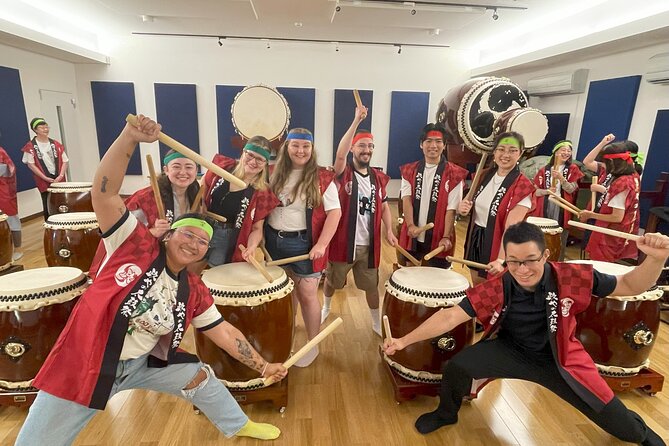
The professional demonstration is the moment that puts the lesson in context. Instructors named in the experience feedback include Aoi and Mr. Sakurai. Aoi is described as a professional drummer and instructor, while Mr. Sakurai is praised for patient teaching.
Expect the demonstration to be powerful. Taiko is a physical performance, and the sound is part of its appeal. One session included a live drummer performing with a recorded drummer, while other descriptions focus on a live demonstration by the instructor. The exact presentation may vary, so you should not assume you will see a large ensemble on every date.
This is also the part where you may realize that the simple rhythm you are about to learn is not as easy as it looks. That is a good thing. The instructor breaks the movement into manageable steps, so the performance inspires you without making the class feel like a test.
Learning the basic movements and rhythm
After the demonstration, you receive drumsticks and begin with the fundamentals. The instructor teaches basic posture, arm movements, timing, and striking patterns. The lesson is built for first-timers, and you do not need to read music.
Some participants have musical experience and may recognize familiar ideas about measures or rhythm. Others arrive with no music background at all. The teaching approach is meant to work for both. The group learns a short sequence, repeats it, and gradually joins the separate parts into a simple piece.
This is where the small group matters. A private class would offer more individual attention, but a group performance creates useful energy. You listen to the people around you, try to keep time, and get a sense of how taiko depends on shared rhythm.
The English-speaking guide also helps translate instructions and cultural explanations. Michiko is specifically noted for providing English interpretation throughout a session, while Kumi is described as speaking excellent English. Since the guide and instructor share the teaching role, you should have help if a movement or explanation is unclear.
Performing together and taking the final photo
The lesson ends with the group playing a simple piece. Do not picture a polished concert. The point is to use the movements you have learned and experience the satisfaction of making a coordinated performance.
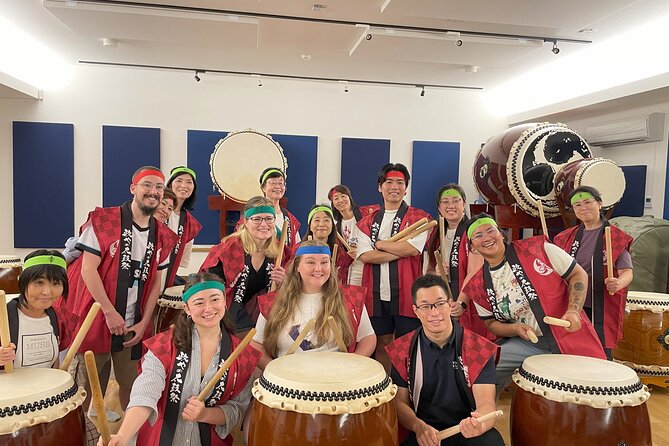
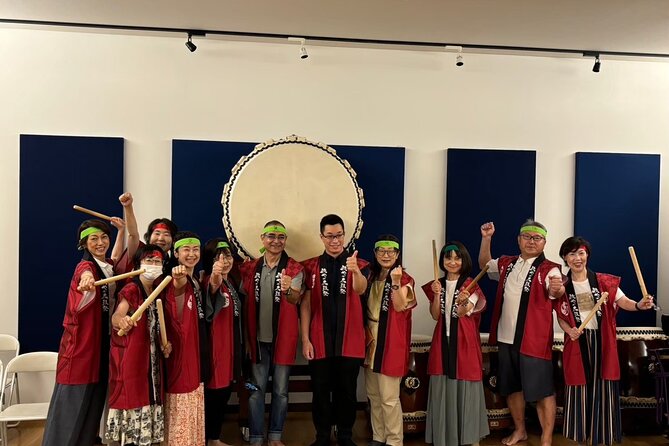
The final photo adds a cheerful finish. You wear a happi coat and your hachimaki, giving the picture a traditional Japanese look. It is a small souvenir, but it also shows how the activity moves from history and explanation to participation and performance.
Parents should note that children under seven cannot take part. Older children have enjoyed the session, with ages 8 and 11 specifically mentioned as having a good time. The activity still requires children to follow instructions, stand for much of the class, and handle the physical rhythm work.
What the $115.62 price gets you
At $115.62 per person, this is not the cheapest cultural activity in Kyoto. The price makes more sense when you count what is bundled into the outing: English guidance, the JR ticket to Takatsuki, taxi transport to and from the studio, the taiko lesson, the hachimaki, the professional demonstration, and the final photo opportunity.
The transportation is particularly useful. You avoid arranging the route yourself and avoid the cost of taking a direct taxi from Kyoto. The class also takes place at a professional studio rather than in a general sightseeing venue.
Value depends on what you want from your time in Japan. If you only want to hear taiko once, you can likely find a performance elsewhere. If you want to learn a few rhythms, meet an instructor, create a headband, and take part in a short group performance, the price is easier to justify.
Observers who do not drum must pay 9,000 yen per person in cash at the studio. You need to notify the operator in advance if someone will observe, since transportation may not be arranged without notice. For most people, participating offers better value than watching from the side.
Timing, group size, and practical limits
The full outing takes about 2.5 to 3 hours, including the train, taxi transfers, lesson, and return to Kyoto Station. The exact timing depends partly on the train schedule. Do not schedule a tight lunch reservation, museum entry, or departure immediately afterward.
The experience has a maximum of 15 participants. That keeps it from becoming a huge class, but the exact amount of individual coaching will depend on the number of people booked that day. Some dates do not accept a booking for only one participant. On those dates, a solo visitor may need to book and pay for two places.
The activity is near public transportation, and most people can participate. Still, the class includes active drumming and standing. If you prefer quiet cultural activities or have limited mobility, read the physical demands carefully before committing.
Free cancellation is available if you cancel at least 24 hours before the local start time. Changes or cancellations within 24 hours are not refundable. If bad weather causes the operator to cancel, you can receive a different date or a full refund.
Who should book this experience
I would recommend it most strongly to you if you want a cultural activity that gets you involved. It suits first-time visitors, families with children aged seven and older, couples, and anyone who likes music but does not consider themselves a musician.
It is also a good choice for a second Kyoto day, when you want a break from temples and formal sightseeing. The train ride to Takatsuki gives the morning or afternoon a change of setting without requiring a long trip.
You may want to skip it if your schedule is packed, if you cannot arrive early at Kyoto Station, or if you dislike structured group activities. The lesson follows a set program, and leaving early is not recommended. You also should not book it expecting an advanced performance workshop or a private class.
Should you book the Kyoto taiko experience?
Book it if you want to feel the rhythm instead of simply hearing about Japanese culture. The combination of history, calligraphy, a professional demonstration, beginner instruction, and a final group performance gives you a clear sense of what taiko demands.
The strongest reasons to go are the patient teaching, English support, and the chance to play at a professional studio. The main concerns are the early meeting discipline, the 2.5 to 3-hour time commitment, and the physical nature of the drumming.
Arrive early at Kyoto Station, keep your afternoon flexible, and take part rather than observe. With those points in mind, this is a lively and memorable addition to a Kyoto itinerary.
FAQ
Where does the taiko experience begin?
It begins at Kyoto Station, at Higashishiokoji Kamadonocho in Shimogyo Ward, Kyoto.
How do I get to the taiko studio?
You take a JR train from Kyoto Station to Takatsuki Station, a ride of about 12 minutes, and then continue by taxi to the studio.
Is transportation included?
Yes. The experience includes the one-way JR ticket to Takatsuki Station and car transportation to and from the studio. The taxi cost is about 2,000 yen, with four people able to share one taxi.
How long does the activity take?
The listed duration is about 2 hours 30 minutes. With train schedules and transfers, you should expect to return to Kyoto Station about 2.5 to 3 hours after the start time.
Do I need previous musical experience?
No. The class is designed for all levels, including complete beginners.
Is the lesson available in English?
Yes. An English-speaking guide is included. Guides who have supported sessions include Michiko, Kumi, Akemi, and Akiko.
What else is included besides drumming?
The activity includes an introduction to taiko history, a professional demonstration, simple calligraphy on a hachimaki, the headband itself, instruction from a taiko teacher, and a final photo in a happi coat and hachimaki.
Can children participate?
Children under seven years old cannot participate. Older children may join, and children aged 8 and 11 have taken part in the activity.
Can someone attend without drumming?
Yes, but observers must pay 9,000 yen per person in cash at the studio. You must notify the operator in advance so transportation can be arranged.
What happens if I need to cancel?
You can receive a full refund if you cancel at least 24 hours before the local start time. Cancellations or changes made less than 24 hours before the start are not refunded.
Newest Kyoto experiences on the site
- Treasures of Kyoto: Gion & historical Walking Tour★ 5.0 · 6 reviews
- Whisk Your Own Matcha: A Zen Matcha Experience at Temple★ 3.6 · 7 reviews
- Kyoto tea town for matcha lovers★ 5.0 · 16 reviews
- Uji: Private immersion into Kyoto’s tea and reglious culture★ 5.0 · 17 reviews
- Kyoto Matcha Green Tea Tour★ 4.5 · 23 reviews
- Uji and Wazuka Matcha Farm Half Day Private Guided Tour★ 5.0 · 21 reviews
- Utilising upcycled Matcha! Creating matcha incense (Uji, Kyoto)★ 5.0 · 6 reviews
- Sacred Temple Yoga Experience in Japan★ 5.0 · 3 reviews
Kyoto Tours, compared.
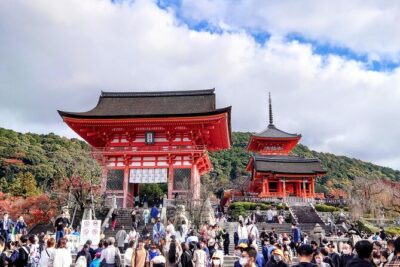
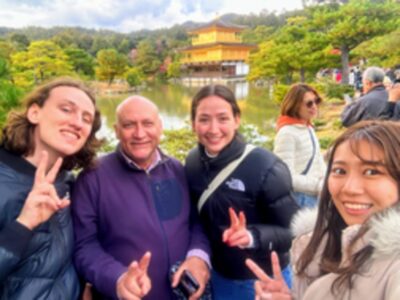
Fushimi Inari, Kinkakuji, Bamboo Grove 1 Day Bus Tour
Read our review →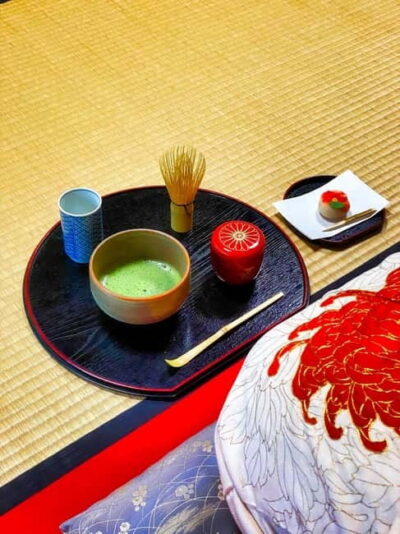
Tea Ceremony in a Traditional Tea House in Kiyomizu
Read our review →
Kyoto Geisha Walking Tour: Gion District & Hidden Gems
Read our review →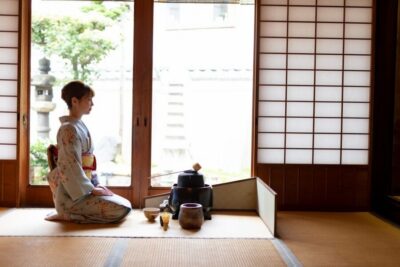
Gion Magical Night Walking Tour with Geisha Trivia
Read our review →