
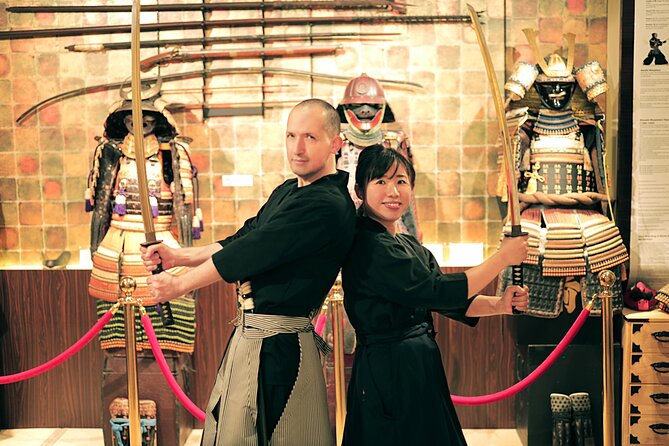
Reviewed · KYOTO SAMURAI EXPERIENCES
Kyoto Sword Experience – includes Museum Ticket/Ninja Experience
The best part of this Kyoto experience is the chance to dress in samurai hakama and handle a safe replica sword in a traditional dojo setting. You learn a few basic Iaido movements, take part in a simple controlled sword exercise, and then visit a museum filled with samurai and ninja displays.
I like the mix of hands-on fun and cultural context. The included museum tour gives the activity more substance than a quick costume photo, and the ninja star throwing adds a playful finish. My main caution is that the pace and group size can change, so you should not book this expecting a serious martial arts lesson or the real sword cutting shown in some older photos.
Key points to know before booking
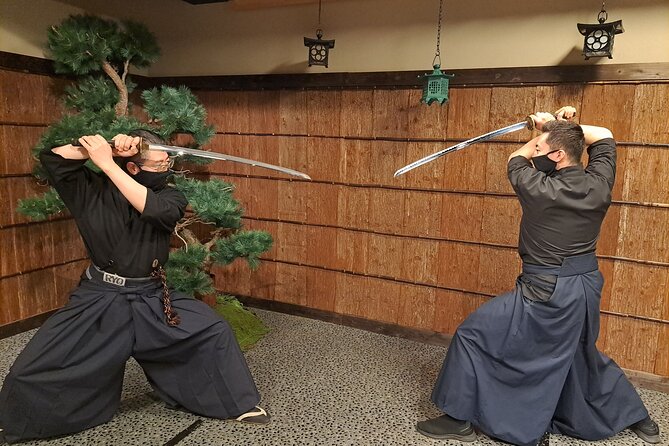
- A blunt replica sword is used: Current safety rules mean this activity does not involve a real sword or sharp blade.
- Hakama dressing is part of the experience: You get the chance to look the part before learning basic sword positions and movements.
- The museum ticket is included: A guided visit adds context about samurai and ninja culture.
- Ninja stars are part of the fun: You may finish with a supervised throwing activity and photo opportunities.
- Allow about two hours: The session can include dressing, instruction, sword practice, museum time, photos, and ninja activities.
- Children under seven cannot enter the dojo: Children must also be accompanied by an adult.
What the Kyoto samurai experience is really like
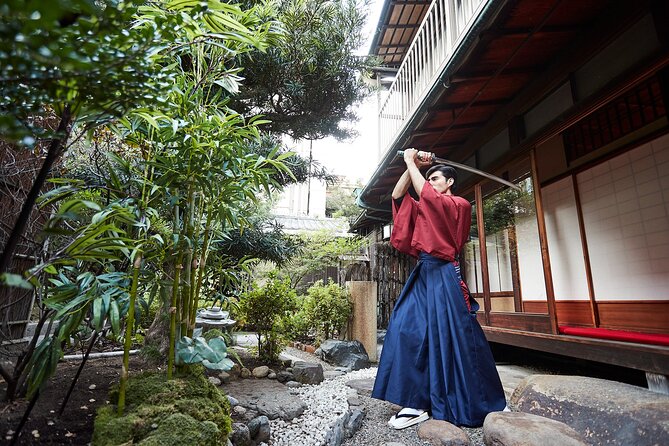
This is best understood as a cultural activity with light physical participation, not a full samurai training course. You will learn simple movements, pose in traditional clothing, and take part in carefully controlled exercises.
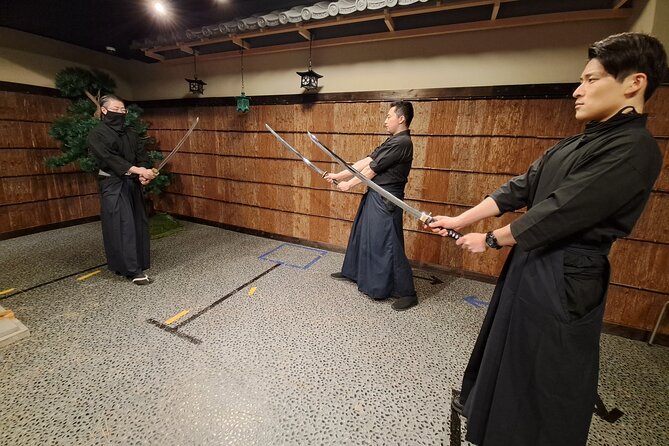
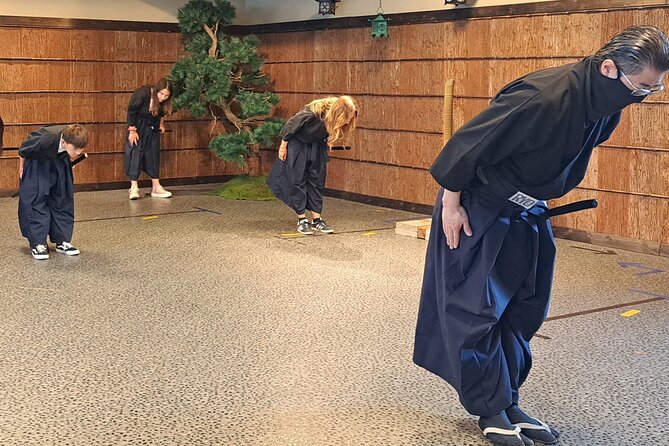
The setting helps. The experience takes place at the Samurai Ninja Museum, with the dojo atmosphere adding more character than a classroom or photo studio. You get a short introduction to the discipline behind Iaido, including basic stance, sword handling, and movement.
The sword is a blunt replica. This point matters. The current activity specifically says that no real sword or sharp blade is used, in line with Japanese law. Some older promotional material and past descriptions referred to cutting tatami mats with a real katana, but you should not book this experience expecting that today.
The activity is suitable for most people who can follow simple instructions. You do not need previous martial arts training. The emphasis is on safe participation, photographs, and a taste of samurai customs.
More samurai experiences in Kyoto:
- Kyoto Samurai Experience
★ 5.0 · 1,294 reviews - Kyoto: Kendo and Samurai Experience with Uniform and Gear
★ 4.9 · 815 reviews - Kyoto: Samurai Sword Class by Experts in Traditional Arts
★ 4.9 · 657 reviews
Dressing in hakama before the lesson
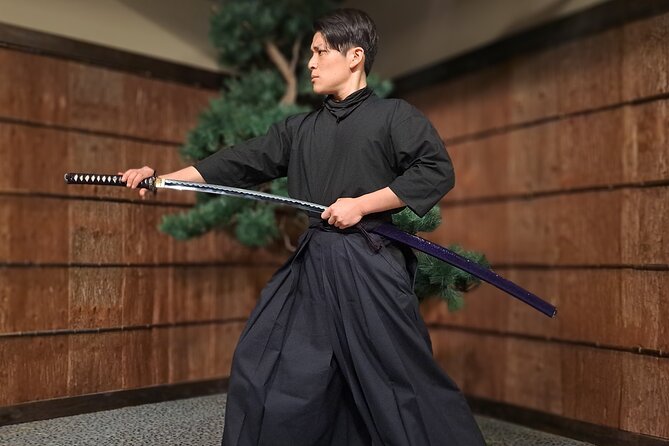
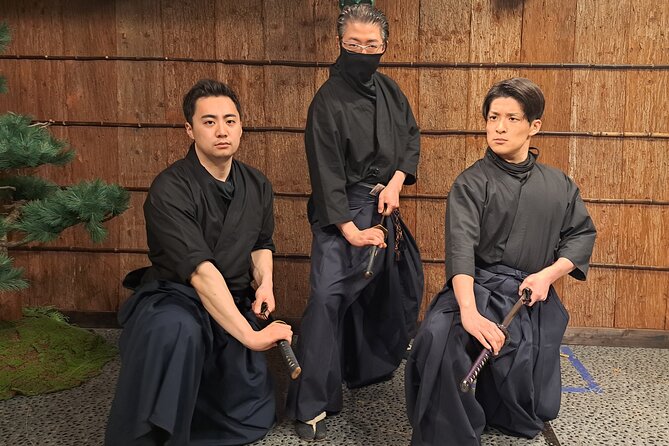
The session begins with traditional samurai clothing. You put on hakama, the pleated trousers associated with Japanese martial arts and formal dress. This takes the experience beyond simply holding a prop sword for a photograph.
Getting dressed is also one reason the total time can stretch toward two hours. Clothing assistance, fitting, changing, and photographs take time, particularly when several people share the session.
The costume is a major part of the appeal for families, couples, and first-time visitors to Kyoto. You can watch others take their turns, and children who are too young for the dojo may still be able to observe from the side if they meet the venue rules. However, children under seven are not allowed to enter the samurai dojo, so check your family arrangements before paying.
The clothing is practical for photographs, but expectations should stay modest. This is a busy attraction rather than a private photo session. If you want unhurried portraits, arrive ready to follow staff instructions and use the available time efficiently.
Learning basic Iaido with a replica sword
Once dressed, you receive instruction in basic Iaido techniques. The lesson focuses on stance, grip, controlled movement, and the formal feel of drawing and handling a sword.
I like this part because it gives the costume some meaning. You are not only posing as a samurai. You are also learning why posture, precision, and calm movement matter in Japanese sword arts.
The teaching is introductory. You should expect a short demonstration followed by simple practice, not a detailed study of Iaido. Some sessions have been praised for lively instruction, with named instructors including Riku, Ken, and Takto associated with different activities. Staff assignments can change, so I would not book based on a particular instructor unless the operator confirms that person directly.
The quality of the lesson depends heavily on the group. A smaller class allows more direct attention and less waiting. A large group can make the class feel like a sequence of demonstrations, with each person receiving only a short turn.
That is the central trade-off here. You get an accessible introduction that works for beginners, but serious martial arts students may find it too brief.
The controlled sword exercise
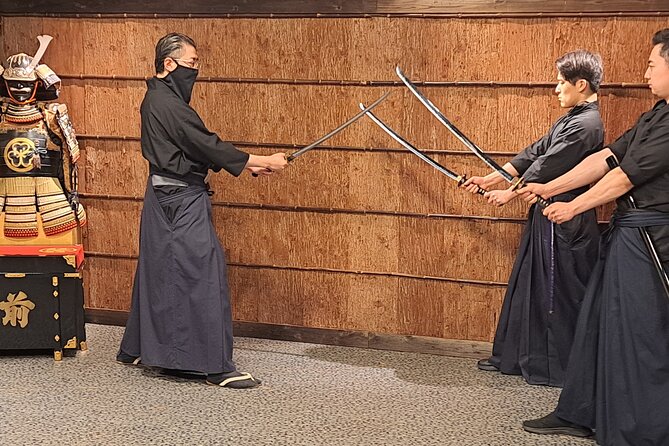
The sword portion is designed to feel dramatic without being dangerous. You use a safe replica and follow the instructor through a simple sword fight or movement exercise.
This is not a free-for-all. The instructor controls the pace and tells you where to stand and how to move. That structure matters because even a blunt replica can cause trouble if people swing carelessly.
Past versions of the activity appear to have included tatami mat cutting with a real sword. The current information says that real swords and sharp blades are not used, and one later account specifically notes that the bamboo or tatami cutting shown in older photographs is no longer part of the class.
If cutting a mat is the main reason you are interested, this is probably not the right booking. If you want to learn a few basic sword motions, wear samurai clothing, and take photographs, the present version fits better.
The sword practice is also where crowding becomes most noticeable. Only one person, or a small number of people, can perform at a time. A large group means more watching and less doing. Ask staff at the beginning how the session will run so you know when your turn is coming.
More ninja experiences in Kyoto:
- Skip the lines Basic Ticket at SAMURAI NINJA MUSEUM KYOTO
★ 4.5 · 632 reviews - Ninja 1-hour Hands-on Lesson by Japanese master in Kyoto -Entry
★ 5.0 · 489 reviews - Kyoto: Ninja Weapon Forging Experience
★ 4.8 · 478 reviews - Ninja 2-hour Hands-on Lesson by Japanese master in Kyoto -Medium
★ 5.0 · 218 reviews
The Samurai Ninja Museum adds useful context
The museum visit is included in the price. It gives you a guided look at samurai and ninja objects, costumes, models, and displays connected with Japanese warfare and popular images of these figures.
This part helps explain the symbols you have just been using. Without it, the activity could feel like costume play with a sword. The museum puts the clothing and movements into a wider cultural setting.
The museum and dojo may not be in the exact same room. Directions and the session layout can send you between nearby spaces, sometimes a few minutes apart. That can make the schedule feel disjointed, especially if you expect one continuous presentation.
The museum tour has been led by guides including Riu and Nobu, who have been praised for keeping the presentation lively and helping people connect with the displays. Guide assignments are not guaranteed, but the format is clear: you receive museum admission and a history-focused explanation as part of the experience.
Do not expect a huge national museum. The attraction is compact and designed to work alongside the activity. Its value comes from the guided explanation, not from spending half a day examining a large collection.
Ninja stars and samurai photographs
The ninja portion usually adds a lighter, more playful note. You get the chance to throw ninja stars in a supervised setting, then take photographs in samurai clothing or armor.
This is especially useful if your group includes people who are less interested in sword technique. The museum and photo elements give everyone something to do, even if they do not want to perform in front of the class.
The order may vary. Some sessions move from the dojo to another nearby area for costumes and photographs, then continue to the museum and ninja activity. You may need to follow signs or ask staff where the next part begins.
A few practical points help:
- Wear clothing that is comfortable under a costume.
- Arrive on time, since late arrival can mean missing the opening instructions.
- Expect group photographs and individual turns rather than a private studio appointment.
- Ask where each activity takes place if the schedule seems unclear.
The photographs are a major reason many people choose this experience. They give you a souvenir that feels more personal than a standard museum visit. The ninja stars also provide a short hands-on activity, but they are not the main educational element.
Timing, group size, and the risk of a rushed session
The advertised duration is about two hours. A full session can include roughly 10 minutes for dressing, 20 to 30 minutes of sword instruction, time for the sword exercise, about 30 minutes for the museum tour, around 15 minutes for ninja star throwing, and another 15 minutes for photographs.
That schedule can vary. A session may feel shorter if activities are run privately for a small group, or longer if many people are waiting for turns.
The supplied information gives different group limits in different places: one section says a maximum of 22, another says a maximum of four, and past descriptions referred to groups of 10. Because those figures do not match, I would confirm the expected group size before booking if personal attention matters to you.
This is not a minor detail. A small group can make the lesson feel relaxed and interactive. A large group can lead to long waits, limited clothing choices, crowded photographs, and repeated instructions.
There have also been periods when scheduling problems created unusually large classes. Those problems were described as having been addressed, but I would still check the current confirmation, especially during Kyoto’s busiest travel periods.
The best strategy is to avoid arriving very early and being placed into a separate mini-session before the main class begins. Arrive at the stated meeting time, listen for the full schedule, and ask what is included before you change clothes.
Is $83.91 good value in Kyoto?
At $83.91 per person, this is not a cheap museum ticket. You are paying for several elements in one package: admission, a guided museum visit, costume use, sword instruction, a controlled activity, ninja star throwing, and photographs.
I think the price can be fair if you want a ready-made cultural outing and plan to use every part of it. A museum visit alone would not provide the same hands-on element, while a private martial arts lesson would likely cost more.
The value drops if you only want sword practice. The actual instruction is fairly basic, and you may spend much of the session watching others if the class is full. The experience also makes less sense if you are specifically seeking real blade work or tatami cutting, since those are not part of the current safe replica format.
For families, the price buys a shared activity with plenty of photographs. For adults who want a serious study of Japanese swordsmanship, I would put the money toward a longer specialist lesson instead.
Location and practical planning
The meeting point is the Samurai Ninja Museum at 109 Horinouecho, Nakagyo Ward, Kyoto, 604-8117. It is near public transportation, and the activity ends back at the meeting point.
The central location makes this easy to pair with other Kyoto sightseeing. Still, allow time to find the entrance. Some parts of the experience may take place in a nearby annex rather than the exact room where you first check in.
The booking uses a mobile ticket, and confirmation is issued at the time of booking. Multiple start times are offered, which helps you fit the activity around temples, markets, or an evening meal.
One facility notice is important for future bookings: the elevator is listed as out of service from January 24, 2026, through February 19, 2026. If stairs are a concern, contact the operator before reserving.
Free cancellation is available up to 24 hours before the local start time. Changes or cancellations made inside that window are not accepted for a refund.
Who should book this experience?
I would recommend it to first-time Kyoto visitors who want an entertaining introduction to samurai and ninja culture without committing to a full martial arts course.
It works particularly well for:
- Families with children aged seven and older
- Couples who want costume photographs
- Visitors interested in Japanese history but looking for more than a standard museum
- Groups that enjoy short, hands-on activities
- People with only a few hours available in central Kyoto
I would be more cautious if you dislike group activities, need a quiet lesson, or expect expert sword instruction. I would also avoid it if real katana handling or mat cutting is essential to your plan.
My booking verdict
Book this if you want a lively, photo-friendly Kyoto activity that combines a dojo lesson, museum tour, costume time, and ninja stars. The strongest parts are the samurai clothing, the safe guided sword practice, and the added cultural explanation.
Before paying, confirm the current group size and make sure you understand that the sword is a blunt replica. Go in expecting a short introduction rather than authentic combat training, and you are more likely to find the $83.91 worthwhile.
FAQ
How long does the Kyoto Sword Experience last?
The activity lasts approximately two hours. Time may include dressing, sword instruction, the sword exercise, the museum tour, ninja star throwing, and photographs.
Is a real samurai sword used?
No. The current activity uses a blunt, safe replica sword and does not involve a real sword or sharp blade.
Is tatami mat cutting included?
Current information does not include real sword cutting. Older photographs or descriptions may show mat cutting, but you should not expect that activity now.
Is the museum ticket included?
Yes. Admission to the Samurai Ninja Museum and a samurai history tour are included.
Can children join the experience?
Children under seven are not allowed to enter the samurai dojo. Children who are allowed to participate must be accompanied by an adult.
Where does the activity start and finish?
It starts at the SAMURAI NINJA MUSEUM at 109 Horinouecho, Nakagyo Ward, Kyoto. It ends back at the meeting point.
How many people can join the session?
The supplied booking details give different maximum figures, including four and 22, while other information refers to groups of 10. Confirm the current group size with the operator if this is important to you.
Are there several start times?
Yes. The experience offers multiple daily start times, so you can choose a slot that fits your Kyoto plans.
What is the cancellation policy?
You can cancel for a full refund if you cancel at least 24 hours before the local start time. Cancellations or changes made less than 24 hours in advance are not accepted for a refund.
More Museums in Kyoto
- Kyoto: Tea Museum Tickets and Matcha Grinding Experience
★ 4.9 · 739 reviews - Kyoto : Geiko Maiko Dance of Kyoto & Visits of Gion Museum
★ 4.6 · 415 reviews - Kyoto: Samurai Ninja Museum guided tour
★ 4.8 · 145 reviews - Ninja Experience (Family Friendly) at Samurai Ninja Museum KYOTO
★ 4.5 · 132 reviews
Newest Kyoto experiences on the site
- Treasures of Kyoto: Gion & historical Walking Tour★ 5.0 · 6 reviews
- Whisk Your Own Matcha: A Zen Matcha Experience at Temple★ 3.6 · 7 reviews
- Kyoto tea town for matcha lovers★ 5.0 · 16 reviews
- Uji: Private immersion into Kyoto’s tea and reglious culture★ 5.0 · 17 reviews
- Kyoto Matcha Green Tea Tour★ 4.5 · 23 reviews
- Uji and Wazuka Matcha Farm Half Day Private Guided Tour★ 5.0 · 21 reviews
- Utilising upcycled Matcha! Creating matcha incense (Uji, Kyoto)★ 5.0 · 6 reviews
- Sacred Temple Yoga Experience in Japan★ 5.0 · 3 reviews
Kyoto Samurai Experiences, compared.
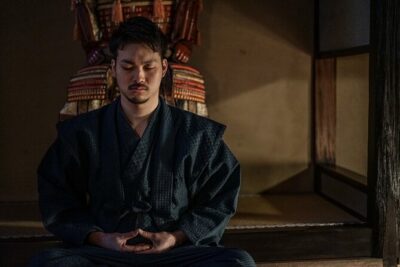
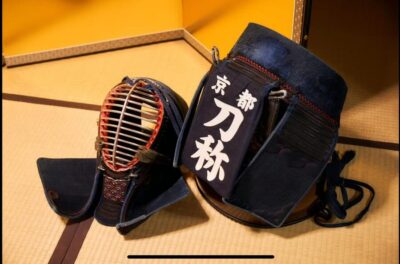
Kendo and Samurai Experience with Uniform and Gear
Read our review →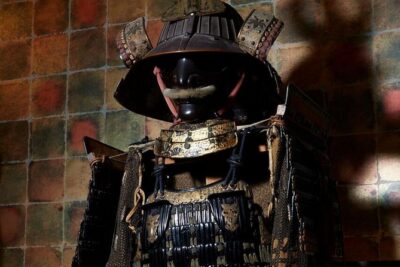
Skip the lines Basic Ticket at SAMURAI NINJA MUSEUM KYOTO
Read our review →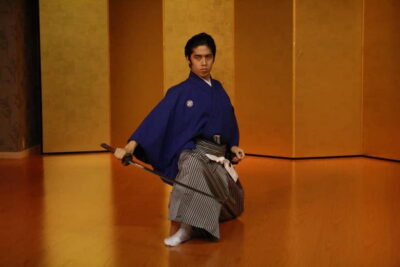
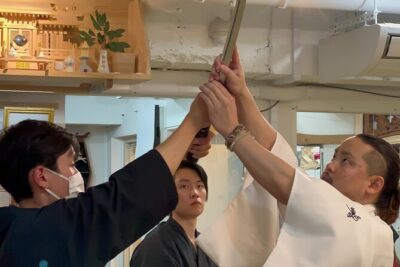
Samurai Training with Modern day Musashi in Kyoto
Read our review →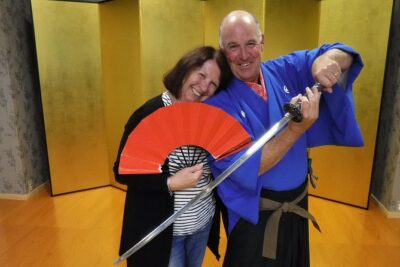

Private Tea Ceremony and Sake Tasting in Kyoto Samurai House
Read our review →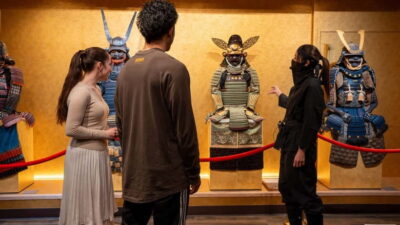
Browse the lists this tour appears in