
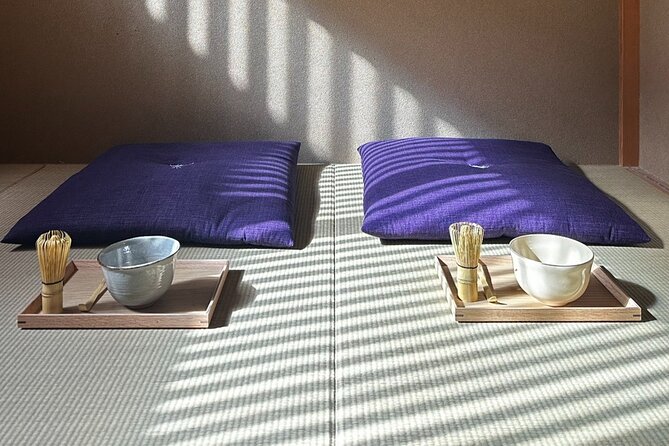
Reviewed · KYOTO TEA CEREMONIES
KYOTO: Private Tea Ceremony in Hidden Townhouse (Kid-Friendly)
Kyoto’s tea tradition becomes much easier to enjoy when you can ask questions, make the tea yourself, and work at your own group’s pace. This private 45-minute ceremony takes place in a hidden townhouse and includes tea-plantation footage, stone-milling matcha, a demonstration, hands-on preparation, tasting, and a matcha latte.
I like two things right away: personal attention from the host, including Yuki, and the chance to learn a skill you can repeat at home. Families also get a calmer setting than a large group class. The main drawback is the short time, so this is a compact introduction rather than a long, formal tea-school lesson.
Key points to know before booking
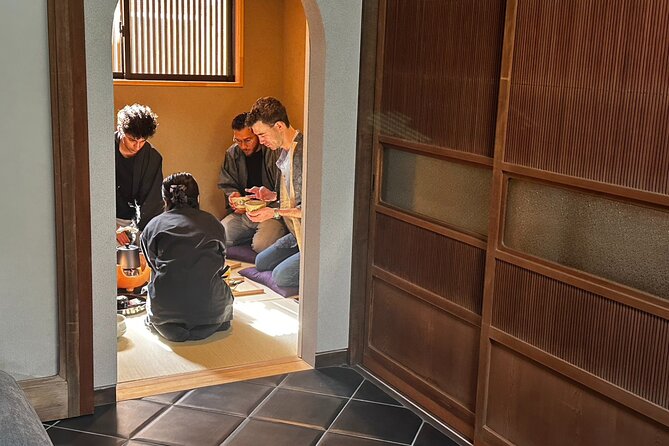
- Private townhouse setting: Only your own group takes part, which makes it easier to ask questions and take photos.
- Matcha from leaf to cup: You watch tea-plantation footage, mill powder with a stone, and prepare your own drink.
- Several ways to taste matcha: The session includes tea tasting and matcha latte making.
- Good for families: Children are welcome, and the private format gives the host more room to adjust the pace.
- Short and focused: The activity lasts about 45 minutes, making it easy to fit into a Kyoto sightseeing day.
- Convenient fixed meeting point: The experience begins and ends at WOM-Way of Matcha, at 863-41 Jurakucho in Kyoto’s Kamigyo Ward.
A quiet start in Kyoto’s Jurakucho neighborhood
The experience begins at WOM-Way of Matcha, at 863-41 Jurakucho, Kamigyo Ward, Kyoto, 602-8156. It ends at the same place, so you do not need to arrange a separate return transfer or figure out a second meeting point.
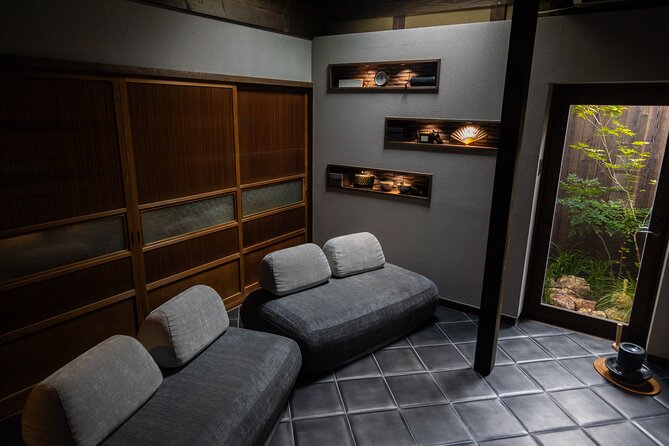
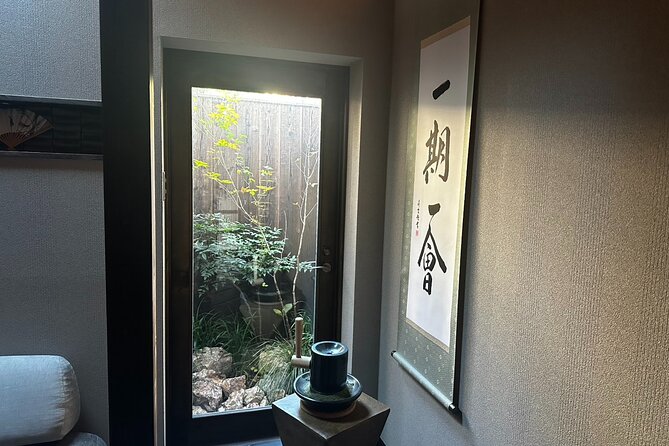
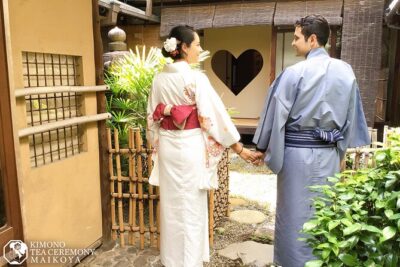
The setting is a hidden townhouse rather than a large public venue. That matters because the mood of a tea ceremony depends partly on quiet and attention. Here, you are not sharing the session with a busload of strangers. Your own group takes part, and the host can explain each stage directly to you.
I would allow enough time to locate the address before the scheduled start. The supplied information gives a precise meeting point, but it does not include transportation directions or a hotel pickup service. A mobile ticket is provided, so keeping your booking details easy to access on your phone should make arrival simpler.
The townhouse setting also gives you time to take photographs. This is useful if you want a record of the experience, though the main value is the activity itself rather than a quick photo stop.
More tea ceremonies in Kyoto:
- Kyoto: Tea Ceremony in a Traditional Tea House in Kiyomizu
★ 4.9 · 3,519 reviews - Kyoto: Tea Ceremony Ju-An at Jotokuji Temple
★ 4.9 · 3,207 reviews - Kyoto: 45-Minute Tea Ceremony Lesson Experience
★ 4.3 · 2,378 reviews
Tea plantations on screen before the bowl
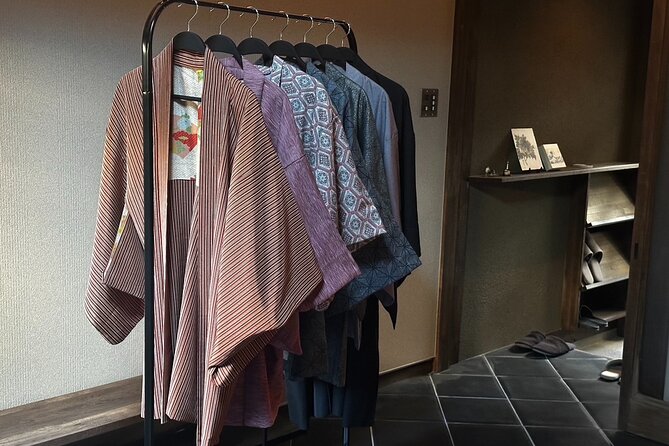
The session starts with footage of tea plantations. This short visual introduction gives you a look at where matcha begins before you handle the powder yourself.
That order is useful. You first see the source, then follow the ingredient through milling and preparation. For children, the film can make the subject easier to understand than a long explanation. It also helps set up the rest of the session without asking everyone to arrive with prior knowledge of Japanese tea.
The available information does not specify the film’s exact length or the tea-growing region shown. Expect it to be a brief introduction, not a separate plantation visit. If you are hoping to walk through actual tea fields, this activity will not provide that. Its focus is a practical indoor lesson in Kyoto.
I like this opening because it gives the ceremony some context without taking up most of the 45-minute schedule. You move quickly from watching to doing.
Grinding matcha with a traditional stone
Next comes stone-milling matcha powder. This is one of the more distinctive parts of the session because you are not simply handed a prepared bowl and told how to drink it.
The stone mill gives you a clear sense that matcha is made through a process. You can see and handle one step before the powder reaches the tea bowl. For children, this may be the most memorable part, since it adds a simple physical task to what could otherwise feel like a demonstration.
The provided details do not explain how long each person uses the mill or how much powder is produced. In a 45-minute experience, expect the milling to be a short shared activity rather than a lengthy workshop. Still, it adds a useful link between the tea plant shown on screen and the drink you later prepare.
This is also the part most likely to appeal to people who enjoy food and drink experiences with a hands-on element. You are learning a technique, not just watching a performance.
A clear demonstration of the tea ceremony
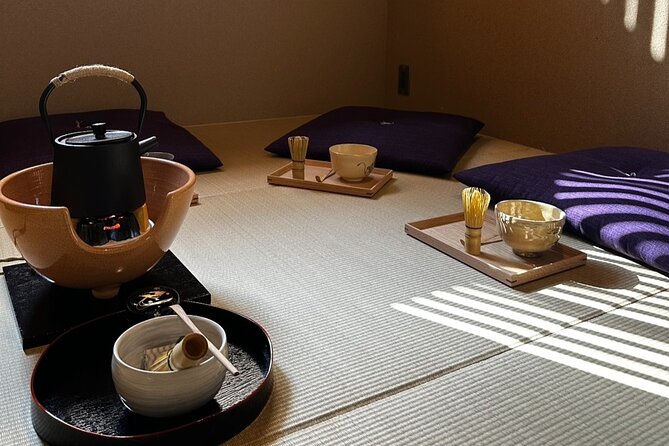
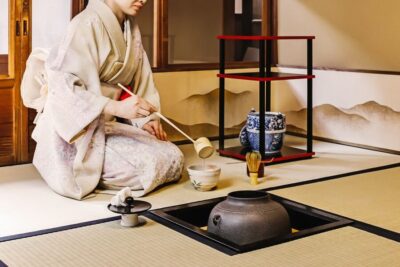
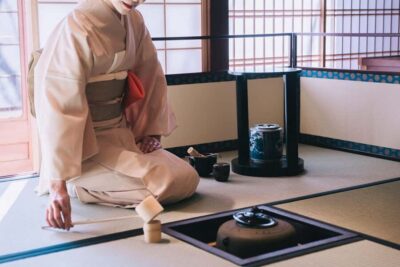
After the milling step, the host gives a tea ceremony demonstration. This lets you see the preparation before you try it yourself.
A demonstration is especially helpful if you have never attended a Japanese tea ceremony. You can watch the sequence first, then copy the basic method with less uncertainty. The host can also explain what is happening as you go, and the private format means you can ask questions without interrupting a large group.
The session is described as traditional, but the supplied information does not list every movement, utensil, or formal rule. I would treat it as an approachable introduction rather than a full ceremonial study. That is good news for families and first-time participants. You can learn the main idea without needing to master a long set of customs in one sitting.
The strongest praise attached to this experience centers on the host’s care and explanations. Yuki is described as polite, friendly, and informative, while another account highlights how carefully the host explained each part. Those details point to a calm teaching style, which is important in a ceremony where the small steps may be unfamiliar.
A few more Kyoto tours worth putting on the shortlist
- PERFECT KYOTO 1-Day Bus Tour
★ 5.0 · 13,518 reviews - Kyoto: Fushimi Inari, Kinkakuji, Bamboo Grove 1 Day Bus Tour
★ 4.8 · 4,316 reviews - Kyoto Geisha Walking Tour: Gion District & Hidden Gems
★ 4.7 · 3,273 reviews - Kyoto: Gion Magical Night Walking Tour with Geisha Trivia
★ 4.9 · 2,393 reviews
Making your own cup of matcha
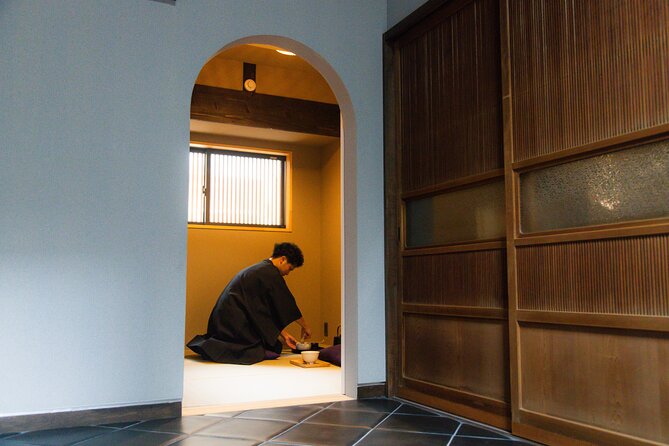
The hands-on portion follows the demonstration. You prepare your own cup and taste it.
This is where the experience earns its place over a simple tea tasting. You get to put the earlier steps together and see how matcha preparation works in practice. The host can give you personalized help, which is harder to provide in a crowded class.
You should also expect some variation in the result. Your first bowl may not look or taste exactly like the host’s. That is part of the point. You are learning a technique that you can try again at home, not being judged in a formal test.
The activity specifically presents the preparation method as something you can recreate later. That makes the lesson more useful after your Kyoto visit. You may leave with a better idea of how matcha is handled and prepared, even if you do not become an expert in one short sitting.
The private format matters here. If someone in your group needs the instructions repeated, or a child wants extra help, the host has a more direct chance to respond. That flexibility is one reason the activity works well for families.
Tasting tea and making a matcha latte
The session also includes tasting and making a matcha latte. This gives you more than one way to experience the tea.
The tasting keeps the focus on matcha itself. The latte offers a softer, more familiar option for anyone who finds straight matcha too strong or unfamiliar. It also gives children a reason to stay interested if the formal ceremony portion feels quiet or serious.
The details do not specify the milk, sweetener, or exact recipe used for the latte, so I would not book this expecting a full café-style beverage workshop. Think of it as an extra tasting format within the tea lesson.
Still, this final stage adds range to the experience. You can compare the traditional tea preparation with a more modern drink and decide which style suits you. It also makes the activity feel less rigid for mixed-age groups.
Why the private format helps families
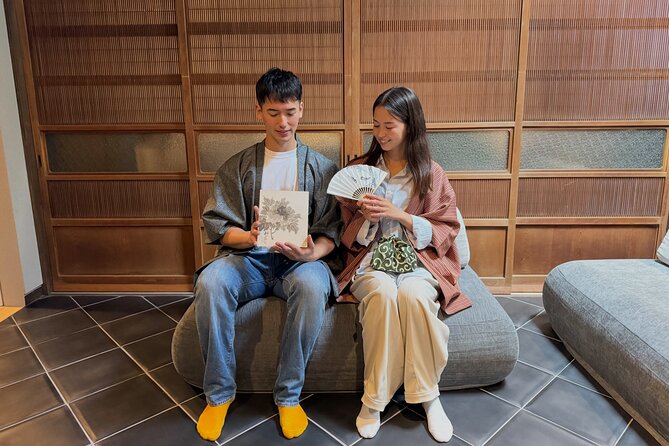
Children are welcome, and the activity is described as suitable for families. That does not mean every child will enjoy every minute. The ceremony still includes quiet observation and careful preparation. Young children who need constant movement may find parts of it slow.
The private setup gives you a better chance of managing that. Your group does not need to match the pace or behavior of a room full of other participants. You can ask the host to clarify a step, give a child a turn, or pause for a photograph without worrying about holding up strangers.
I would choose this for families who want a cultural activity with a practical element. The stone milling, tea making, tasting, and latte preparation offer several changes of pace within a short session.
It also suits couples, friends, and solo visitors who prefer a quieter introduction. The experience has enough structure to feel organized, but it does not appear designed as a strict examination of tea ceremony rules.
What the 45-minute length means
Forty-five minutes is enough for a focused introduction, but it sets a clear limit. You will cover several stages, so none should be treated as a long standalone lesson.
The schedule moves from tea-plantation footage to stone milling, a demonstration, hands-on tea making, tasting, and latte making. That is a lot to fit into one sitting. If you want an in-depth study of Japanese tea, a longer specialist class may suit you better.
For most Kyoto itineraries, though, the shorter format is practical. You can fit it between sightseeing stops without giving up half a day. The fixed start and end point also make it easier to plan the rest of your schedule, provided you allow time to reach Jurakucho.
I see the 45-minute length as a strength for first-time visitors and families, with one caution: arrive ready to participate. If you spend much of the session taking photos or waiting for your group to settle, there will be less time for questions and practice.
Is the 51.24 price good value?
At $51.24 per person, the price is not simply paying for a cup of tea. You are paying for a private activity, a host-led explanation, the tea-plantation introduction, stone-milling demonstration, ceremony demonstration, hands-on preparation, tasting, and latte making.
The private format is the key value. A lower-priced group activity may offer a similar basic demonstration, but it may not give your family or personal group the same freedom to ask questions or move at a comfortable pace. For visitors who want a personal cultural experience rather than a quick observation, the added cost can make sense.
The value is also stronger if you plan to use the technique again at home. The activity teaches a process, not just a story. If you buy matcha later and remember the basic preparation, the experience continues to be useful after your visit.
On the other hand, the price may feel high if you only want to taste matcha or take a few photographs. The session lasts about 45 minutes, and no transportation, meal, or wider Kyoto tour is included. You are paying for the private instruction and hands-on format.
The experience has a 4.9 rating from 20 reviews, with 100 percent recommendation shown in the supplied information. The most praised points are the host’s kindness, careful explanations, and personalized feel. Those qualities are exactly what support the price.
Practical details before you reserve
Confirmation is provided at the time of booking. The activity uses a mobile ticket, and the meeting point is WOM-Way of Matcha in Jurakucho.
This is a private tour, so only your group participates. The activity finishes back at the meeting point. No hotel pickup or transportation service is included in the details provided, so plan your route to and from the townhouse yourself.
Free cancellation is available if you cancel at least 24 hours before the start time. Cancellations made less than 24 hours in advance are not refunded, and changes within that period are not accepted. The cut-off uses Kyoto local time.
The experience provider is OHINERI. Yuki is the host name specifically associated with the positive comments supplied for this activity, though the booking information does not guarantee that Yuki will personally lead every session.
Who should book this Kyoto tea experience?
I would recommend it to families, couples, and small private groups who want to learn by doing. It is also a good choice if you have limited time and want a short cultural activity that does not require a full day.
You should book it if you value direct explanations, a quiet setting, and the chance to prepare matcha yourself. The private format is particularly useful if your group includes children or people who may want to ask many questions.
I would look elsewhere if you want a long, highly formal tea ceremony, extensive historical instruction, or a visit to an actual tea plantation. Those are not part of this experience. The focus is a compact introduction in a Kyoto townhouse, with practical preparation at its center.
Final verdict: a useful, family-friendly introduction
This private tea ceremony makes a smart choice for visitors who want more than a ceremonial photo. You watch where tea begins, mill matcha with a stone, see the proper sequence, prepare your own cup, taste it, and make a latte.
The short duration keeps it easy to fit into a busy Kyoto day, while the private format gives the host room to explain things carefully. At $51.24 per person, it offers fair value for a personal, hands-on lesson, especially for families and small groups.
Book it for the friendly instruction and practical activity. Skip it only if you are seeking a longer academic course or a formal ceremony with extensive traditional detail.
FAQ
Where does the tea ceremony take place?
It takes place at WOM-Way of Matcha, at 863-41 Jurakucho, Kamigyo Ward, Kyoto, 602-8156, Japan.
How long does the experience last?
The tea ceremony lasts approximately 45 minutes.
Is this a private activity?
Yes. Only your personal group participates in the activity.
Are children allowed to join?
Yes. The experience is described as family-friendly, and children are welcome.
What happens during the experience?
You watch footage of tea plantations, make matcha powder with stone milling, watch a tea ceremony demonstration, prepare and taste tea, and make a matcha latte.
Can I make my own matcha?
Yes. The experience includes hands-on tea making, and you can learn preparation techniques to recreate at home.
Can I take photographs?
Yes. The experience includes time to capture photographs of your tea ceremony.
Where does the activity end?
It ends back at the meeting point at WOM-Way of Matcha.
Is a mobile ticket available?
Yes. The experience includes a mobile ticket.
What is the cancellation policy?
You can cancel for a full refund up to 24 hours before the start time. Cancellations or changes made less than 24 hours before the start time are not accepted for a refund.
Newest Kyoto experiences on the site
- Treasures of Kyoto: Gion & historical Walking Tour★ 5.0 · 6 reviews
- Whisk Your Own Matcha: A Zen Matcha Experience at Temple★ 3.6 · 7 reviews
- Uji: Private immersion into Kyoto’s tea and reglious culture★ 5.0 · 17 reviews
- Kyoto tea town for matcha lovers★ 5.0 · 16 reviews
- Kyoto Matcha Green Tea Tour★ 4.5 · 23 reviews
- Uji and Wazuka Matcha Farm Half Day Private Guided Tour★ 5.0 · 21 reviews
- Utilising upcycled Matcha! Creating matcha incense (Uji, Kyoto)★ 5.0 · 6 reviews
- Sacred Temple Yoga Experience in Japan★ 5.0 · 3 reviews
Kyoto Tea Ceremonies, compared.
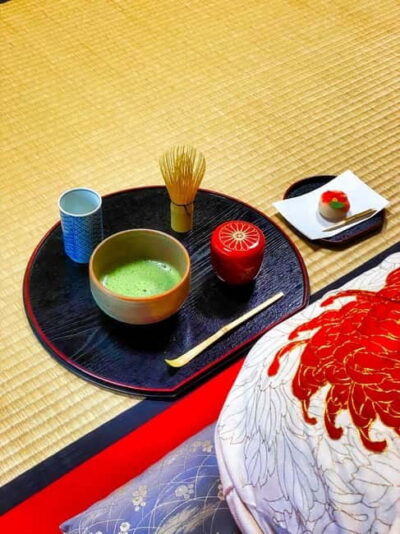
Tea Ceremony in a Traditional Tea House in Kiyomizu
Read our review →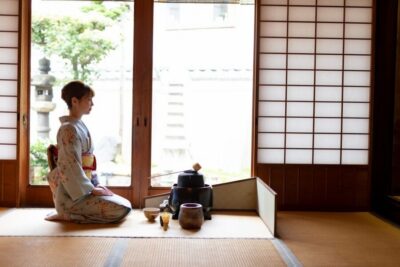
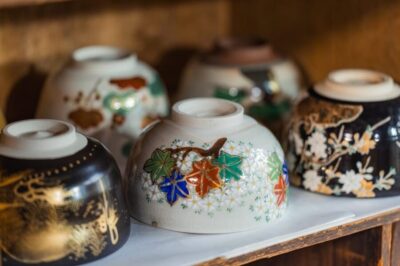
Tea Ceremony in 100-year-old Kyo-Machiya Townhouse
Read our review →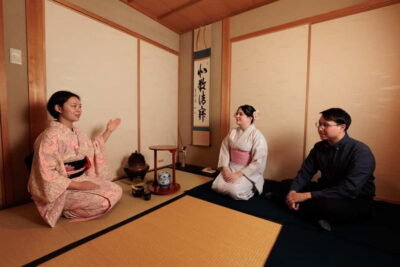
Browse the lists this tour appears in