
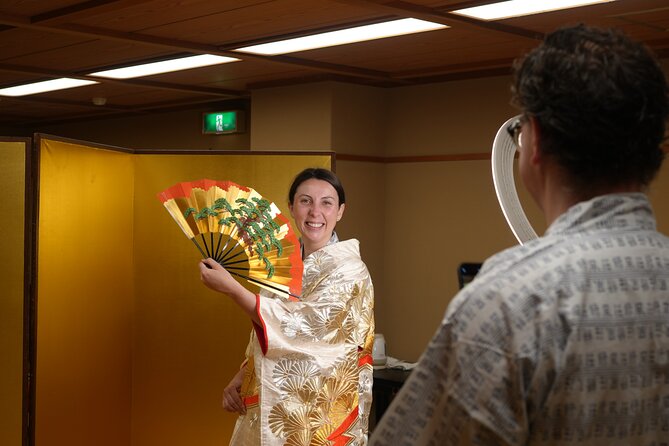
Reviewed · KYOTO TEA CEREMONIES
Kyoto Private Tea Ceremony at a Japanese Inns
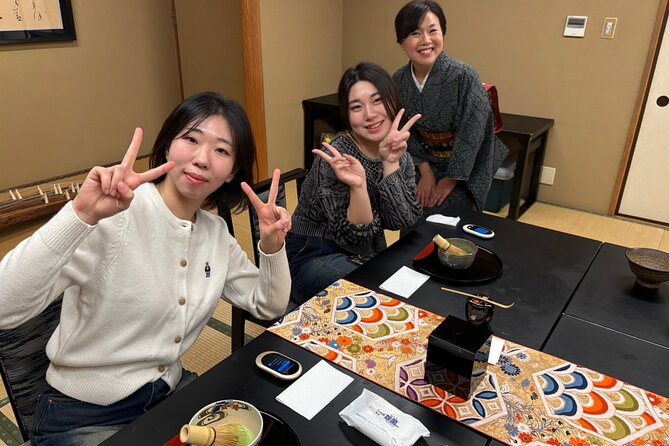
Kyoto’s temples may close for the night, but this candlelit tea ceremony keeps the city’s cultural life going. Inside a traditional inn, you enter a private 20-tatami banquet room for kimono photos, a short Zen meditation, a formal tea demonstration, and your own bowl of whisked matcha. I like the intimate group size of two to six people, and I like that hosts Matsuda and Mayumi use translator devices so children and non-Japanese speakers can ask questions.
The kimono session is more than a quick costume change. You can wear a bridal uchikake or a men’s haori, pose with folding fans or swords, and use professional lighting while staff help take photographs. The main consideration is value: at about $97.98 per person, this is not simply a cup of tea. You are paying for a private cultural program, costumes, a guide, and personal attention.
Key points
- A private 20-tatami room: The ceremony takes place in a traditional Kyoto ryokan space normally closed to the public.
- Four-part evening program: Allow about 59 minutes for kimono photos, Zen meditation, the tea demonstration, and matcha preparation.
- Matsuda and Mayumi host the experience: Translator devices make it possible to follow explanations without speaking Japanese.
- Hands-on matcha making: You do not just watch the ceremony. You whisk your own tea and receive matcha with sweets.
- Good for families and small groups: The private format is limited to two to six people, with children under 15 priced at ¥3,000.
- After-dark Kyoto option: This gives you a cultural activity after major temples and sightseeing stops have closed.
A candlelit room inside a Kyoto ryokan
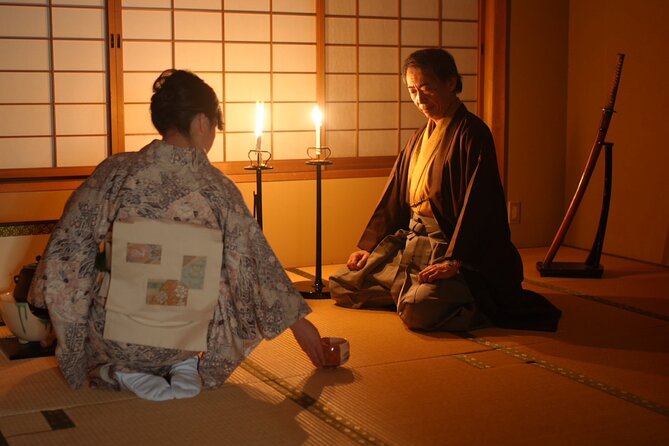
The setting does much of the work here. You meet at ZEN: Tea Ceremony Experience in Kyoto, at 490 Kanayacho, Ryofuso, fourth floor, in Kyoto’s Shimogyo Ward. The activity ends at the same place, and the venue is near public transportation.
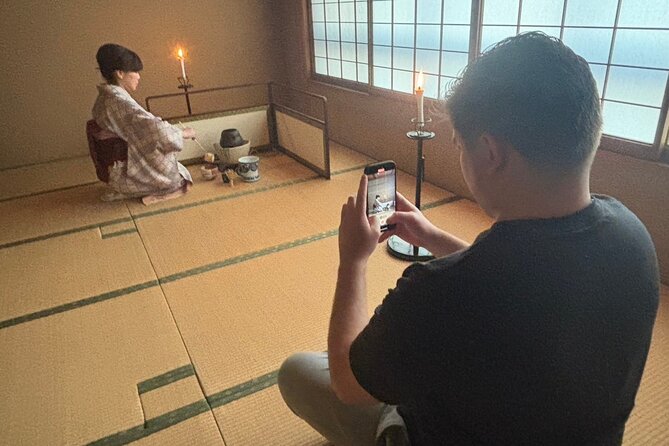
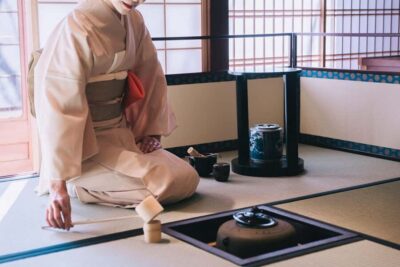
The room is a 20-tatami banquet hall inside a long-established inn. It is normally closed to the public, so the experience has a private, tucked-away feel without requiring you to leave central Kyoto. Candlelight replaces the bright lighting you may have encountered at more commercial cultural shows. That soft, dark setting suits the quiet pace of the tea ritual.
This is a private activity for your own group, with two to six people. That limit matters. A tea ceremony can lose its calm when you are one face in a large crowd, or when an instructor must rush from person to person. Here, the small group allows more room for questions, photographs, and individual help with the tea whisk.
The venue is traditional, but the communication is modern. Matsuda and Mayumi use translation devices to explain the ceremony and answer questions. If you are bringing children or family members who do not speak English, this is especially useful. One family found that even children could ask questions in their own language.
More tea ceremonies in Kyoto:
- Kyoto: Tea Ceremony in a Traditional Tea House in Kiyomizu
★ 4.9 · 3,519 reviews - Kyoto: Tea Ceremony Ju-An at Jotokuji Temple
★ 4.9 · 3,207 reviews - Kyoto: 45-Minute Tea Ceremony Lesson Experience
★ 4.3 · 2,378 reviews
Kimono, haori, fans, and swords: the first 15 minutes
The activity begins with a kimono dressing and photo session lasting about 15 minutes. You may wear a bridal uchikake, the elaborate outer robe associated with formal Japanese dress, or a men’s haori. Props include folding fans and swords, giving the photographs a more theatrical look than a simple rental-kimono portrait.
Staff assist with the photography, and professional lighting is provided. That is a practical advantage if you want a family photograph or a keepsake from the evening. You do not need to arrange a separate photographer or ask a stranger to take hurried phone pictures.
The photo session also eases you into the room. You get time to look around, adjust to the costume, and meet the hosts before the quieter sections begin. If you are taking children, this active opening may help hold their attention before the meditation and demonstration.
The tradeoff is time. Fifteen minutes is enough for a set of portraits, not a full kimono rental outing. Do not book this expecting a long walk through Kyoto in costume or an elaborate hair and makeup appointment. The clothing is part of this short cultural program, not a separate fashion experience.
Photos are welcome throughout the activity. Still, you will get better pictures if you also put your phone away for a few minutes and watch what is happening. The room’s candlelight is part of the appeal, and constant screen use can work against the calm atmosphere.
Four quiet minutes of Zen meditation
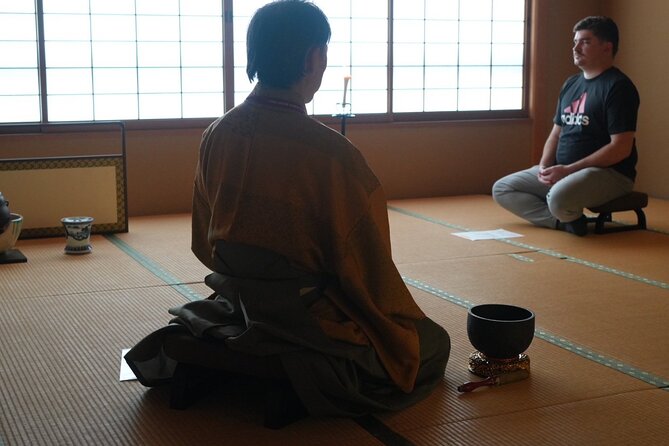
After the photographs, the program includes about four minutes of Zen meditation. It is brief, but that is useful. You do not need previous meditation experience, and you are not being asked to sit through a long silent session in an unfamiliar posture.
The short pause helps change the mood from playful photo session to tea ceremony. You have just been posing with a fan or sword. A few quiet minutes let you settle, look around the candlelit room, and pay attention to the movements that follow.
I would treat this as an introduction rather than a full Zen lesson. Four minutes is too short for detailed instruction or a sustained meditation practice. Its purpose is to slow the pace and prepare you for the tea ritual.
For families, this part may be the biggest challenge. Young children can manage four minutes, but they may need a simple explanation beforehand: this is a short quiet pause, not a long class. The private room helps because your group can take part without worrying about disrupting a large audience.
Watching the 20-minute tea ceremony
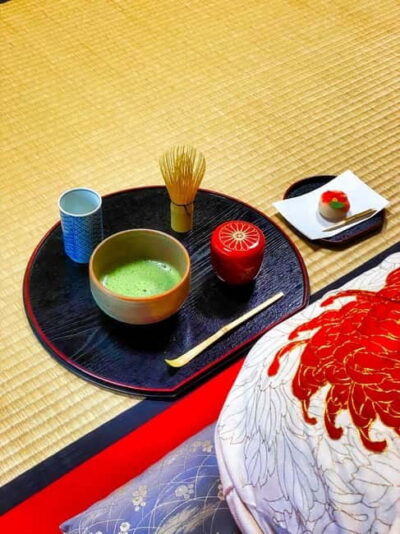
The central demonstration lasts about 20 minutes. You are welcomed as a guest, watch the preparation, and receive a bowl of matcha with Japanese sweets. The focus is not only on the drink, but also on the order, gestures, and care that shape a formal tea gathering.
That context makes the experience more valuable than a basic matcha tasting. Matcha can taste bitter or grassy if you are not used to it, but the ceremony gives the bowl a setting and a purpose. You see how the tea is presented, how the host treats the guest, and why small movements matter.
The demonstration is also the part that benefits most from the translator device. Tea ceremony customs can be hard to follow if you only watch from a distance. With explanations available, you can ask why a utensil is used, what a gesture means, or how the guest should receive the bowl.
The experience includes tea utensils and a licensed guide. You should expect a guided presentation, not a fully silent ritual where nobody explains anything. That makes it accessible for first-time visitors, but it also means the program is designed for learning and participation rather than strict ceremonial silence.
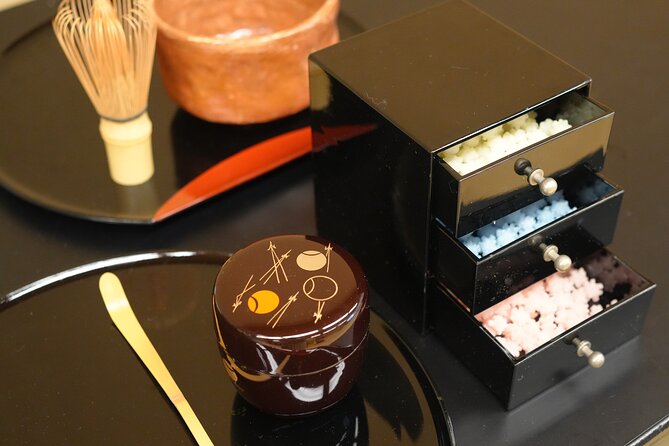
The sweets matter, too. Traditional sweets balance the sharp taste of matcha and give you a small example of how food and tea work together in Japanese hospitality. The supplied details describe matcha and sweets as included. Coffee and tea are also listed among the inclusions, though the main focus is clearly the matcha ceremony.
A few more Kyoto tours worth putting on the shortlist
- PERFECT KYOTO 1-Day Bus Tour
★ 5.0 · 13,518 reviews - Kyoto: Fushimi Inari, Kinkakuji, Bamboo Grove 1 Day Bus Tour
★ 4.8 · 4,316 reviews - Kyoto Geisha Walking Tour: Gion District & Hidden Gems
★ 4.7 · 3,273 reviews - Kyoto: Gion Magical Night Walking Tour with Geisha Trivia
★ 4.9 · 2,393 reviews
Whisking your own matcha for 20 minutes
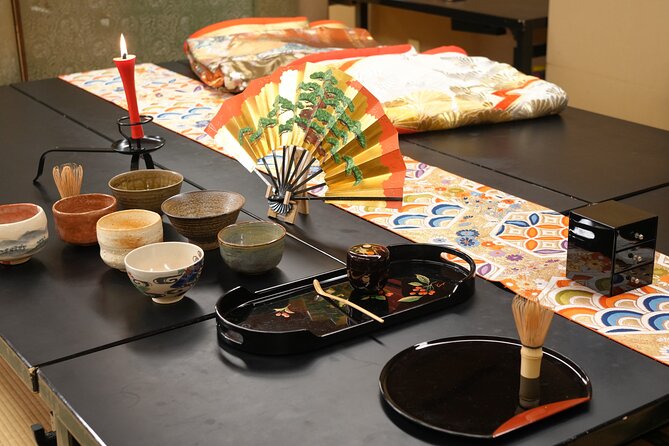
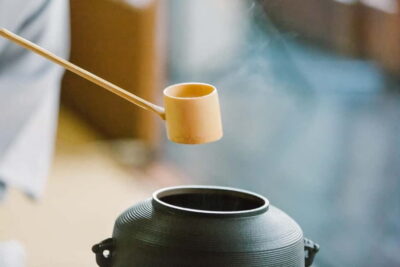
The final major section lasts about 20 minutes and puts the whisk in your hand. You make your own matcha under guidance, using the tea utensils provided at the venue.
This is where the activity becomes more than a performance. Watching a practiced host prepare tea is one thing. Trying to whisk the powder yourself gives you a better sense of the technique and the care involved. Your first bowl may not have the same foam or smoothness as the guide’s, and that is part of the point.
You will have time to ask questions and receive help. The small group format is useful here because the host can pay attention to how each person is holding the whisk and moving it through the tea.
The hands-on section also works well for children and mixed-age groups. A child may not remember every detail of the demonstration, but making a bowl of matcha gives the evening a clear activity. The translation devices add another layer of access, letting children ask questions in the language they are most comfortable using.
Do not expect a large meal or a long tasting menu. This is a focused tea experience with sweets, not a dinner. You may want to eat beforehand if you are scheduling it around an evening meal.
What makes the private format worth the price
The adult price is listed as ¥15,000, or about $97.98 in the supplied booking information. Children under 15 are listed at ¥3,000. Currency conversions change, so check the final amount shown when you reserve.
At first glance, nearly $100 for 59 minutes can seem steep. The price makes more sense when you count what is included: a private room, a licensed guide, kimono or haori costumes, props, professional lighting, staff photography help, Zen meditation, a tea demonstration, matcha, sweets, utensils, and hands-on preparation.
You are also paying for privacy. A group of two to six avoids the feel of a mass class and lets the hosts give attention to your family or friends. If you want a quiet cultural activity with good photo opportunities and direct instruction, that personal format may justify the cost.
The value is weaker if you only want to taste matcha or take a quick kimono photo. Kyoto offers many ways to do those individual activities, and this experience combines them into a tightly timed evening program. I would book it for the complete package, not for one isolated feature.
The child price improves the calculation for families. At ¥3,000, children can join the same private program at a much lower rate. The activity’s communication system also makes it a more practical choice for families with different language abilities.
How this fits into a Kyoto evening

The experience is designed for the hours after major sightseeing stops close. The supplied description specifically points to famous temples such as Kinkaku-ji, Ginkaku-ji, and Kiyomizu-dera being closed at night. You can use this activity to keep your evening focused on Japanese culture rather than simply returning to your hotel.
The timing also makes sense after a day of walking. Instead of another large attraction, you get nearly an hour indoors, seated in a traditional room. That makes it a useful choice for a night when you want something structured but not physically demanding.
You should plan around the meeting point carefully. The activity starts and ends at ZEN: Tea Ceremony Experience in Kyoto, at the fourth floor of Ryofuso in Kanayacho, postal code 600-8323. The venue is near public transportation, but the information provided does not give a walking time from a specific station, so check your route before the start time.
Advance reservation is required, and the activity is commonly booked about eight days ahead. That is a good reason to reserve early if you need a particular evening, especially for a group of six. You receive confirmation at booking, and the ticket is mobile.
The cancellation rules are simple but strict close to the start. You receive a full refund if you cancel at least 24 hours beforehand. Changes or cancellations inside 24 hours are not accepted and are not refunded. The policy also says the activity requires good weather and a minimum number of participants. If the provider cancels for either reason, you are offered another date or experience, or a full refund.
Who will enjoy this tea ceremony most
I would recommend this to you if you want a small, guided introduction to Japanese customs rather than a formal tea school lesson. It gives you enough explanation to understand the main gestures, but it does not require prior knowledge or Japanese language skills.
Families are a strong match. The costumes, props, photographs, sweets, and matcha preparation create several different points of interest. The translator devices are particularly helpful when children want to ask questions directly.
Couples and small groups of friends may like the private setting and candlelit atmosphere. The activity also suits anyone looking for an evening cultural program after temple visits have ended.
You may want to skip it if you dislike dressing up, sitting quietly, or following a guided sequence. The photo session is central to the opening, and the meditation and tea demonstration require a calmer pace than a casual tasting stop. It is also not the best choice if you want a long, formal tea ceremony lasting several hours.
Should you book the Kyoto private tea ceremony?
Book this experience if you want several pieces of Japanese culture in one compact evening: traditional clothing, a private ryokan room, Zen meditation, a guided tea ceremony, and hands-on matcha making. The warm hosting style of Matsuda and Mayumi, along with the translator devices, makes it approachable for families and international visitors.
Think carefully about the price and the short duration. At about $97.98 per adult, the value comes from privacy, costumes, instruction, photography help, and personal attention. If those details matter to you, this is a well-rounded Kyoto evening activity. If you only want a bowl of matcha, choose a simpler and less expensive tasting instead.
FAQ
How long does the tea ceremony experience last?
The activity lasts approximately 59 minutes. The listed sections include 15 minutes for kimono dressing and photographs, 4 minutes of Zen meditation, 20 minutes of tea ceremony demonstration, and 20 minutes of matcha whisking.
Where does the experience take place?
It takes place at ZEN: Tea Ceremony Experience in Kyoto, located at 490 Kanayacho, Ryofuso, fourth floor, in Kyoto’s Shimogyo Ward, postal code 600-8323. The activity ends at the same meeting point.
How many people can join the private activity?
The private group size is two to six people. Only your group participates in the activity.
Is Japanese language ability required?
No. Translation devices are available so you can communicate with the hosts regardless of language. Children can also ask questions in their own language.
What is included in the price?
The experience includes matcha green tea and sweets, tea utensils, costumes, a katana and other props, staff assistance with photographs, and a licensed guide. The program also includes Zen meditation and hands-on matcha preparation.
What is the cancellation policy?
You can cancel at least 24 hours before the start time for a full refund. Cancellations or changes made less than 24 hours before the experience are not accepted and are not refunded. If the provider cancels because of weather or an insufficient minimum number of participants, you are offered another date or experience, or a full refund.
Newest Kyoto experiences on the site
- Whisk Your Own Matcha: A Zen Matcha Experience at Temple★ 3.6 · 7 reviews
- Treasures of Kyoto: Gion & historical Walking Tour★ 5.0 · 6 reviews
- Kyoto tea town for matcha lovers★ 5.0 · 16 reviews
- Uji: Private immersion into Kyoto’s tea and reglious culture★ 5.0 · 17 reviews
- Kyoto Matcha Green Tea Tour★ 4.5 · 23 reviews
- Uji and Wazuka Matcha Farm Half Day Private Guided Tour★ 5.0 · 21 reviews
- Utilising upcycled Matcha! Creating matcha incense (Uji, Kyoto)★ 5.0 · 6 reviews
- Sacred Temple Yoga Experience in Japan★ 5.0 · 3 reviews
Kyoto Tea Ceremonies, compared.
Tea Ceremony in a Traditional Tea House in Kiyomizu
Read our review →
Tea Ceremony in 100-year-old Kyo-Machiya Townhouse
Read our review →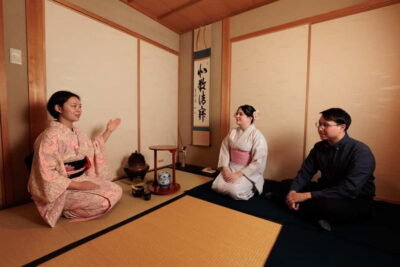
Browse the lists this tour appears in