Reviewed · FULL-DAY
Kyoto Private Customizable Full Day Tour
Kyoto gives you far too much to see in one day, so this private tour takes a sensible approach: you choose the themes and four or five places that matter most, then let the operator shape the route. You can build a classic temple day, mix famous sights with local interests, or avoid places you have already visited. Your itinerary is made for your group, not pulled from a fixed schedule.
I like the freedom to set the pace, and I like having an English-speaking guide handle the day’s transport and reservations. Guide Tak has also shown the sort of flexibility you want on a long sightseeing day, fitting in many stops, adjusting lunch plans, and even taking on the climb to the monkey park. The main catch is that four or five Kyoto sights in eight hours is ambitious, and the final price does not include meals, admission fees, or optional activities.
Key points at a glance
- Choose four or five sites: Shape the day around temples, history, food, nature, or special events.
- Start at 8:00 a.m.: An early beginning gives you the best chance of fitting several major sights into one day.
- Private guide Tak has handled changes well: A past day included a lunch adjustment and a demanding walk to the monkey park.
- Classic Kyoto stops are possible: Fushimi Inari, Kiyomizu-dera, Kinkaku-ji, Byodo-in, and Kitasuisan Bridge may all be considered, depending on your choices.
- Transport is arranged within Kyoto city: You may travel by public transportation or private vehicle, based on your booking.
- Plan early: The operator recommends booking about three months ahead, especially if you want meal or venue reservations.
A Kyoto day built around your priorities
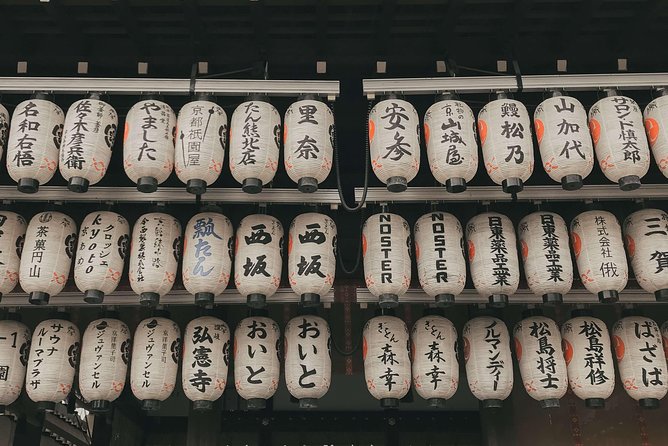
The real product here is not a fixed route. It is the planning service.
After booking, you receive a Kyoto form asking what you care about, which sights you have already seen, and what you want to avoid repeating. You can point the planning team toward culture, history, cuisine, nature, or special events. That matters in Kyoto, where a first-time visitor may want the classic temples while a repeat visitor may prefer a quieter neighborhood, a food-focused day, or a trip outside the usual circuit.
You choose four or five sites, and the operator creates the schedule. Reservations and bookings can be made on your behalf when needed. Your guide then leads only your group, rather than combining you with strangers or forcing you to keep up with a large party.
This format works best if you already have a rough idea of your priorities. You do not need to plan every minute, but it helps to tell the operator clearly if Fushimi Inari is essential, if you want time for lunch, or if you have already visited Kinkaku-ji. The more precise your form, the more useful the final route should be.
A few more Kyoto tours worth putting on the shortlist
- 5 Top Highlights of Kyoto Full Day Bike Tour (E-bike option)
★ 5.0 · 511 reviews - Full Day Biking Tour Exploring the Best of Kyoto
★ 5.0 · 498 reviews - Full Day Guided Tour to Kyoto and Nara from Osaka by Van
★ 5.0 · 420 reviews
Why the 8:00 a.m. start matters
The tour begins at 8:00 a.m. from Kyoto Station, with central Kyoto hotel pickup and drop-off offered when applicable. You should arrive at least 10 minutes early. If you are late, the guide waits for up to 30 minutes before the tour is canceled, so this is not a morning for a slow breakfast or a last-minute train connection.
Eight hours sounds generous, but Kyoto’s sights are spread across the city and beyond. Fushimi Inari is in the south, Kiyomizu-dera is in the eastern hills, Kinkaku-ji is in the northwest, and Byodo-in is in Uji. Even with an efficient guide, moving between areas takes time.
That is why the custom plan matters. Your guide can help decide if four major stops are realistic, or if five shorter visits make more sense. You may also save time by allowing the guide to arrange the day’s transport and reservations rather than working out every transfer yourself.
The tour includes transportation within the city, using public transportation or a private vehicle based on your booking. The wording is important: you should not assume that a private car is included unless your booking confirms it. Ask about the transport arrangement before you commit, especially if your group has limited mobility, young children, or luggage.
Fushimi Inari, Kyoto’s famous tunnel of gates
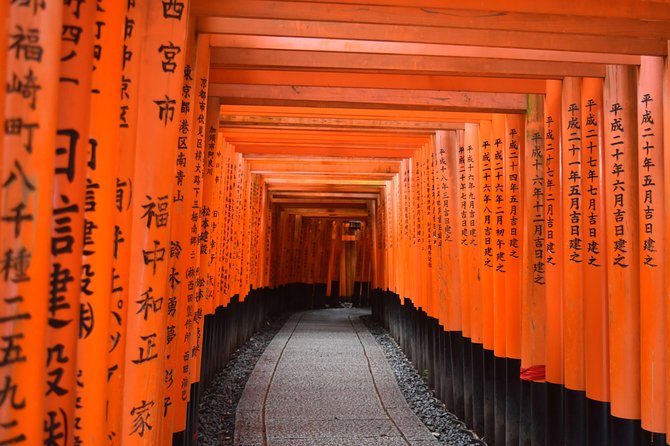
Fushimi Inari Taisha is one of Kyoto’s best-known sights, and it gives the day an immediate sense of place. This is the head shrine of Inari, the kami associated with rice and prosperity. Its long passages of torii gates lead up the wooded slopes behind the shrine.
The appeal is visual and spiritual at once. You get the bright orange gates, shrine buildings, stone fox figures, and a path that changes as you climb. The lower section is the easiest part to visit, while going farther uphill takes more time and effort.
On a custom tour, you can tell your guide how much walking you want to do. If Fushimi Inari is one of your must-see stops, ask whether the plan allows time beyond the main entrance area. If you also want Kiyomizu-dera and Kinkaku-ji, a full climb may leave you rushing later in the day.
This stop is a strong choice for first-time visitors, photographers, and anyone interested in Shinto traditions. It is less suitable if your group wants a slow, quiet temple visit with little walking. Wear shoes you can comfortably use on slopes and steps, and dress for changing weather.
Kiyomizu-dera and Kyoto’s eastern hills
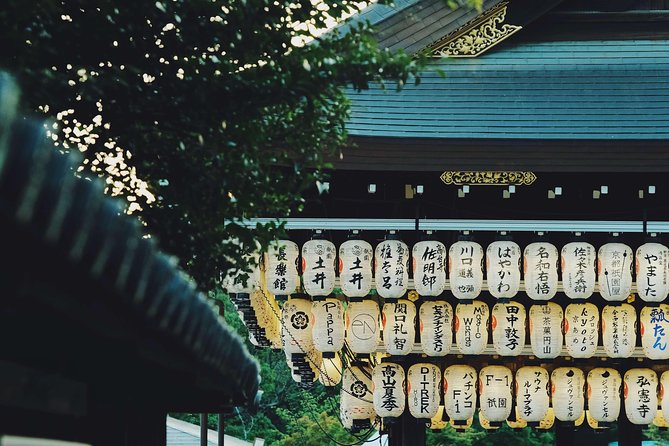
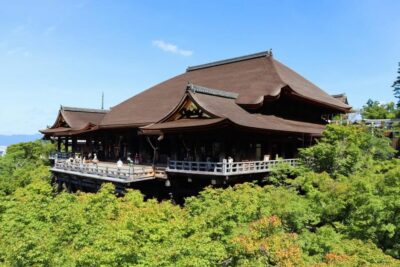
Kiyomizu-dera is an independent Buddhist temple in eastern Kyoto and part of the Historic Monuments of Ancient Kyoto UNESCO World Heritage site. Its elevated wooden stage and hillside setting make it one of the city’s essential visits.
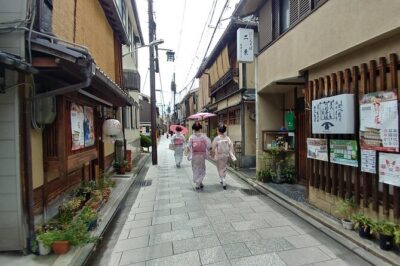
The approach is part of the experience. You reach the temple through the historic Higashiyama area, with narrow lanes and traditional-looking buildings along the way. The temple itself offers broad views over Kyoto, though the walk to and around the complex can be tiring.
This is another place where the guide’s pacing can improve the day. You may want a focused temple visit, time for photographs, or a slower walk through the surrounding streets. Tell the guide if shopping and food stops matter to you, since the custom format allows your interests to shape the route.
Kiyomizu-dera pairs well with Fushimi Inari because the two stops show different sides of Kyoto’s religious life. It also makes a good choice for a first visit, but it can be crowded and physically demanding. A moderate fitness level is expected, and you should be ready for hills, steps, and standing.
Same city, a completely different kind of day:
- PERFECT KYOTO 1-Day Bus Tour
★ 5.0 · 13,518 reviews - Kyoto: Fushimi Inari, Kinkakuji, Bamboo Grove 1 Day Bus Tour
★ 4.8 · 4,316 reviews - Kyoto: Tea Ceremony in a Traditional Tea House in Kiyomizu
★ 4.9 · 3,519 reviews - Kyoto Geisha Walking Tour: Gion District & Hidden Gems
★ 4.7 · 3,273 reviews
Kinkaku-ji, the Golden Pavilion
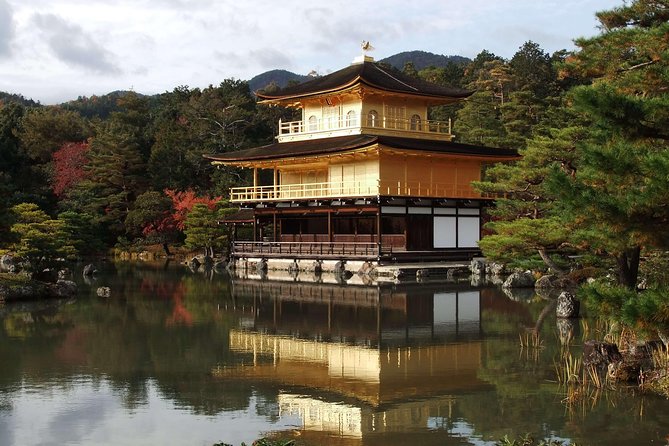
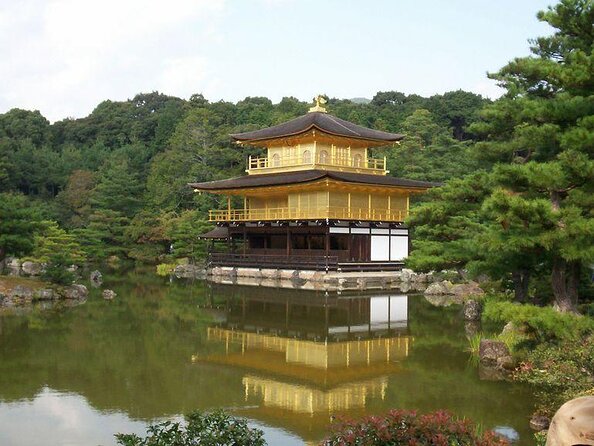
Kinkaku-ji, officially Rokuon-ji, is a Zen Buddhist temple and one of Japan’s most photographed buildings. The gold-covered pavilion sits beside a pond, giving you the famous reflection view that appears in guidebooks and travel photos.
The visit is more about the building and its setting than a long interior tour. The main draw is the sight of the pavilion from the garden route. You will want to pause for photographs, but the stop itself may be shorter than a visit to a large temple complex.
Kinkaku-ji is a sensible pick if you want one of Kyoto’s signature sights. It is also a good place to discuss with your guide if you have already seen it, since the custom form specifically lets you exclude places from earlier visits.
The tradeoff is distance. Kinkaku-ji lies away from the southern and eastern sights, so combining it with Fushimi Inari, Kiyomizu-dera, and Uji could make the day feel rushed. Your guide can help you weigh the famous checklist against a more relaxed route.
Byodo-in and the option of Uji
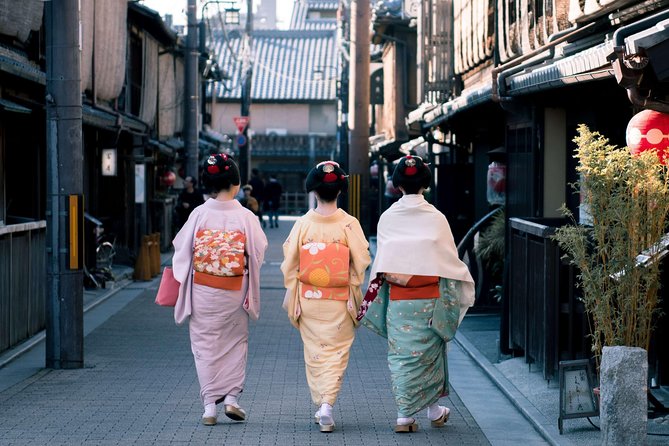
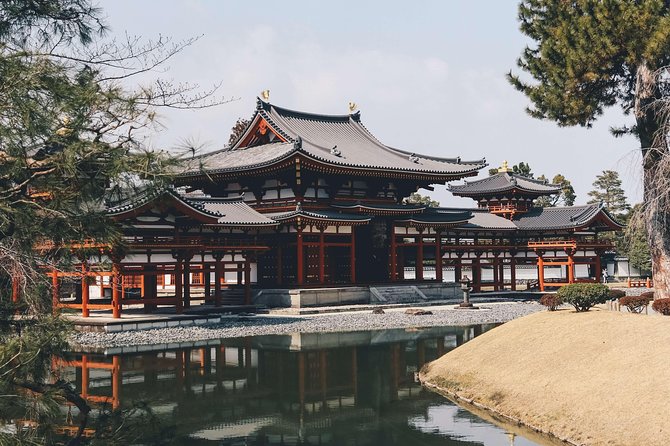
Byodo-in is in Uji, a city in Kyoto Prefecture rather than central Kyoto. Built during the late Heian period, the Buddhist temple is shared by the Jodo-shu and Tendai-shu sects. Its Phoenix Hall is one of Japan’s best-known historic buildings, and it appears on the 10-yen coin.
The supplied tour details list Byodo-in as a possible stop, but they also say transportation is within Kyoto city. That creates an important planning question. If you want Uji, confirm that the operator considers the route and transportation arrangement suitable for your booking. Do not assume every listed sight fits automatically into the standard city transport provision.
Uji can be a fine choice for someone who has already seen the central Kyoto highlights or prefers a quieter historical outing. It is less practical if your main goal is to see Fushimi Inari, Kiyomizu-dera, and Kinkaku-ji on the same day.
This is exactly the kind of decision a private guide can help with. You can choose depth in one area, or try to cover several parts of the region. The eight-hour limit means you probably cannot do both without compromises.
Kitasuisan Bridge and lesser-known choices
Kitasuisan Bridge is also listed among the possible stops. The tour information does not provide further detail about what is planned there, so you should ask the operator how it fits your interests and route before selecting it.
That limited information is not necessarily a problem. The point of the custom form is to tell the planning team what sort of places appeal to you, including local spots you may not have found on your own. Still, you should request a clear explanation of each proposed stop before the itinerary is finalized.
A private day becomes more valuable when it helps you avoid repeating places you have already visited. If you have seen all three major temple choices, you can ask for alternatives based on food, nature, local life, or special events. The operator says it can review those requests and build the day around your preferences.
What your guide adds to the day
A good private guide does more than point at buildings. The guide helps you decide how long to stay, when to move on, and which parts of a large site deserve your limited time.
Guide Tak is the only guide name provided, and the strongest detail about the guiding style is practical. Tak managed to fit in many activities while keeping the group’s pace, changed the lunch plan when asked, and accepted the challenge of walking to the top of the monkey park. That suggests a useful degree of flexibility, though you should not assume Tak will be your assigned guide unless the operator confirms it.
You also receive the guide’s phone number before the tour. That is helpful if you are meeting at Kyoto Station or need assistance on the morning of the tour. The tour is private, so you can discuss breaks, lunch timing, walking speed, and priorities directly with your guide.
The guide’s role is especially valuable in Kyoto because the city rewards good sequencing. A poor route can turn a day into a series of long transfers. A sensible route can give you four strong visits with time to stop and eat.
Price, inclusions, and the real value
The listed price is $250.19 per person. That is a serious spend, but the value depends on your group size and how much planning help you need.
You are paying for an eight-hour private service, an English-speaking professional guide, itinerary planning, arrangements made on your behalf, and transportation within the city. Hotel pickup and drop-off may also be included if your hotel is in central Kyoto. The price can make sense for a family or small group that wants one person coordinating a complicated day.
Admission fees, meals, drinks, optional activities, and gratuities are not included. You need to budget for those separately. Since several major Kyoto sights charge admission, ask for an estimate of expected entrance costs when the itinerary is prepared.
The tour is less attractive if you are comfortable using Kyoto’s public transport, choosing your own temples, and reading about each site beforehand. It is more useful if you have only one full day, want to combine distant areas, need English-language help, or do not want to spend your holiday arranging bookings.
Group discounts are offered, though the exact discount is not provided. Ask how the price changes for your party before booking. A private tour often becomes better value when divided among several people.
Booking early and protecting your plans
The operator recommends booking about three months ahead, or at least one month before your date. That advice matters if you want restaurant reservations, special venues, or a particular guide. Requests made within seven days may not be possible to arrange and can be canceled with a full refund by the operator.
After booking, you should receive the Kyoto form within 48 hours. Complete it accurately at least seven days before the tour date. The planning team uses your answers to build the route and arrange bookings.
Cancellation terms need careful attention. The main policy says the experience is non-refundable and cannot be changed for any reason. Additional booking information describes charges of 25 percent within 30 days, 50 percent within 21 days, and 100 percent within 14 days, and says a 15 percent service fee becomes nonrefundable after the custom itinerary is sent.
Because those terms appear in different parts of the booking information, I would ask the operator to confirm the exact policy that applies to your reservation before paying. Once the itinerary is prepared, changing plans may cost you.
Who should book this private Kyoto day?
I would consider this tour for a first-time visitor with one full day in Kyoto, a family that wants a flexible pace, or a small group with a clear list of priorities. It also suits repeat visitors who want to skip the standard sights and ask for food, nature, history, or local places instead.
You should be comfortable with a moderate amount of walking. Fushimi Inari and Kiyomizu-dera can involve hills and steps, and the day may include several transfers. Dress for the weather and wear practical shoes.
I would hesitate if you want a slow day at one or two temples, if you dislike fixed early starts, or if your budget does not allow for admission fees and meals beyond the tour price. I would also think twice about selecting all five major stops listed here, especially if Uji is included.
Should you book it?
Book this tour if planning time is more valuable to you than saving money. The private format, custom route, guide contact, and ability to adjust the day can turn a difficult Kyoto schedule into a manageable one. It is especially appealing when your group has mixed interests or when you want to avoid places you have already seen.
Before booking, ask for the proposed transport method, likely admission costs, the handling of Uji, and the final cancellation terms. Then keep your wish list realistic. Four well-chosen sights with time to look around will serve you better than five famous names squeezed into an exhausting timetable.
FAQ
How long is the Kyoto private custom tour?
The tour lasts approximately eight hours.
What time does the tour begin?
The scheduled start time is 8:00 a.m. You should arrive at least 10 minutes before the meeting time.
Where does the tour start?
The listed meeting point is Kyoto Station, at Higashishiokoji Kamadonocho, Shimogyo Ward, Kyoto, 600-8216, Japan.
Does the tour include hotel pickup?
Hotel pickup and drop-off are included when your hotel is within Kyoto city center.
How many sights can I choose?
You can choose four to five sites for a personalized Kyoto tour. The final route is planned around your interests and available time.
Is transportation included?
Transportation within the city is included. Depending on your booking, the transport may be public transportation or a private vehicle.
Are meals and admission fees included?
No. Meals, food, drinks, optional activities, and their fees are not included unless specifically stated. Entrance fees for selected attractions should be confirmed during planning.
What happens if I arrive late?
The guide will wait up to 30 minutes after the scheduled start time. After that, the tour may be canceled. The guide’s phone number is provided before the tour in case you need help.
Newest Kyoto experiences on the site
- Treasures of Kyoto: Gion & historical Walking Tour★ 5.0 · 6 reviews
- Whisk Your Own Matcha: A Zen Matcha Experience at Temple★ 3.6 · 7 reviews
- Kyoto tea town for matcha lovers★ 5.0 · 16 reviews
- Uji: Private immersion into Kyoto’s tea and reglious culture★ 5.0 · 17 reviews
- Kyoto Matcha Green Tea Tour★ 4.5 · 23 reviews
- Uji and Wazuka Matcha Farm Half Day Private Guided Tour★ 5.0 · 21 reviews
- Utilising upcycled Matcha! Creating matcha incense (Uji, Kyoto)★ 5.0 · 6 reviews
- Sacred Temple Yoga Experience in Japan★ 5.0 · 3 reviews
Full-Day, compared.

5 Top Highlights of Kyoto Full Day Bike Tour (E-bike option)
Read our review →
Full Day Biking Tour Exploring the Best of Kyoto
Read our review →
Full Day Guided Tour to Kyoto and Nara from Osaka by Van
Read our review →
Nara Park, Osaka & Kobe from Kyoto Full Day tour
Read our review →
Kyoto Private Car Tour – Full Day with Local Guide & Nara Option
Read our review →
Full Day Hiroshima and Miyajima Tour by Bullet Train from Kyoto
Read our review →