
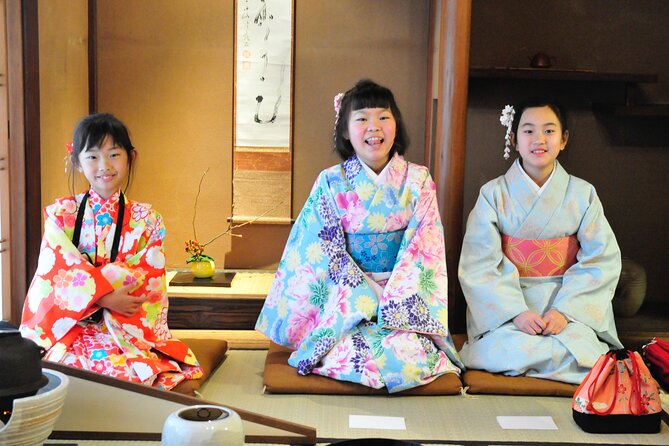
Reviewed · KYOTO TEA CEREMONIES
Kyoto Japanese Tea Ceremony Experience in Ankoan
The best part of this Kyoto experience is that you do not simply watch a tea ceremony. After a welcome cup and a clear explanation of the customs, you prepare matcha yourself, then offer it to another person. I like the small group of up to eight and Yuka’s warm, fluent English explanations. I also like the relaxed conversation about daily life and Japanese culture.
The main drawback is practical: the studio is not recommended if you have knee pain, since traditional tea rooms may require floor-level sitting. The advertised session is about one hour, though the hands-on format can take closer to 90 minutes or, depending on the group, around two hours.
Key points to know before booking
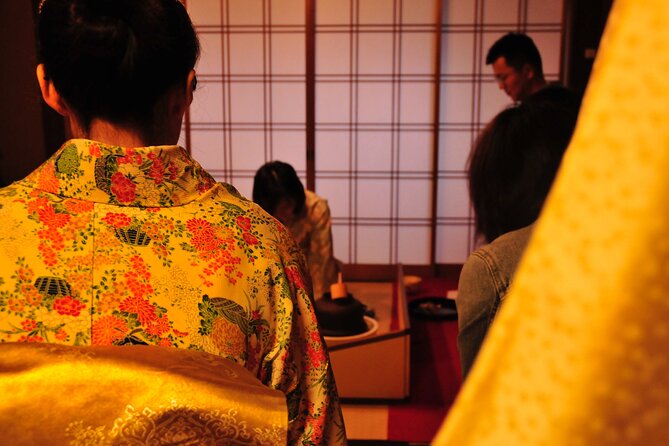
- Make your own matcha: You watch the tea master first, then whisk and serve your own tea with guidance.
- Meet Yuka: The host welcomes you with tea and explains customs, symbols, phrases, and the meaning behind the ritual in English.
- Taste wagashi: Matcha is served with a traditional Japanese sweet, giving you the classic balance of bitter tea and delicate sweetness.
- Small-group setting: The activity accepts no more than eight people, allowing time for questions and individual instruction.
- Useful Kyoto location: The studio is near public transportation in Kita Ward, close to temples that you can visit before or after.
- Good value at $32.84: You get instruction, conversation, tea, matcha preparation, and a cultural activity without paying for private transportation.
What happens when you arrive at Ankoan
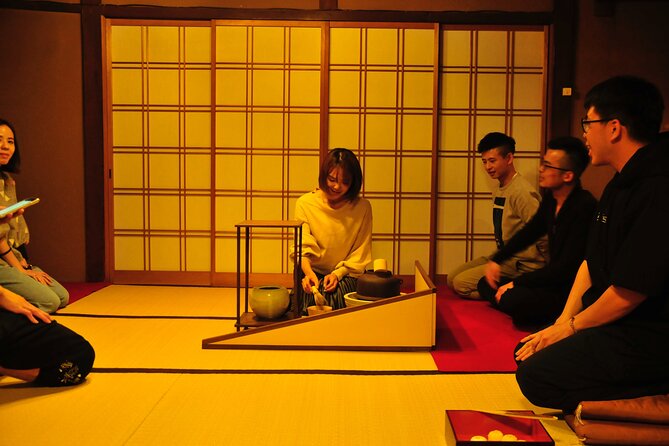
The meeting point is Tea ceremonyJapan at 63 Murasakino Monzencho, in Kyoto’s Kita Ward. The experience ends at the same place, so you do not need to arrange a separate return transfer.
You begin with a welcome tea from Yuka. This first cup is not just a quick drink before the main event. It gives you time to settle in after the journey from your hotel and start asking questions. The tone is informal, which helps if you know little about tea ceremony etiquette or feel nervous about making a mistake.
I like this gentle opening because Japanese tea ceremony can look strict from the outside. A short conversation first makes the formal steps easier to understand. You can talk about tea, matcha, Japanese customs, or everyday life in Japan.
The studio is near public transportation, and one particularly useful planning tip is its location near temples. You might visit the surrounding temples first, then use the tea ceremony as a quieter change of pace. Allow enough time to find the address, since the experience begins at a specific studio rather than at a major sightseeing landmark.
More tea ceremonies in Kyoto:
- Kyoto: Tea Ceremony in a Traditional Tea House in Kiyomizu
★ 4.9 · 3,519 reviews - Kyoto: Tea Ceremony Ju-An at Jotokuji Temple
★ 4.9 · 3,207 reviews - Kyoto: 45-Minute Tea Ceremony Lesson Experience
★ 4.3 · 2,378 reviews
Learning why each movement matters
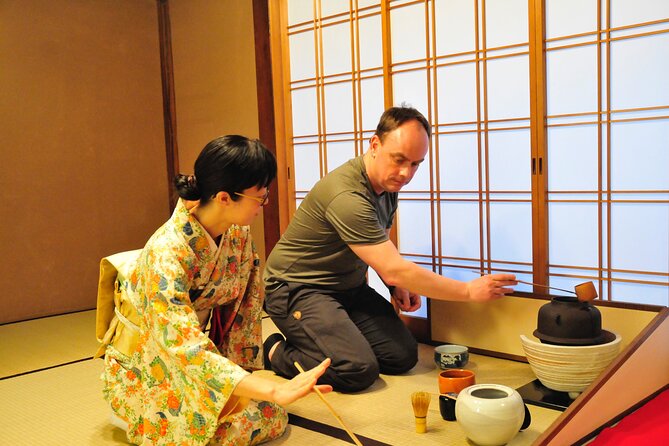
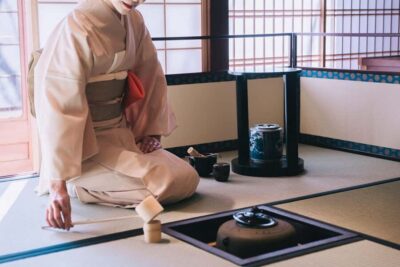
After the welcome tea, you move into a matcha tearoom. Yuka explains the main ideas and manners of Japanese tea ceremony before demonstrating the procedure.
This explanation is important. The ceremony is not only about whisking green tea. Small actions have meaning, including the way tea is prepared, served, received, and enjoyed. You learn some of the symbols and phrases used during the ritual, along with the values of attention, respect, and harmony that shape the experience.
The demonstration gives you a chance to watch before you act. Yuka uses a practical watch, then do, then teach approach. That makes the activity approachable for first-time participants, including children who can follow the steps with help.
The ceremony has a formal side, but the teaching is not presented as a test. You can ask questions as you go, and the conversation can widen into subjects such as how Japanese people live and how aspects of Japanese culture developed. This exchange between cultures is one of the strongest parts of the hour.
Making matcha instead of only watching
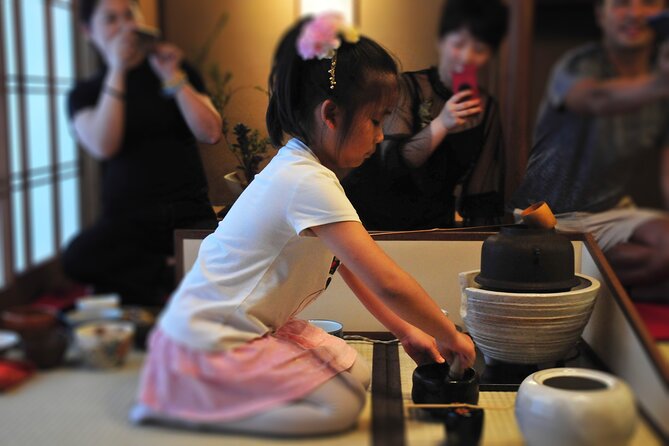
The hands-on section is the reason to choose this activity over a simple demonstration. Yuka gives you the tools and guides you through making matcha personally.
You learn the essential procedure step by step. The teacher remains nearby to explain what to do, so you are not left trying to copy a complicated series of movements from memory. This matters because the process can feel precise at first, especially if you have never used a bamboo whisk.
Once your tea is ready, you taste it yourself. You also have the chance to serve tea to another participant, following the spirit of offering tea to someone else. That small exchange turns the activity from a performance into a shared ritual.
I find this especially useful for families and couples. Children can take part rather than sit quietly through a demonstration, and couples can prepare tea for one another. An eight-year-old has been included successfully, though each child’s attention span will differ.
The tea you make may not look perfect, and that is part of the value. You are learning through practice, not buying a polished stage show. The result is a better sense of the care involved in preparing and serving matcha.
Matcha, wagashi, and a quiet pause
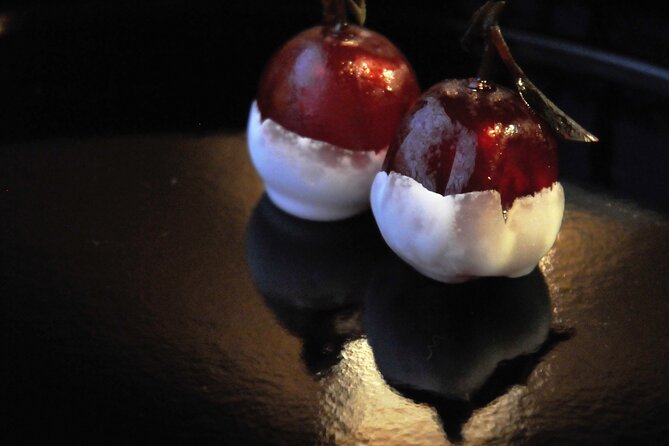
The matcha is served with wagashi, a traditional Japanese sweet. This pairing is central to the experience because the sweetness of the wagashi balances the tea’s grassy, bitter flavor.
If you are new to matcha, the taste may be stronger than expected. The sweet helps you appreciate why the two are served together. You get more than a quick sample because you first watch the preparation, learn the etiquette, make your own tea, and then taste the result.
The setting also gives you a break from Kyoto’s busy sightseeing schedule. The activity is not a rushed stop between major attractions. It asks you to sit, pay attention, and notice small details.
You can take photographs indoors freely. That is helpful if you want a record of the tools, the tea preparation, or your own attempt at whisking matcha. Still, I would treat photographs as secondary to the ceremony. The experience works best when you are paying attention to the people and movements in front of you rather than viewing everything through a phone.
A few more Kyoto tours worth putting on the shortlist
- PERFECT KYOTO 1-Day Bus Tour
★ 5.0 · 13,518 reviews - Kyoto: Fushimi Inari, Kinkakuji, Bamboo Grove 1 Day Bus Tour
★ 4.8 · 4,316 reviews - Kyoto Geisha Walking Tour: Gion District & Hidden Gems
★ 4.7 · 3,273 reviews - Kyoto: Gion Magical Night Walking Tour with Geisha Trivia
★ 4.9 · 2,393 reviews
The host makes the experience accessible
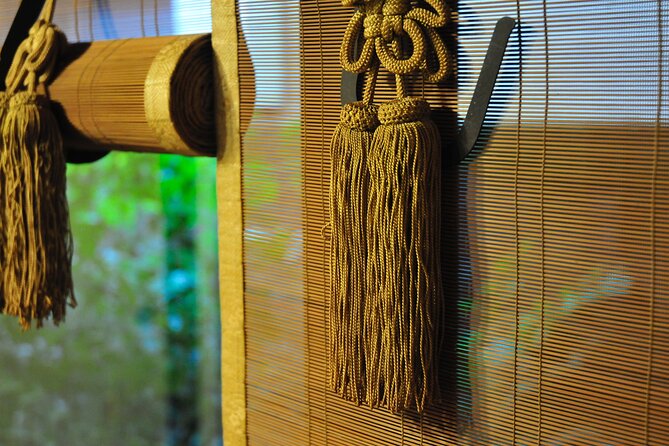
Yuka is the central reason this experience works for first-time visitors. She welcomes you, explains the customs in English, and keeps the discussion open enough for questions about Japanese life and culture.
Her English is described as very good, which matters in an activity where small details can otherwise be lost. You need to understand not only what to do, but why you are doing it. Clear explanations also make it easier to follow the manners when you serve tea to another participant.
The host’s style combines formal instruction with friendly conversation. You can learn proper procedure without feeling that you are attending a stiff lecture. That balance suits people who want cultural context but also want to relax.
The experience can be especially useful if you have long wanted to learn about tea ceremony but worried that the customs would be too difficult. The teaching is gradual, and the instructor stays close during your turn.
How long the session really takes
The listed duration is approximately one hour. The detailed description refers to a 90-minute service, while some sessions have lasted around two hours according to participant accounts.
Plan for flexibility rather than scheduling a major attraction immediately afterward. The actual length may depend on the number of people, the pace of questions, and how much time each person needs to prepare tea.
This is not necessarily a problem. A one-hour demonstration would be shorter and more predictable, but the added practice and conversation give this activity its value. If you have a tight Kyoto itinerary, leave a cushion after the scheduled finish.
The group limit is eight people. That is large enough for a social exchange but small enough for the host to guide each person. A larger group would make the personal tea preparation less useful, so the limit is worth noting when comparing similar activities.
Price, transport, and overall value
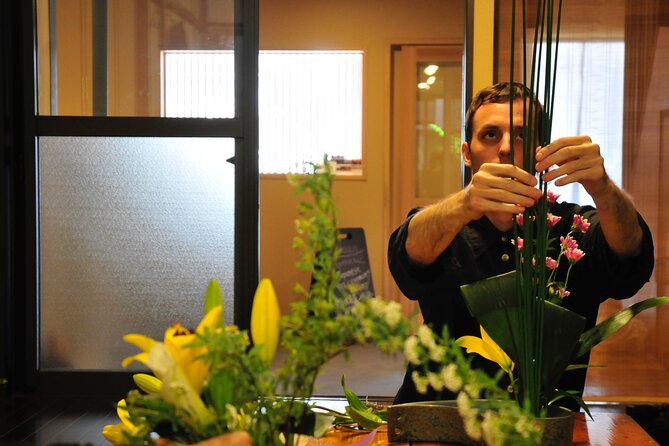
At $32.84 per person, this is a reasonably priced cultural activity for Kyoto. The fee includes tea and the guided experience, including the demonstration, explanation, matcha preparation, tasting, wagashi, and conversation.
Private transportation is not included. You make your own way to Ankoan, which keeps the price down but requires a little planning. The studio is near public transportation, so this is best suited to people already exploring northern Kyoto or comfortable navigating the city independently.
The value is strongest if you want participation rather than a short ceremonial display. You receive direct instruction, a chance to prepare tea, and a cultural discussion for less than the cost of many large, highly staged attractions.
It is less suitable if you want door-to-door service or a very formal private ceremony. This is a small-group lesson and cultural exchange, not a private luxury event.
Sitting comfort and family suitability
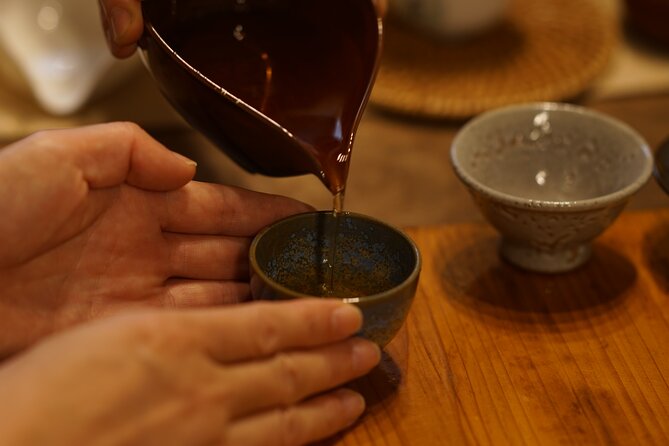
The activity is not recommended for people with knee pain. The information does not specify every seating arrangement, so you should take the warning seriously and ask before booking if floor-level sitting could cause difficulty.
For families, the activity can work well because children are allowed to participate in the tea preparation. The process gives them something active to do, and the host can adjust her approach to younger participants.
The session also suits couples, solo visitors, and friends. Couples can serve one another, while solo visitors can meet other participants in a setting designed around exchange and conversation.
People who prefer a quick photo opportunity may find the pace slow. People who enjoy learning a ritual by doing it will get much more from the time.
What makes this different from a staged tea show
Many visitors see a tea ceremony as a performance to observe in silence. At Ankoan, the demonstration is only one part of the session.
You first learn the basic ideas, then watch the host, then make matcha yourself, and finally taste it. The repeated pattern of watching, practicing, and asking questions gives you a clearer understanding of the ritual.
The act of preparing tea for another participant is particularly meaningful. It shows that the ceremony is about the relationship between host and guest, not just the beverage. You begin to see why preparation, attention, and manners matter.
The informal discussion adds another layer. You can connect the physical movements with questions about Japanese culture and everyday life. That makes the experience useful even if you do not plan to study tea ceremony in detail after your visit.
Booking and cancellation details
Confirmation is sent within 48 hours of booking, subject to availability. The experience is often reserved about 12 days in advance, so I would not leave it until the last minute if your Kyoto dates are fixed.
You can cancel for a full refund up to 24 hours before the start time. Changes made less than 24 hours before the activity are not accepted, and cancellations inside that period are not refunded.
The activity requires good weather. If poor weather causes cancellation, you are offered another date or a full refund. Since the session is indoors, this condition may relate to the overall operating arrangements rather than the tea room itself.
Should you book the Ankoan tea ceremony?
Book this experience if you want to make matcha yourself, ask questions in English, and understand the meaning behind Japanese tea customs. The small group, patient instruction, welcome tea, wagashi, and open cultural conversation give you more than a ceremonial photo stop.
I would especially recommend it for first-time visitors, families with children, couples, and anyone planning to visit nearby temples. At $32.84, it offers good value for a guided cultural activity with real participation.
Think twice if you have knee pain, need private transportation, or have only a narrow gap in your schedule. Also allow more than the stated one hour if you want time for questions and practice.
For most visitors who want a calm, hands-on Kyoto experience, Ankoan is an easy choice. You leave having tasted matcha, prepared it yourself, and gained a practical understanding of why the ceremony is treated with such care.
FAQ
Where does the tea ceremony take place?
It takes place at Tea ceremonyJapan, 63 Murasakino Monzencho, Kita Ward, Kyoto, 603-8216. The activity ends back at the meeting point.
How much does the experience cost?
The listed price is $32.84 per person.
How long does the tea ceremony last?
The tour summary lists approximately one hour. The detailed description refers to a 90-minute service, and some sessions may last closer to two hours depending on the pace of the group.
What is included in the price?
Tea is included. The experience also includes the demonstration, cultural explanation, matcha preparation, tasting, and wagashi as part of the session.
Is transportation included?
No. Private transportation is not included. The studio is near public transportation.
How many people can join?
The activity accepts a maximum of eight participants.
Can I take photographs?
Yes. Indoor photography is allowed.
Is the activity suitable for children?
Children can participate in the ceremony and prepare matcha with guidance. The experience has accommodated young children, including an eight-year-old.
Is the activity suitable for people with knee pain?
It is not recommended for people with knee pain.
What happens if I need to cancel?
You receive a full refund if you cancel at least 24 hours before the start time. Cancellations or changes made less than 24 hours before the start are not accepted for a refund. If poor weather causes the activity to be canceled, you are offered another date or a full refund.
Newest Kyoto experiences on the site
- Treasures of Kyoto: Gion & historical Walking Tour★ 5.0 · 6 reviews
- Whisk Your Own Matcha: A Zen Matcha Experience at Temple★ 3.6 · 7 reviews
- Kyoto tea town for matcha lovers★ 5.0 · 16 reviews
- Uji: Private immersion into Kyoto’s tea and reglious culture★ 5.0 · 17 reviews
- Kyoto Matcha Green Tea Tour★ 4.5 · 23 reviews
- Uji and Wazuka Matcha Farm Half Day Private Guided Tour★ 5.0 · 21 reviews
- Utilising upcycled Matcha! Creating matcha incense (Uji, Kyoto)★ 5.0 · 6 reviews
- Sacred Temple Yoga Experience in Japan★ 5.0 · 3 reviews
Kyoto Tea Ceremonies, compared.
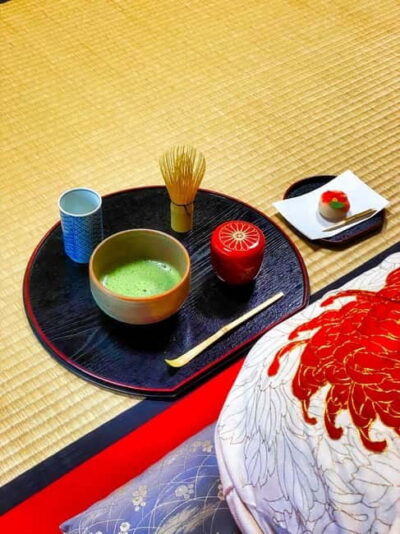
Tea Ceremony in a Traditional Tea House in Kiyomizu
Read our review →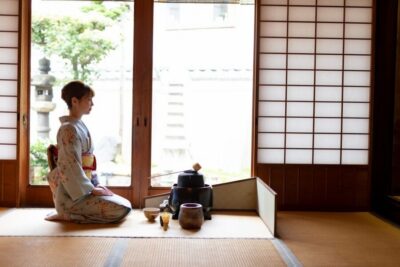
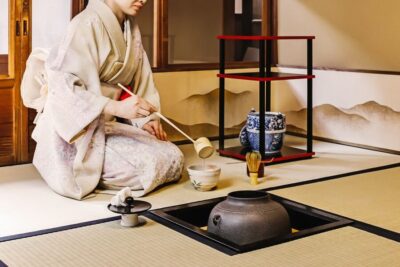
Tea Ceremony in 100-year-old Kyo-Machiya Townhouse
Read our review →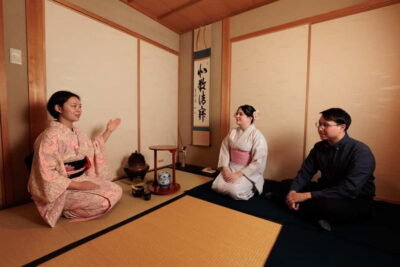
Browse the lists this tour appears in