
Reviewed · TRAIN EXPERIENCES
Full Day Hiroshima and Miyajima Tour by Bullet Train from Kyoto
Miyajima’s great orange torii gate and Hiroshima’s Peace Memorial sites make an unusual pair: one is serene and beautiful, the other sobering and hard to forget. This 13-hour, 20-minute day links both by bullet train, ferry, bus, and guided walks, saving you the work of arranging a complicated trip from Kyoto.
I like the reserved Shinkansen seats and the careful handoff at Kyoto and Hiroshima stations. I also like having a guide for the Peace Memorial Museum, where a few clear explanations can help you understand what you are seeing. The catch is time: Miyajima and the museum both deserve longer, and the schedule can feel tight.
Key points to know before booking
- Two major sights in one day: Visit Itsukushima Shrine and Miyajima, then Hiroshima’s Peace Memorial Park, Museum, and Atomic Bomb Dome.
- Reserved bullet train travel: The Kyoto to Hiroshima and return journeys take about 1 hour 40 minutes each, with standard or Green Car seating.
- Lunch is not included: You choose and pay for lunch on Miyajima, where oysters, Hiroshima-style okonomiyaki, and conger eel rice bowls are common choices.
- The museum visit is meaningful but short: You have about an hour inside, so plan to focus on the main building and the exhibits that matter most to you.
- A full group day: The maximum group size is 40 people, with an English-speaking government-licensed guide during the Hiroshima portion.
- A late finish: The group returns to Kyoto Station at about 9pm, with no hotel drop-off afterward.
Why this Kyoto day trip works
A day trip from Kyoto to Hiroshima is possible on your own, but it takes planning. You need to buy the right train tickets, find the ferry, work out the local bus or train connections, and keep an eye on the clock. This tour puts those pieces together.
That convenience has real value. Someone leads you from the meeting point to Kyoto Station, reserved train seats are arranged, transportation in Hiroshima is covered, and an English-speaking guide joins you for the city visits. You can spend your energy on the places themselves instead of checking departure boards.
The price is $399.71 per person. That is not a cheap add-on, especially since lunch is extra. Still, the cost includes the round-trip Shinkansen, local transportation, ferry travel, admission fees, the Miyajima visitor tax, and a guide. For a first visit, I think the price can make sense if you want one tightly organized day and do not want to manage the connections yourself.
If you are comfortable planning Japanese rail travel, you could likely create a more flexible day on your own. You would also be able to choose how long to stay in the museum and Miyajima. The tour earns its price through structure and guidance, not through extra free time.
More scenic train rides through the Sagano hills:
- From Osaka: Sagano Train Ride and Kyoto Guided Day Tour
★ 4.3 · 180 reviews - Kyoto Railway Museum Admission Ticket
★ 4.3 · 23 reviews - Kyoto Bus Tour: Sagano Railway & Hozugawa River Boat Ride
★ 4.0 · 21 reviews
Starting at Kyoto Station before 7:30am
The meeting point is the JTB Sunrise Tours Desk in the basement level of Avanti, across from the Hachijo Exit of Kyoto Station. The official meeting time is 7:30am, and staff walk the group to the station.
Give yourself extra time to find the desk. It is downstairs inside Avanti, and several people have had trouble locating it because the main station area does not offer much obvious signage for the meeting point. I would arrive 20 to 30 minutes early rather than trying to find it at the last moment.
From Kyoto Station, you board the Shinkansen for Hiroshima. The ride takes about 1 hour 40 minutes, and the train is one of the strongest parts of the day. It is fast, comfortable, and much easier than arranging several separate rail segments.
The train ride also gives your guide time to explain Hiroshima’s story, from its earlier history to the atomic bombing on August 6, 1945, and the city’s recovery afterward. The morning is long, so use the journey to rest as well as listen.
Seat assignments may not be fully designated in advance, so your group might not all sit together. The tour offers standard or premium Green Car seating, depending on the booking arrangement.
Crossing to Miyajima and Itsukushima Shrine
After arriving in Hiroshima, you travel to Miyajimaguchi by train or vehicle, then board a boat for Miyajima. The crossing gives you a pleasant change of pace after the early train and puts the island’s wooded slopes and waterfront into view.
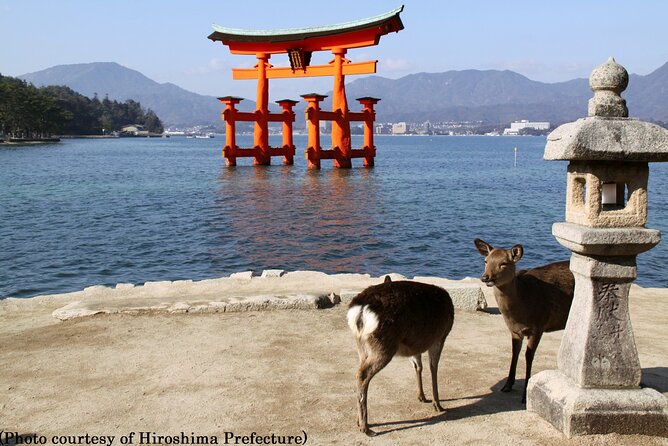
Miyajima is also called the Sacred Island. Its main draw is Itsukushima Shrine, founded in the sixth century and known for its Heian-period Shinden-zukuri design. The shrine’s famous torii gate appears to float offshore at high tide, creating one of Japan’s most recognizable views.
The shrine is not just a quick photo stop. The guide can explain why the buildings were placed over the water and how the island’s religious importance shaped its design. You will also see deer roaming freely around the island, an easy detail to enjoy while walking between the waterfront and shrine.
The schedule allows about an hour at the shrine, with additional time set aside for lunch and personal exploring. Exact timing can change because of traffic, ferry schedules, and conditions at the destinations. Some outings provide roughly 80 minutes of free time after the guided portion, while other schedules feel closer to an hour.
That is enough for the main shrine area and a meal, but not enough for a slow island visit. If you want to shop, linger by the water, visit more religious sites, or browse every food stall, you may feel hurried. I would decide in advance if the shrine, lunch, photographs, or shopping matters most.
Lunch on your own in Miyajima
Lunch is not included, which gives you choice but requires a little planning. Miyajima is known for oysters, Hiroshima-style okonomiyaki, and conger eel rice bowls. These dishes give you a useful taste of the local food culture without adding a fixed group meal.
The free time is practical rather than leisurely. You need to eat, find the meeting point again, and stay aware of the group’s departure time. If you have dietary needs, do not assume the quick restaurant choices will suit you. One person specifically found vegetarian options limited, so it is sensible to ask your guide early about available choices.
The island portion is the lighter opening to a day that becomes much more serious. I like that order. You see Miyajima’s beauty first, then move into Hiroshima’s wartime history with some context and calm.
A few more Kyoto tours worth putting on the shortlist
- 5 Top Highlights of Kyoto Full Day Bike Tour (E-bike option)
★ 5.0 · 511 reviews - Full Day Biking Tour Exploring the Best of Kyoto
★ 5.0 · 498 reviews - Full Day Guided Tour to Kyoto and Nara from Osaka by Van
★ 5.0 · 420 reviews - Nara Park, Osaka & Kobe from Kyoto Full Day tour
★ 5.0 · 207 reviews
Entering Hiroshima’s Peace Memorial Park
After returning by boat, you continue to the Peace Memorial Park by vehicle or train. The park was established in 1949 after the Pacific War and now serves as a place for remembrance and peace education.
The guide brings the sites together instead of leaving you to interpret them one by one. That matters here. The park contains monuments, memorials, and reminders of individual lives, and a short explanation can show how each relates to the bombing and its aftermath.
The Atomic Bomb Dome is usually one of the most affecting stops. It is one of the few structures near the hypocenter that remained partly standing after the blast. Its damaged frame has been preserved as a reminder of the destruction and as a call for the elimination of nuclear weapons.
Nearby, the Children’s Peace Monument is covered with paper cranes made by children. The Atomic Bomb Memorial Mound contains the ashes of about 70,000 victims, including people who could not be identified or whose families could not claim them.
You will have about 40 minutes at the Atomic Bomb Dome. That is enough to see the building from several angles and hear its story, but you will not have the time for a slow, independent walk through every corner of the park.
The Peace Memorial Museum deserves your full attention
The Hiroshima Peace Memorial Museum is the emotional center of the day. Its exhibits cover the bombing, its human cost, and Hiroshima’s recovery. Displays include personal objects and accounts that move the subject beyond military history and into the lives of ordinary people.
The scheduled museum visit lasts about an hour. I consider that the main limitation of the tour. The museum can be crowded and, at times, uncomfortable in the heat. With only an hour, you may need to move quickly and accept that you cannot read every panel.
Start with the main building and follow your guide’s advice about priorities. One guide, Takeshi, suggested beginning there, which is sensible when time is limited. The museum’s photographs and descriptions can be disturbing, especially for young children, so parents should decide if the material is suitable for their family.
Some participants have preferred less time on Miyajima and more time at the museum. That is a fair criticism. The tour is trying to fit two major destinations into one day, and the result gives you an introduction rather than a complete study of Hiroshima.
Audio equipment has also been inconsistent. Some groups have had trouble hearing the guide or have not received headsets, a real issue in a crowded museum. The quality of the day can depend heavily on how clearly your guide communicates and how close you can stay to the group.
The guides shape the experience
The Hiroshima portion is led by a licensed English-speaking guide, but the individual guide changes. Guides praised for their clear explanations, good humor, and steady organization have included Masako, Miki, Azusa, Taeko Watanabe, Sato, Takeshi, Akiko, Hiro, Marie, and others.
That range of names also points to an important reality: the guide you receive can shape your day. The strongest guides keep the group moving, explain difficult history with care, answer questions, and help everyone stay together. Masako, Azusa, Taeko Watanabe, and Sato were especially noted for energy, warmth, and useful detail.
A small number of outings have had weaker communication, including a guide who relied heavily on notes or gave short answers. English ability and audio equipment may vary. I would not book this tour expecting a private guide or a custom pace. Think of it as a structured group tour with a guide who may be excellent, but is not guaranteed to match every group’s style.
The maximum group size is 40. That is manageable for a major day trip, but it is not intimate. Stay near the guide, especially during station changes and busy walks.
Returning to Kyoto after a very long day
The final train leaves Hiroshima Station for Kyoto, with the return ride taking about 1 hour 40 minutes. The tour ends when you arrive at Kyoto Station, around 9pm.
That late finish is worth taking seriously. You will have started early, walked around Miyajima and the park, spent time in the museum, and made four hours of long-distance train travel. I find the day worthwhile, but I would not schedule an important evening meal or another activity after it.
There is no hotel drop-off. From Kyoto Station, you make your own way to your accommodation or onward destination. The station is a practical ending point, but tired legs and a late hour can make the final connection less pleasant.
Who should book this Hiroshima tour?
I think this tour suits you if Hiroshima is important to your Japan trip but you are based in Kyoto and do not want to change hotels. It is also a strong choice for families with older children, first-time visitors, and anyone who values an organized route over free time.
It works especially well if you want both Miyajima and the Peace Memorial sites in one day. The bullet train keeps the long-distance journey manageable, and the guide adds context that signs alone cannot always provide.
I would hesitate if you want a slow museum visit, several hours on Miyajima, or a quiet small-group experience. Independent planners who can manage Japanese trains may prefer to stay overnight in Hiroshima. That would let you separate the island from the memorial sites and give both the time they deserve.
Free cancellation is available when you cancel at least 24 hours before the 7:30am start time. Changes or cancellations inside that window are not accepted for a refund.
Should you book it?
Book this day trip if you want a well-organized first look at two major Hiroshima-area sights and accept a packed schedule. The reserved Shinkansen seats, boat crossing, local transport, admissions, and guide remove much of the stress from a difficult day to arrange.
Skip it if the Peace Memorial Museum is your main reason for going and you want to read every exhibit. In that case, spend more time in Hiroshima itself. For everyone else, this is a practical, serious, and memorable way to reach Hiroshima from Kyoto in one long day, with Miyajima’s beauty balancing the weight of the city’s history.
FAQ
How long is the full-day Hiroshima and Miyajima tour from Kyoto?
The tour lasts approximately 13 hours and 20 minutes. It begins at 7:30am and returns to Kyoto Station at about 9pm.
Where does the tour begin?
Meet at the JTB Sunrise Tours Desk inside Avanti B1F, across from Kyoto Station’s Hachijo Exit. Staff then walk the group to Kyoto Station.
Is lunch included?
No. Lunch is on your own in Miyajima. Common local choices include oysters, Hiroshima-style okonomiyaki, and conger eel rice bowls.
Does the tour include bullet train tickets?
Yes. Round-trip Shinkansen transportation between Kyoto and Hiroshima is included, with reserved seating in either a standard car or the premium Green Car.
Is an English-speaking guide included?
Yes. A National Government Licensed English Guide Interpreter leads the Hiroshima portion of the tour. The individual guide varies.
How much time is spent at the Peace Memorial Museum?
The scheduled visit to the museum is about one hour. The Atomic Bomb Dome is allotted about 40 minutes, and the order or exact timing can change due to conditions.
Does the tour return me to my hotel?
No. The tour ends at Kyoto Station around 9pm. You arrange your own onward transportation from the station.
Newest Kyoto experiences on the site
- Treasures of Kyoto: Gion & historical Walking Tour★ 5.0 · 6 reviews
- Whisk Your Own Matcha: A Zen Matcha Experience at Temple★ 3.6 · 7 reviews
- Kyoto tea town for matcha lovers★ 5.0 · 16 reviews
- Uji: Private immersion into Kyoto’s tea and reglious culture★ 5.0 · 17 reviews
- Kyoto Matcha Green Tea Tour★ 4.5 · 23 reviews
- Uji and Wazuka Matcha Farm Half Day Private Guided Tour★ 5.0 · 21 reviews
- Utilising upcycled Matcha! Creating matcha incense (Uji, Kyoto)★ 5.0 · 6 reviews
- Sacred Temple Yoga Experience in Japan★ 5.0 · 3 reviews
Train Experiences, compared.
Kyoto Bus Tour: Sagano Railway & Hozugawa River Boat Ride
Read our review →
Arashiyama Tour with optional Sagano Romantic Train
Read our review →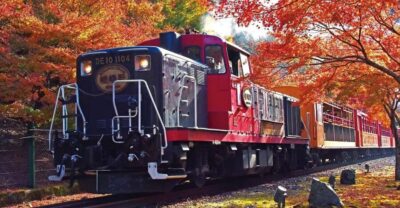
Kyoto Hozugawa River Boat Sagano Romantic Train Tour
Read our review →
Arashiyama Walking Tour with Optional Sagano Romantic Train Ride
Read our review →
Kyoto Sagano Romantic Train in Arashiyama Bus Tour
Read our review →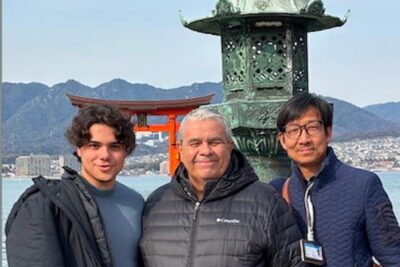
Private Day Trip To Hiroshima from Kyoto or Osaka by Bullet Train
Read our review →Browse the lists this tour appears in