
Reviewed · KYOTO TEA CEREMONIES
2 Types of Japanese Sweets making and Tea Ceremony
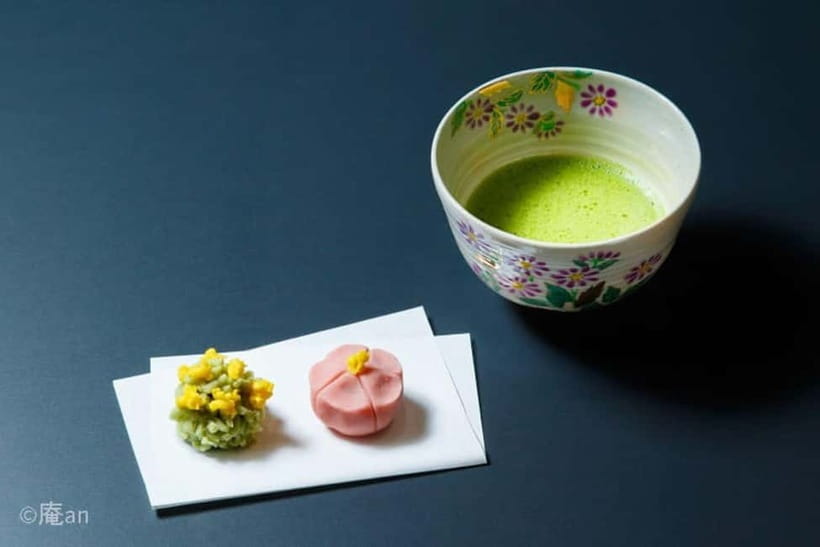
The best part of this 125-minute workshop is the chance to make three kinds of Japanese sweets before preparing your own matcha. You work with wasanbon sugar for dry ohigashi, Kyoto-made white or red bean paste for two seasonal nerikiri, and single-origin matcha. It is a hands-on look at Japanese tea culture, not just a demonstration.
I especially like the strong value at $28 per person and the easy location, one minute from Gojo Station. I also like the clear variety: you make a dry sweet, two molded sweets, and tea. The main point to understand is that the tea portion is casual and instructional, not a full formal tea ceremony, and English support may depend on the instructor.
- Three activities in one session: Make ohigashi, two nerikiri sweets, and your own matcha.
- Kyoto ingredients: Use wasanbon sugar and bean paste supplied by long-established Kyoto shops.
- Seasonal designs: Shape a flower-style nerikiri and a kinton nerikiri linked to the season.
- Easy access: The meeting point is one minute from Exit 1 of Gojo Station on the Karasuma Line.
- Good price: At $28, the workshop gives you nearly two hours of guided activity and tasting.
- Know the format: Expect a casual tea lesson with matcha preparation, not a highly formal ceremony.
Three Japanese sweets before your bowl of matcha
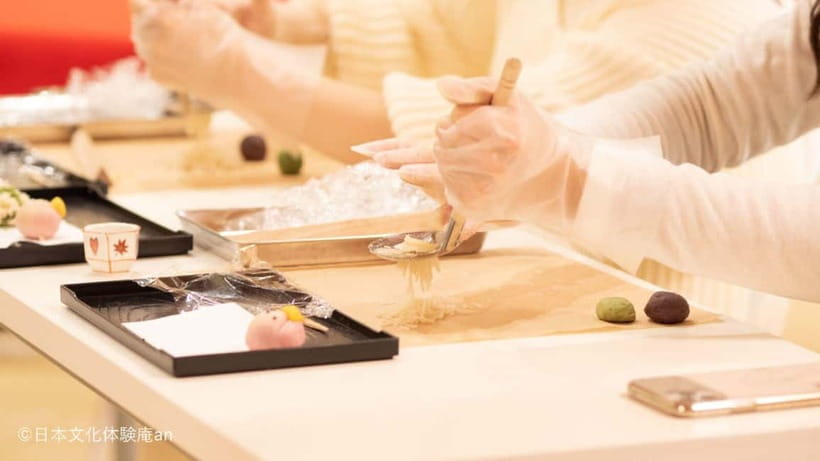
This workshop gives you a useful introduction to wagashi, the broad Japanese term for traditional sweets. Instead of making one item and watching the rest, you move through three related parts: dry molded sugar sweets, bean-paste sweets, and tea.
That order makes sense. You begin with ohigashi, which is made from wasanbon, a fine traditional Japanese sugar. You then work with the softer texture of nerikiri, made from white or red bean paste. Finally, you prepare matcha, the drink that balances the sweetness.
The session lasts 125 minutes, so it is long enough to work at a calm pace without taking half a day from your Kyoto sightseeing. I would allow extra time before the start, though. The event does not wait for late arrivals, and the building requires stairs.
Finding the workshop near Gojo Station
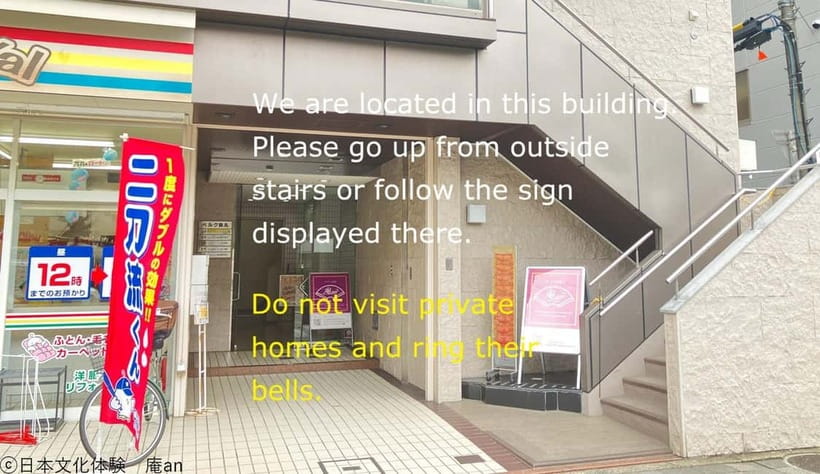
The meeting point is one minute from Exit 1 of Gojo Station on Kyoto’s Karasuma subway line. The entrance faces Gojo-dori, the main street, which should make it easier to locate than a room tucked down a side lane.
This central subway location is one of the strongest practical points. You do not need to arrange a long transfer or build a separate outing around the activity. It fits neatly into a day spent around central Kyoto.
The listed operation hours are 10:00 to 17:00. Reservations received after 17:00 are handled the next day, so do not expect an evening response if you send a last-minute request. Arrive early enough to find the entrance, use the restroom if needed, and settle in before the explanation begins.
The activity is listed as wheelchair accessible, but the building has no elevator and stairs are required to reach each venue. If you use a wheelchair or have trouble with stairs, contact the provider before booking so you can confirm what access is possible for your session.
More tea ceremonies in Kyoto:
- Kyoto: Tea Ceremony in a Traditional Tea House in Kiyomizu
★ 4.9 · 3,519 reviews - Kyoto: Tea Ceremony Ju-An at Jotokuji Temple
★ 4.9 · 3,207 reviews - Kyoto: 45-Minute Tea Ceremony Lesson Experience
★ 4.3 · 2,378 reviews
Ohigashi, a small lesson in Japanese sugar
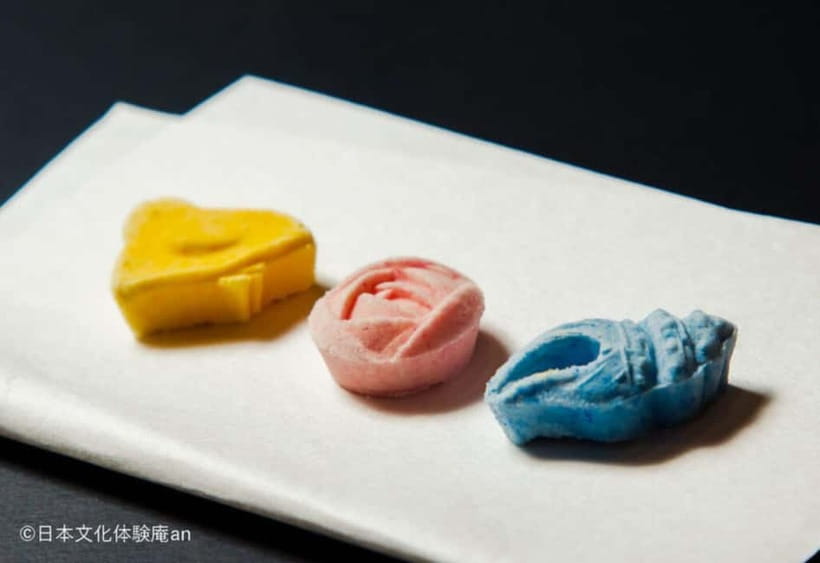
The first making activity is ohigashi, a dry-style Japanese sweet formed from wasanbon. Wasanbon is not ordinary table sugar. It is a fine traditional Japanese sugar used in Japanese confectionery, and its delicate texture suits small molded sweets.
You receive an explanation of traditional sweets before beginning. The value here is in handling the ingredient yourself. A finished confection in a shop can look simple, but making one shows you how much care goes into shape, pressure, and detail.
The schedule places a short break after the ohigashi portion. That pause helps because the experience has several stages, and it gives you a moment to look at what you made before moving to the softer bean-paste sweets.
Adding color costs an extra 200 yen. The base activity includes the making experience, but this small fee is worth noting if you want a more decorative result. Ask about the color option early so you know what is included in your own session.
Shaping seasonal nerikiri with Kyoto bean paste
Next comes the main sweet-making section: two seasonal nerikiri. These are made with white or red bean paste supplied by long-established Kyoto shops. That ingredient choice gives the class a direct connection to Kyoto confectionery rather than relying on a generic sweet-making kit.
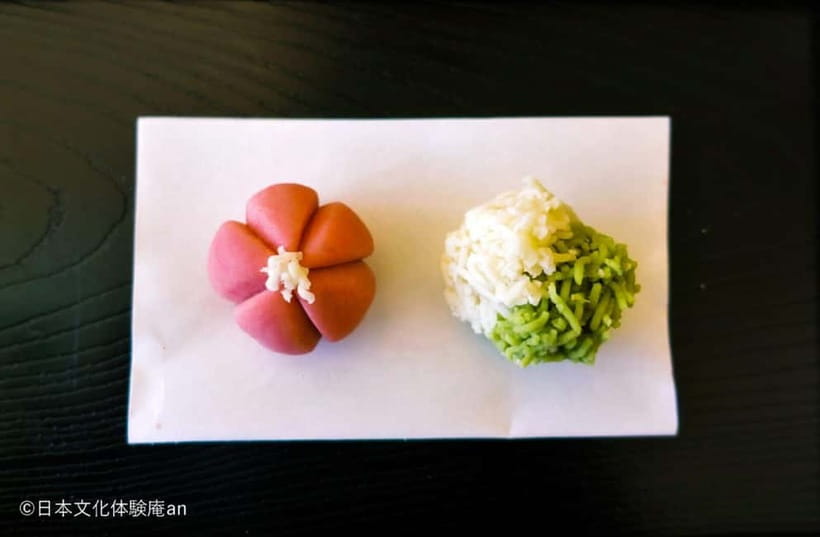
The first nerikiri is flower-shaped. You will work the paste into a seasonal design, learning how the form is built and finished. The second is a kinton nerikiri, a style known for its fine strands and soft, textured appearance.
These two pieces show different sides of the craft. The flower design focuses on shaping and visual balance. The kinton form is more about texture and arranging the paste. You do not need to be artistic to take part, but patience helps. The finished items may not look exactly like the instructor’s, and that is part of the useful lesson.
The sweets are seasonal, so the design can change during the year. That gives repeat visitors a reason to return, though the specific seasonal shapes are not fixed in the activity details. If presentation matters to you, an optional take-out box costs 100 yen. Without one, you should not assume the sweets will be packed for later transport.
A casual matcha session, not a formal ceremony
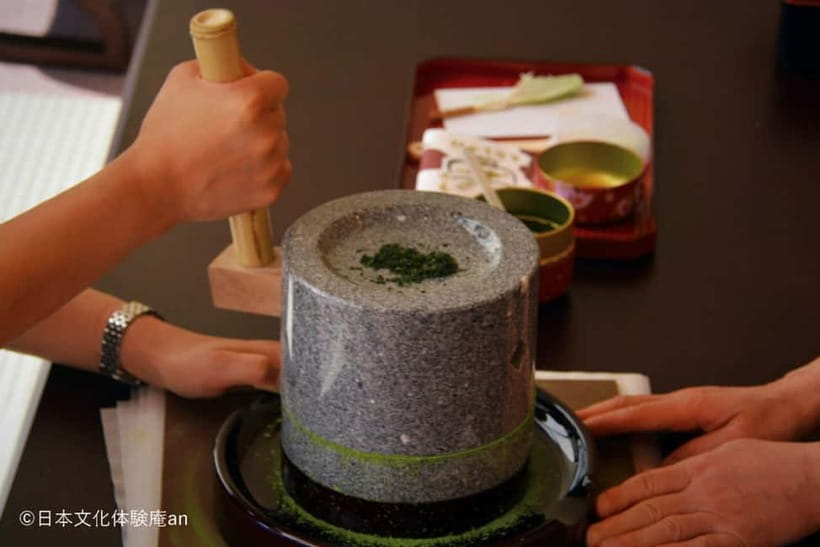
After the nerikiri work and another break, the group receives an explanation of tea. You watch a matcha-grinding demonstration, then make your own bowl using special single-origin matcha.
This is the point where expectations matter most. You will learn about matcha and prepare the drink yourself, but this is not presented as a full formal tea ceremony with an elaborate ritual. The tea portion is casual and practical. If you want to understand how matcha is prepared and taste the result alongside sweets, it fits well. If you are seeking a highly traditional ceremony with strict etiquette and a long sequence of formal gestures, this may feel lighter than expected.
The workshop uses single-origin matcha, which gives the tea portion more character than a basic powdered-tea demonstration. Still, the activity is designed for participation, not for a specialist tasting. You grind matcha, follow the preparation steps, and drink it with the sweets you have made.
There is picture time before the experience ends. Eating and drinking time follows, with room departure at the 125-minute mark. Take photos when invited rather than interrupting the instruction, especially if the room is busy.
More wagashi and sweets workshops in Kyoto:
- Kyoto: Japanese Traditional Sweets Making and Tea Ceremony
★ 4.4 · 314 reviews - Kyoto Wagashi(Japanese sweets) Cooking Class near Fushimiinari
★ 5.0 · 60 reviews - Kyoto: Wagashi (Japanese sweets) Cooking near Fushimiinari
★ 5.0 · 40 reviews - Kyoto: Traditional Tea Ceremony with Matcha & Sweets in Gion
★ 4.9 · 27 reviews
How much English help can you expect?
The instructor is Japanese, and English translation is provided as much as possible. One session was led by Maiko, who was described as attentive and informative, and another participant found the instructor’s English good. That suggests you can expect useful support, but the exact amount of English may vary by date and instructor.
If you need English guidance for every step, contact the provider before booking and request it. The activity information specifically asks people who want English translation to get in touch. Do not assume every explanation will be delivered at the same depth in English.
The teaching style can also depend on the group. One session was praised for its friendly, enthusiastic instruction, while another felt more like a classroom than a personal workshop. That is a fair warning. The experience is built around explanations and shared activities, so it may feel less intimate when the room is full or when other participants are noisy.
I would choose a seat where you can clearly see the instructor’s hands. That matters more than sitting near the door. The shapes can be small, and watching the technique is often easier than relying only on spoken directions.
The value of $28 for 125 minutes
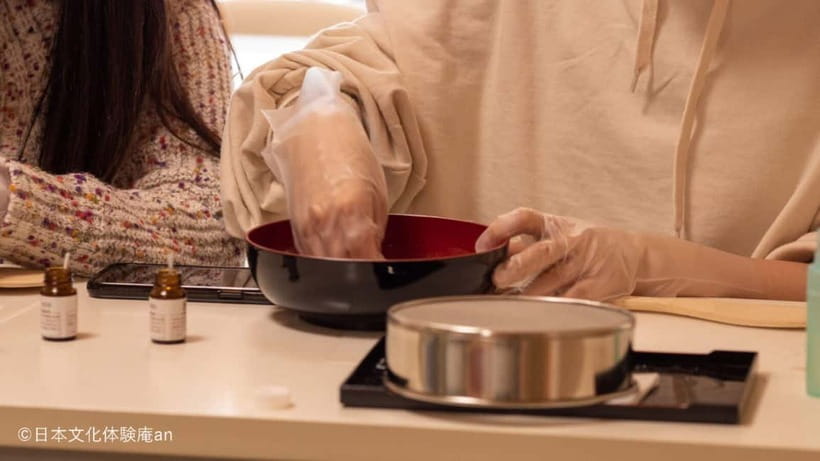
At $28 per person, the price is strong for Kyoto. You receive three connected activities, ingredient instruction, matcha preparation, tasting time, and almost two hours in the workshop. A single short confectionery lesson could cost a similar amount, so the combination makes this a practical pick for budget-conscious visitors.
The value is best for someone who wants to do something rather than simply eat wagashi. You leave with a better sense of how sugar, bean paste, shape, and tea work together. The educational part is just as important as the food.
Three small extra charges can affect your final cost:
- Adding color costs 200 yen.
- A sweets take-out box costs 100 yen.
- An experience completion certificate costs 300 yen.
None is required for the basic session. I would consider the box if you want to carry the sweets away, but I would skip the certificate unless you collect activity keepsakes.
Children under two who sit on a parent’s lap are free. Other participants need to book a place, and anyone not taking part cannot enter the venue. That rule matters for families hoping to bring along a nonparticipating companion.
What the room and group atmosphere may feel like
This is a shared workshop rather than a private appointment. You should expect explanations, demonstrations, and hands-on work in a classroom-style setting. That format keeps the price low and lets you meet other people, but it can reduce the quiet, personal feeling some visitors want from a tea experience.
Noise is the main possible annoyance. A noisy group can make it harder to hear instructions, especially if English translation is being added. The instructor can be attentive and enthusiastic, but the overall mood also depends on how respectfully the group behaves.
The workshop’s strengths are its structure and variety. You always have something to do, and the schedule avoids a long stretch of passive watching. Its weakness is that the format may feel less intimate than a small tea gathering in a traditional home.
For me, that trade-off is reasonable at this price. I would book it for a first introduction to wagashi and matcha, not as the only cultural activity of a Kyoto trip.
Who will enjoy this Kyoto sweets workshop?
You are a good match for this activity if you:
- Want a hands-on food experience near central Kyoto
- Enjoy craft activities and do not mind following detailed instructions
- Want to try matcha without committing to a formal ceremony
- Are curious about seasonal Japanese sweets
- Need a reasonably priced activity lasting about two hours
- Are visiting with children old enough to take part
It also suits couples, families, and solo visitors who like structured activities. The short break between sections keeps the pace manageable, and the different textures make the session more interesting than one repeated recipe.
You may prefer another type of tea experience if your main goal is formal etiquette, a quiet private setting, or a strongly traditional ceremony. The wording casual tea experience is important here. This is a learning workshop with tea preparation, not a staged ritual.
Booking details worth handling before you go
Free cancellation is available up to 24 hours in advance for a full refund. You can also reserve now and pay later, which helps if you are still arranging your Kyoto schedule.
Do not count on changing the date after a cancellation fee applies without an additional specified fee. The provider also does not cover your travel costs if you cancel, so give yourself plenty of time to reach Gojo Station.
The event will not be held for late arrivals. That is especially important in Kyoto, where subway exits, large streets, and station corridors can take longer than expected. Aim to be at the street-level entrance before the start time rather than arriving at Gojo Station at the last minute.
The overall rating is 4.6 from 17 ratings, but the more useful takeaway is the pattern in the feedback: the instructor and the number of activities are major strengths, while the casual format, classroom setting, and variable English support deserve clear expectations.
Should you book the ohigashi, nerikiri, and matcha experience?
Book it if you want good value, active participation, and a simple introduction to Kyoto sweets. The combination of wasanbon ohigashi, two seasonal nerikiri, and single-origin matcha gives you more substance than a basic tea tasting.
I would especially recommend it for first-time visitors, families with participating children, and anyone looking for a weather-proof activity near a subway station. Request English support ahead of time, arrive early, and budget a few extra yen if you want color or a take-out box.
Skip it if you want a quiet, highly formal tea ceremony or a private setting. For everyone else, this is a friendly, practical way to spend two hours making sweets and learning what goes into a bowl of matcha.
FAQ
Where does the experience take place?
It takes place in Honshu, Japan, one minute from Exit 1 of Gojo Station on the Subway Karasuma Line. The entrance faces Gojo-dori.
How long does the activity last?
The full experience lasts 125 minutes, including making sweets, the tea explanation, matcha preparation, photos, and eating and drinking time.
How much does it cost?
The listed price is $28 per person. Optional additions cost 200 yen for coloring, 100 yen for a sweets take-out box, and 300 yen for a completion certificate.
What kinds of sweets will I make?
You will make wasanbon ohigashi, a flower-shaped nerikiri, and a kinton nerikiri. The two nerikiri sweets are seasonal.
What ingredients are used?
The ohigashi uses wasanbon, a traditional Japanese sugar. The nerikiri uses white or red bean paste from long-established Kyoto shops. The matcha is single-origin.
Is this a formal tea ceremony?
It is a casual tea experience. You receive an explanation, watch a matcha-grinding demonstration, and make your own matcha. It is not described as a full formal tea ceremony.
Is English available?
The instructor language is Japanese, and English translation is provided as much as possible. Contact the provider in advance if you would like English support.
Is the activity wheelchair accessible?
The activity is listed as wheelchair accessible, but the building has no elevator and stairs are required to reach each venue. Contact the provider before booking to confirm your access needs.
What happens if I arrive late?
The event will not be held to accommodate delays. Plan to reach the entrance before the scheduled start time.
Can I cancel for a refund?
You can cancel up to 24 hours in advance for a full refund. Reservations received after 17:00 are processed the next day, and different fees may apply after the cancellation deadline.
Newest Kyoto experiences on the site
- Whisk Your Own Matcha: A Zen Matcha Experience at Temple★ 3.6 · 7 reviews
- Treasures of Kyoto: Gion & historical Walking Tour★ 5.0 · 6 reviews
- Kyoto tea town for matcha lovers★ 5.0 · 16 reviews
- Uji: Private immersion into Kyoto’s tea and reglious culture★ 5.0 · 17 reviews
- Kyoto Matcha Green Tea Tour★ 4.5 · 23 reviews
- Uji and Wazuka Matcha Farm Half Day Private Guided Tour★ 5.0 · 21 reviews
- Utilising upcycled Matcha! Creating matcha incense (Uji, Kyoto)★ 5.0 · 6 reviews
- Sacred Temple Yoga Experience in Japan★ 5.0 · 3 reviews
Kyoto Tea Ceremonies, compared.
Tea Ceremony in a Traditional Tea House in Kiyomizu
Read our review →
Tea Ceremony in 100-year-old Kyo-Machiya Townhouse
Read our review →
Browse the lists this tour appears in