
Reviewed · KYOTO TEA CEREMONIES
Kyoto Tea Ceremony and Samurai Photo Session
Kyoto’s tea culture becomes much more memorable when you put the whisk in your own hand. In this small-group class, you learn the basics of matcha, taste seasonal wagashi, prepare a creamy matcha latte, and finish with photos in authentic samurai armor. Making the tea yourself is the real draw.
I like the setting: a 100-year-old machiya, the traditional townhouse style that gives the class a sense of place. I also like the balance between old and new. You get a traditional tea demonstration and history lesson, then make a latte you can recreate at home.
The main consideration is timing. The core tea activity is described as about 50 minutes, while the overall experience is listed at approximately 1 hour 20 minutes. That makes it a compact introduction, not a long formal tea ceremony.
Key points to know before booking
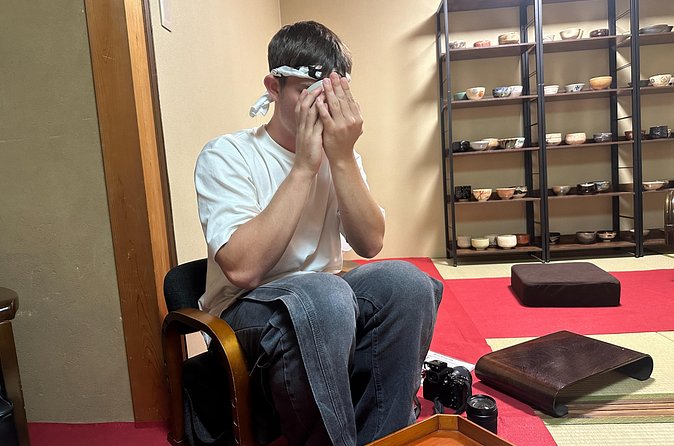
- A 100-year-old machiya: The class takes place in a traditional Kyoto townhouse rather than a modern studio.
- You make your own matcha: The session is hands-on, with instruction before you prepare the tea yourself.
- Traditional and modern drinks: You taste regular matcha, then create a Kyoto-style matcha latte.
- Seasonal wagashi included: These small Japanese sweets provide the classic matcha pairing.
- Samurai armor photos: The session ends with a memorable photo opportunity in authentic armor.
- Small group of up to 10: The limited size should make it easier to follow the demonstration and ask questions.
Entering a Kyoto machiya for tea
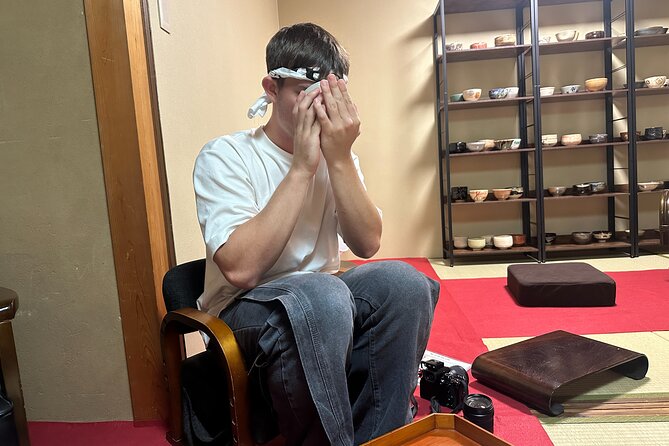
The experience begins at Samurai Gyoza Factory Kyoto, at 230-1 Kamimyōkakujichō in Nakagyo Ward. From there, you enter a 100-year-old machiya and shift from the busy rhythm of sightseeing to a more measured activity.
A machiya is a traditional Kyoto townhouse, often long and narrow, with a street-facing entrance and a more intimate interior. The age of the building matters here. You are not simply learning about tea in an anonymous classroom. The setting helps explain why Japanese tea culture pays such close attention to space, movement, quiet, and the small details of serving.
The meeting point is near public transportation, which makes this a practical stop between other Kyoto sights. Still, allow enough time to find the address. A compact city address can be harder to spot than a large hotel or museum entrance, especially if you are arriving with luggage or in a group.
The group is capped at 10 people. That is small enough to keep the session personal without making it a private class. If the group is full, you will still be sharing the demonstration and photo time with others, so this is best approached as a friendly cultural activity rather than a silent, private ceremony.
More tea ceremonies in Kyoto:
- Kyoto: Tea Ceremony in a Traditional Tea House in Kiyomizu
★ 4.9 · 3,519 reviews - Kyoto: Tea Ceremony Ju-An at Jotokuji Temple
★ 4.9 · 3,207 reviews - Kyoto: 45-Minute Tea Ceremony Lesson Experience
★ 4.3 · 2,378 reviews
Learning why matcha is more than green tea
Before you make the drink, the instructor explains the history and meaning of the tea ceremony. The class also touches on mindfulness, the idea of giving full attention to one moment, one guest, and one carefully prepared bowl of tea.
This background is useful because it keeps the activity from becoming a simple green tea tasting. You begin to understand why the ceremony values calm movements, care, and hospitality. The explanation is presented in clear English, and Maya is repeatedly praised for being warm, funny, patient, and easy to understand.
That teaching style matters for beginners. Matcha preparation has several unfamiliar steps, and it is easy to worry about doing something incorrectly. A lighthearted instructor helps remove that pressure. You can ask questions, try the process yourself, and enjoy the ritual without pretending to be a tea master.
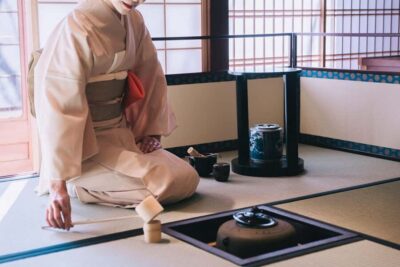
You will also see the instructor perform the ceremony before taking your turn. This demonstration gives you a visual guide to the pace and technique. It also lets you notice details that are difficult to catch if you begin making tea immediately.
Making traditional matcha by hand
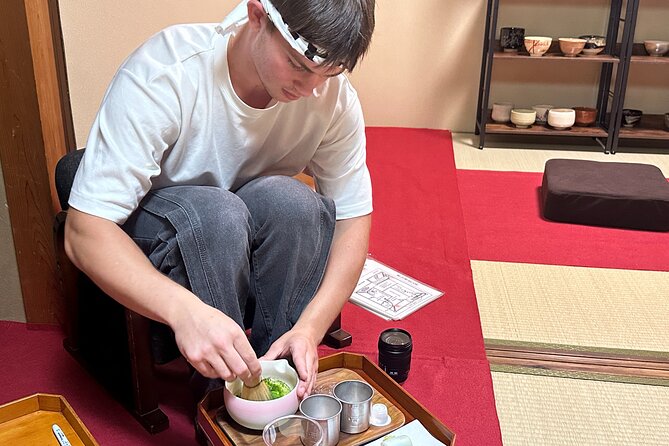
The central activity is preparing your own matcha. You learn the proper method, use good-quality matcha, and whisk the powder into a smooth drink.
The value here is practical as well as cultural. Watching someone make matcha can look simple, but the texture depends on how you combine the powder and water and how you use the whisk. By doing it yourself, you leave with a better sense of what the process requires.
Do not expect a formal qualification in tea ceremony from a one-hour class. This is an introduction designed for first-timers and curious visitors. You are learning the basic action and the ideas behind it, not completing years of training.
That distinction is important. If you want a highly formal ceremony with strict etiquette and a long period of quiet observation, this may feel brief and informal. If you want to take part rather than sit at a distance, the format works well.
The class also gives you room to make mistakes. That is one of its strengths. You can learn the technique without the pressure of getting every movement perfect. The instructor’s patience and clear English are especially useful here.
Tasting seasonal wagashi with the tea
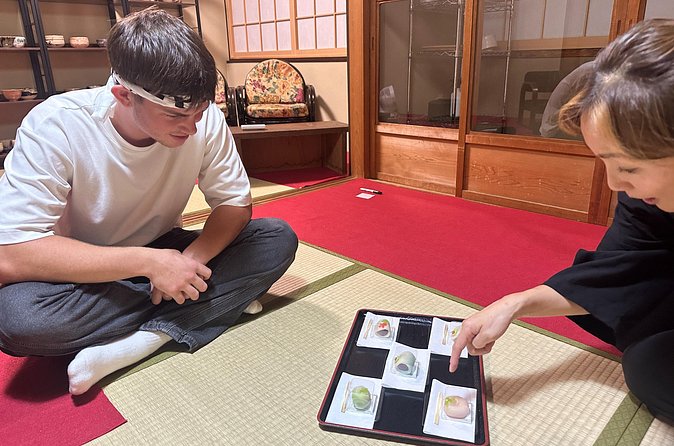
Matcha is traditionally paired with wagashi, small Japanese sweets often shaped or colored to reflect the season. The sweets served here are seasonal, so the exact appearance and flavor can vary.
Wagashi is not just a snack added to fill out the schedule. Its sweetness balances matcha’s bitter, grassy edge. Eating the sweet before sipping the tea changes the way the drink tastes and helps you understand the pairing.
This is one of the quieter pleasures of the class. You get a chance to slow down and pay attention to texture and flavor rather than rushing from one Kyoto landmark to the next. The portions are part of a tasting experience, not a meal, so you should not book this as a substitute for lunch.
The class is well suited to people who are new to Japanese sweets. You do not need prior tea experience, and the instructor explains the customs rather than assuming you already know them.
More photoshoots in Kyoto:
- Kyoto: Maiko Makeover and Photoshoot Experience
★ 4.7 · 239 reviews - Kyoto: Private Photoshoot Service
★ 5.0 · 158 reviews - Your Private Vacation Photography Session In Kyoto
★ 5.0 · 110 reviews - Kyoto: Tea Ceremony with Kimono and Photoshoot
★ 4.9 · 90 reviews
Switching from ceremony to matcha latte
After the traditional preparation, the experience takes a modern turn. You make a creamy Kyoto-style matcha latte and receive a recipe to use at home.
I like this part because it connects the formal tradition with everyday life. Traditional matcha can seem difficult to reproduce once you leave Kyoto. A latte feels more approachable, and the recipe gives you a practical way to continue experimenting after the class.
The latte also gives you a useful comparison. You taste matcha in its more traditional form, then experience the same ingredient with milk and a softer texture. That makes the lesson more than a single drink demonstration.
The phrase Kyoto-style matcha latte does not mean you are learning an old tea ceremony custom. It is the contemporary portion of the class, and the change in format is deliberate. You get a clear contrast between the ceremonial preparation and the modern café-style drink.
If you are an avid tea drinker, this section may be the most useful part of the experience. You can take the recipe home and practice. If you are unsure about the stronger taste of plain matcha, the latte offers an easier introduction.
Posing in samurai armor
The session closes with photos in authentic samurai armor. This is the most playful part of the experience, and it gives the class a memorable finish.
The armor photos also add something that a standard tea lesson would not provide. You leave with an image connected to Japanese culture rather than only a cup of tea. For families, friends, and couples, the photos can become a shared souvenir.
Keep your expectations sensible. The armor session is a photo opportunity, not a historical weapons lesson or a full samurai performance. The appeal is the chance to dress up and capture the moment after learning about tea culture.
The combination may sound unusual at first: a quiet tea ceremony followed by samurai portraits. In practice, it gives the experience two moods. The first half is focused and instructional. The final portion is relaxed, social, and fun.
Some participants have also reported receiving an official certificate. Since the supplied details do not promise one for every booking, treat that as a possible extra rather than something to count on.
Why Maya’s teaching style matters
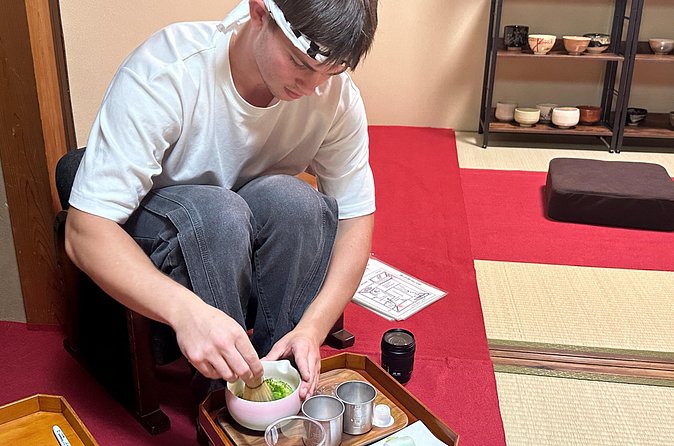
Maya is the instructor most often identified with this experience. Her strengths are clear: friendly instruction, strong English, patience, humor, and an ability to encourage people who are trying matcha for the first time.
That combination is worth noting because cultural activities can fail when the presentation becomes stiff or overly technical. Here, the class aims to teach without making you feel tested. Maya explains the history, shows the process, answers questions, and keeps the mood light.
Her humor is especially helpful for groups of friends and families. The session is not built around silent observation. You are expected to participate, taste, prepare the drinks, and take photos.
English-language ability is based on the experience described by participants, rather than a detailed formal language list. If clear English instruction is important to you, this is a point in the activity’s favor, but you should still confirm any language concerns when booking.
Is $71.74 a fair price?
At $71.74 per person, this is not the cheapest way to drink matcha in Kyoto. You can buy a cup at a café for far less. The price makes more sense when you count the instruction, traditional setting, wagashi, hands-on preparation, matcha latte, and armor photos as one package.
You are paying for participation rather than a beverage. The instructor explains the culture, demonstrates the ceremony, supervises your own preparation, and gives you a recipe for later use. The small group, limited to 10 people, also makes the fee easier to justify than a large workshop with little personal attention.
Value depends on what you want from Kyoto. If you only want to taste matcha, choose a tea shop. If you want a short cultural activity that gives you context, food, a practical skill, and photos, the cost is more reasonable.
The booking pattern suggests people reserve this experience well ahead of time, with an average booking window of 72 days. That does not mean every date sells out, but it is a good reason to reserve early if your Kyoto schedule is fixed.
Timing, location, and practical details
The overall duration is listed at about 1 hour 20 minutes. The main tea portion is described as roughly 50 minutes, with the remaining time likely covering the full flow of the activity and photo session. Plan your day around the longer figure rather than trying to squeeze this in between tightly timed attractions.
The experience starts and ends at the same meeting point. That makes planning easier, especially if you have a restaurant reservation or another tour later. You will not need to arrange separate transportation from the final photo session.
A mobile ticket is provided, and confirmation is received when you book. The meeting point is near public transportation, but the details do not specify a particular train or bus route. Use the full address and allow a little extra time to get there.
Free cancellation is available if you cancel at least 24 hours before the local start time. Cancellations or changes made less than 24 hours ahead are not accepted for a refund.
Who will enjoy this experience most
This class is a strong fit for first-time visitors who want an easy introduction to Japanese tea culture. You do not need prior experience, and the hands-on format keeps the lesson from feeling like a lecture.
It also suits:
- Couples looking for a shared Kyoto activity
- Families with older children who enjoy making food and dressing up
- Friends who want both cultural context and fun photos
- Tea lovers interested in practicing matcha at home
- Visitors with only a short amount of time for a cultural class
It may be less suitable if you want a long, highly formal tea ceremony with strict etiquette and extended quiet. The modern latte and samurai armor make this a friendly cultural workshop, not a complete study of tea ceremony.
Should you book the Kyoto tea and samurai session?
Book it if you want to do more than watch. You will learn the basic meaning of tea ceremony, make matcha with your own hands, taste seasonal wagashi, prepare a latte, and leave with samurai armor photos.
I especially like the way the activity connects tradition to something practical. The machiya and ceremony provide the cultural setting, while the latte recipe gives you a way to continue at home. The price is fair for that combination, though high if your only goal is a cup of tea.
For a short, friendly, participatory introduction to Kyoto culture, this is an easy choice. Just remember that the class is compact and informal. Reserve ahead if your dates matter, arrive at the listed meeting point with time to spare, and treat the armor photos as a playful final chapter rather than the main lesson.
FAQ
How much does the Kyoto Tea Ceremony and Samurai Photo Session cost?
The listed price is $71.74 per person.
How long does the experience last?
The overall duration is approximately 1 hour 20 minutes. The main tea ceremony and matcha activity are described as taking about 50 minutes.
Where does the experience start?
It starts at Samurai Gyoza Factory Kyoto, 230-1 Kamimyōkakujichō, Nakagyo Ward, Kyoto, 604-0025, Japan.
Where does the experience end?
The activity ends back at the meeting point.
How many people can join the group?
The maximum group size is 10 people.
What activities are included?
You learn about tea ceremony history, watch a demonstration, make traditional matcha, enjoy seasonal wagashi, prepare a Kyoto-style matcha latte, and take photos in samurai armor.
Can I cancel for a full refund?
Yes. You can cancel for a full refund up to 24 hours before the experience start time. Cancellations or changes made less than 24 hours before the start time are not refunded or accepted.
More Samurai Experiences in Kyoto
- Kyoto Samurai Experience
★ 5.0 · 1,294 reviews - Kyoto: Kendo and Samurai Experience with Uniform and Gear
★ 4.9 · 815 reviews - Kyoto: Samurai Sword Class by Experts in Traditional Arts
★ 4.9 · 657 reviews - Skip the lines Basic Ticket at SAMURAI NINJA MUSEUM KYOTO
★ 4.5 · 632 reviews
Newest Kyoto experiences on the site
- Treasures of Kyoto: Gion & historical Walking Tour★ 5.0 · 6 reviews
- Whisk Your Own Matcha: A Zen Matcha Experience at Temple★ 3.6 · 7 reviews
- Kyoto tea town for matcha lovers★ 5.0 · 16 reviews
- Uji: Private immersion into Kyoto’s tea and reglious culture★ 5.0 · 17 reviews
- Uji and Wazuka Matcha Farm Half Day Private Guided Tour★ 5.0 · 21 reviews
- Kyoto Matcha Green Tea Tour★ 4.5 · 23 reviews
- Utilising upcycled Matcha! Creating matcha incense (Uji, Kyoto)★ 5.0 · 6 reviews
- Sacred Temple Yoga Experience in Japan★ 5.0 · 3 reviews
Kyoto Tea Ceremonies, compared.
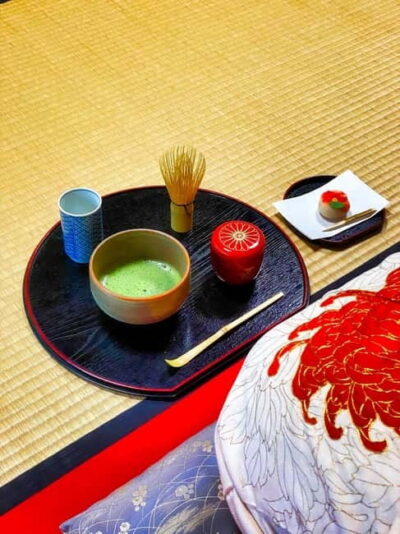
Tea Ceremony in a Traditional Tea House in Kiyomizu
Read our review →
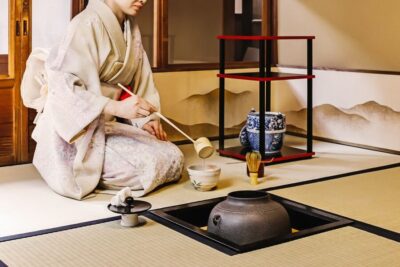
Tea Ceremony in 100-year-old Kyo-Machiya Townhouse
Read our review →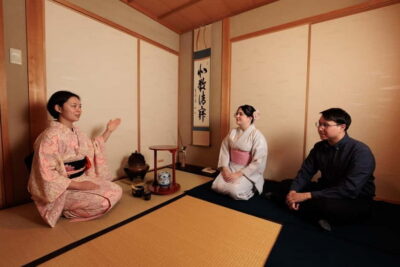
Browse the lists this tour appears in